
 Search Articles


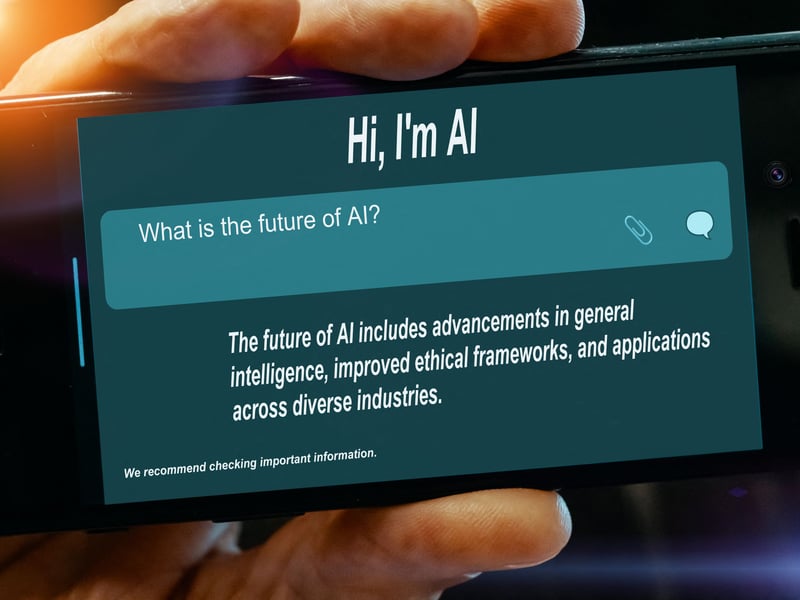
ATLANTA (CN) — A Georgia Senate committee heard from parents, advocates and legal experts Wednesday to discuss the impact of social media and artificial intelligence on children and platform privacy protection.
Megan Garcia, a mother from Orlando, Florida, told the bipartisan committee how AI chatbots led to the loss of her son, who died by suicide last year.
After his death, she discovered that the 14-year-old was regularly interacting for months with chatbots based off of “Game of Thrones” character Daenerys Targaryen, often with romantic and sexual undertones. She said he sent a message to the Daenerys chatbot, expressing his love and saying he would “come home” to her, and after the chatbot replied, “Please do my sweet king,” he shot himself.
“Sewell was a bright boy. I really believe he would’ve grown up to change the world,” Garcia said.
Garcia testified that her son explicitly told the chatbots about his suicidal ideations, but the platform had no mechanisms in place to protect him or alert an adult.
Last October, Garcia became the first person in the country to file a wrongful death lawsuit against an AI company. In May, a Florida judge ruled that AI chatbots are not protected by the First Amendment as argued by Character Technologies, the developer of Character.AI, an app that lets users interact with chatbots based on celebrities and fictional people.
“Your testimony was some of the most compelling I’ve ever seen at the Capitol," said Republican Senator Ed Setzler, who urged Garcia to not accept any settlement offers in her case.
“Every single detail of this needs to be put in front of Americans. I think you have a case that is an earthquake for this country,” Setzler added.
Director of the Tech Justice Law Project, Meetali Jain, encouraged the committee to pass legislation that defines AI as products, so that it can be held to the same product liability standards in court and to encourage companies to implement greater safety guardrails. Jain is one of the attorneys representing Garcia, as well as two other families suing AI companies over harms caused to their children.
“Based on what I’ve seen, I can unequivocally say I am terrified,” Jain said of AI’s expanding influence.
She advocated for legislation that prevents collecting data on users under 18, creates safety-oriented memory to identify concerns and provide tailored interventions, and prohibits offering unlicensed professional services on AI platforms.
Jain also advised the committee to implement conversation limits for AI chatbot users. She noted that the parents of another teen who died by suicide claim their son spent more than four hours per day conversing with ChatGPT.
“These products don’t have to be designed this way,” Jain said.
The attorney and Sharon Winkler, a retired Navy Medical Service Corps captain and founder of Social Media Harms, warned the lawmakers about federal proposals that might prohibit states and local governments from enforcing new or existing regulations on AI systems for 10 years.
While the moratorium was struck from President Donald Trump’s Big Beautiful Bill in July, tech lobbyists continue to push for nationwide regulations that preempt various state legislation.
Winkler testified about how she too lost her teenage son to suicide that was invoked by the negligence of large tech companies. She expressed concerns about AI chatbots utilizing multiple emotional manipulation tactics that cause users, particularly adolescents, to develop a romantic bond or other highly engaging emotional relationship.
In addition to increased consumer protection standards and data collection protections for minors, she recommended that senators invest funding into research on the long-term developmental impacts of AI companion usage among children.
According to a Common Sense Media study conducted in April and May, 72% of teens ages 13 to 17 use AI companions. The majority of users reported interacting with these platforms at least a few times a month or more.
Melodi Dinçer, another lawyer for the Tech Justice Law Project, warned that data collected by tech companies can be used to create digital replicas of people online with AI. She pointed to a Texas man who discovered an AI chatbot version of his 18-year-old daughter who was murdered nearly two decades ago.
“Georgia courts have not been clear about how ordinary persons enjoy protections from this,” Dincer said.
She noted that states such as California, Texas and Florida have enacted laws to regulate deepfakes, but have focused on sexually explicit and political deepfakes.
“If we wait for the federal government to do something, it will never get done," Democratic Senator Sheikh Rahman said.
“We have to do something before it causes a lot of harm,” Rahman added.
If you are having thoughts of suicide, call or text 988, or call the National Suicide Prevention Lifeline at 1-800-273-8255 (TALK). Visit SpeakingOfSuicide.com/resources * for a list of additional resources.*
 Follow @Megwiththenews
Subscribe to our free newsletters
Our weekly newsletter Closing Arguments offers the latest about ongoing trials, major litigation and rulings in courthouses around the U.S. and the world, while the monthly Under the Lights dishes the legal dirt from Hollywood, sports, Big Tech and the arts.