
 Search Articles


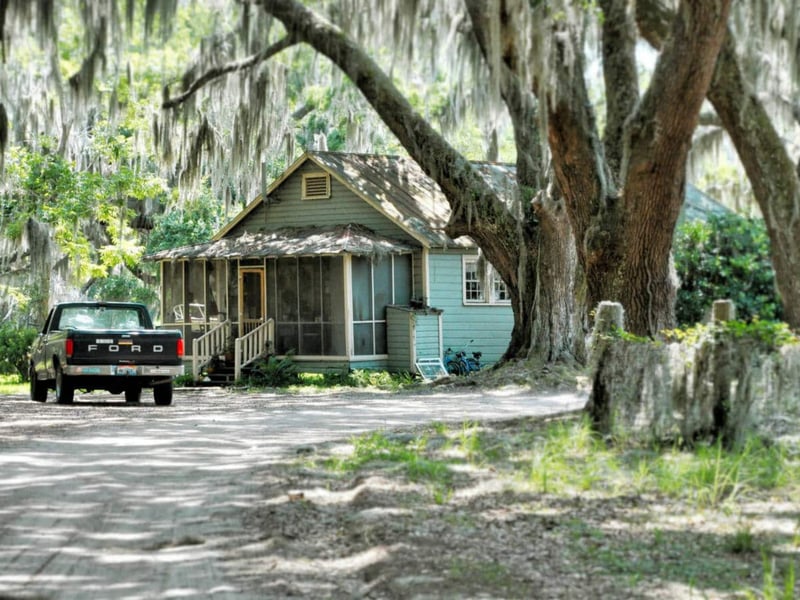
ATLANTA (CN) — The Georgia Supreme Court handed a win Tuesday to residents of what is believed to be the last intact community of descendants of enslaved West Africans in their fight against a county zoning rule change.
In a unanimous opinion, the justices reversed a lower court ruling that blocked the residents’ referendum petition to repeal the ordinance under the Georgia Constitution’s Home Rule Provision.
Residents started a petition movement in July 2024 called Keep Sapelo Geechee. Living on a small, designated portion of Sapelo Island, one of Georgia’s 15 coastal islands located about 70 miles south of Savannah, the Gullah-Geechee people are federally recognized as a distinct culture with their own indigenous Creole language and heritage.
They are the descendants of slaves who were brought to the island to work on plantations and have lived continuously on the island for over 150 years since the end of the Civil War in Hog Hammock, a 434-acre district listed on the National Register of Historic Places.
Residents collected more than 2,300 signatures to prompt McIntosh County Probate Court Judge Harold Webster III to hold a special election to let county voters determine the fate of the ordinance, which allows for larger homes to be built in the district.
The 2023 ordinance change more than doubled the allowable home size in the sparsely populated Hog Hammock settlement, spurring concerns that it will drive out the few remaining Gullah-Geechee residents to make way for large vacation homes and resorts that would diminish its history and culture.
McIntosh County initiated litigation to stop the special election. But in Tuesday’s ruling, Georgia’s highest court disagreed with the lower court’s conclusion that Webster acted without authority.
The justices determined that under Georgia’s Constitution, it is the Home Rule Provision, not the zoning provision, that “provides the express grant of legislative power enabling a county to exercise its zoning power by ordinance.”
“Although the Zoning Provision broadly grants zoning powers to counties, that provision contains no express reference to the legislative authority to enact ordinances,” Justice John Ellington wrote.
“The legislative power to enact ordinances, including those related to zoning, is instead explicitly granted in the Home Rule Provision,” he added.
Georgia’s home rule grants counties and municipalities legislative power to adopt ordinances, resolutions, and regulations related to their property, affairs, and local government, as long as they don’t conflict with the state constitution or general laws, according to the Georgia Municipal Association and the Georgia General Assembly.
In the opinion, the justices acknowledged that they had previously determined this provision authorizes a county’s electorate to petition the county’s probate court for a special election to consider the repeal of an ordinance, resolution or regulation.
In 2023, the high court unanimously sided with citizens of Camden County who forced a referendum to cancel the county’s plans to purchase land for a commercial spaceport.
The ruling also upholds an injunction preventing enforcement of the ordinance. Ellington wrote that the county cannot prevail in its efforts to stop the injunction because its arguments are based around the text of the ordinance, which it failed to include in the appellate record.
Spars with the local government of McIntosh County, whose population is 65% white, are nothing new to Sapelo Island residents and landowners. Dozens successfully appealed huge property tax hikes in 2012, and residents spent years pursuing a civil rights challenge in federal court for basic public services, including firefighters and trash collection, before county officials settled in 2022.
Despite their battle to preserve the community, the Gullah-Geechee population has slowly dwindled as descendants either sold their land or moved off the island, which has limited access through a state-run ferry. Today, fewer than 50 still live full time on Sapelo, occupying small dwellings and mobile homes.
 Follow @Megwiththenews
Subscribe to our free newsletters
Our weekly newsletter Closing Arguments offers the latest about ongoing trials, major litigation and rulings in courthouses around the U.S. and the world, while the monthly Under the Lights dishes the legal dirt from Hollywood, sports, Big Tech and the arts.