
 Search Articles


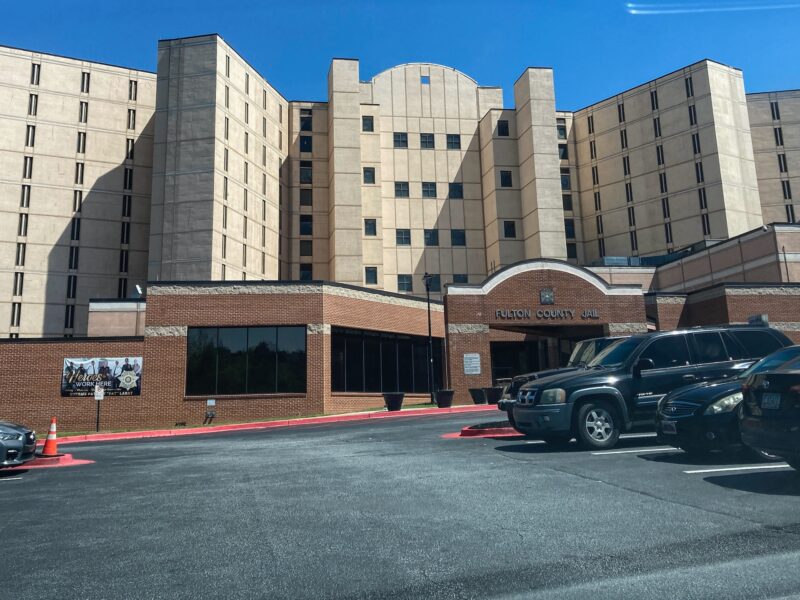
ATLANTA (CN) — Clear divisions emerged between judges on the 11th Circuit Tuesday as the federal appeals court weighed whether Georgia’s limits on the practice of charitable bail funds are constitutional.
A Georgia federal judge last year blocked the state from enforcing a provision of Georgia Senate Bill 63, which limited individuals, corporations and charities to posting no more than three cash bonds per year in any jurisdiction. The law also would have required charitable bail funds to submit to the same licensing requirements as professional bond companies.
Two Joe Biden-appointed U.S. circuit judges appeared swayed on Tuesday by arguments presented on behalf of a nonprofit organization and two individuals seeking to uphold the preliminary injunction.
The American Civil Liberties Union of Georgia and the Institute for Constitutional Advocacy and Protection at Georgetown University Law Center sued state officials in 2024 to block the law on behalf of the plaintiffs: two people who help run their church’s charitable bail fund and Barred Business Foundation, an Atlanta-based nonprofit that fundraises and pays cash bail so pretrial detainees can be released while their criminal cases are pending. The lawsuit called the regulations “arguably the most severe restrictions on charitable bail funds in the nation.”
U.S. Circuit Judges Nancy Abudu and Embry Kidd pointed to the history of posting bail and the context surrounding charitable bail payments as evidence that the practice may be protected by the First Amendment. The third judge on the panel, Donald Trump-appointed U.S. Circuit Judge Elizabeth Branch, seemed skeptical that paying cash bail on behalf of an impoverished incarcerated person is, by itself, a form of expressive conduct under the First Amendment.
U.S. District Judge Victoria Calvert ruled the bond limit unconstitutionally vague and arbitrary last year. Calvert found that the plaintiffs intended to convey a message of “opposition to unnecessary, poverty-based detention” with their actions, which was protected under the First Amendment.
“Posting bail for others as an act of faith and an expression of the need for reform has an important history in this country since its founding,” Calvert wrote in the ruling.
Arguing on behalf of the state on Tuesday, Georgia Solicitor General Stephen Petrany told the panel paying bail is “not speech” and is “not close to expressive” and asked that the injunction be tossed out.
But Abudu and Kidd separately reminded Petrany that context is key in this case.
“In this context, you have a church that’s raising money specifically to bail people out, and then they use the money for that purpose related to that message they communicated,” Abudu said.
Abudu also noted that Calvert pointed to a history of charitable bail work in the United States as a check on prosecutorial overreach and a way of ensuring poor people were not deprived of the presumption of innocence. Kidd added that there is a history of “paying bail for people who some organizations might think have been wrongly imprisoned.”
Petrany said the judges were “conflating” a history of charitable activity with “a history of understanding something as inherently expressive.”
“There is certainly a history of people paying bail and maybe even doing it for a charitable purpose, but that doesn’t turn it into a history of a reasonable observer understanding it in all circumstances as inherently expressive,” Petrany said.
Abudu reminded Petrany that plaintiffs’ actions in paying bail were accompanied by organized events and discussions about the issue of mass incarceration.
Barred Business’ members and volunteers regularly gather in the parking lot outside detention centers to celebrate the release of a detainee. They wear matching T-shirts, hold signs, greet people with gift bags and livestream the bailouts.
But Petrany told the panel those actions are not relevant because a reasonable observer of the actual bail payment would not know about them.
“Someone watching someone pay bail is not seeing the church raising money. They’re not seeing the social media posts. They’re not seeing those people outside,” Petrany said. “There’s no way that a reasonable observer watching someone hand money over to a bail clerk is going to take any generalized message out of that unless they know all the speech surrounding it … unless they’ve read the T-shirts and looked at the banners and seen the protesters and know what they’re protesting.”
Branch appeared to agree, questioning whether the presence of people outside the jail could render the conduct expressive.
“You have a separate activity of paying the bail, and then apart from that, there is the communication of, hey, we’re doing this for you, we’ve raised money in a charitable endeavor to bail you out,” Branch said.
Attorney Alex Lichtenstein of Georgetown University’s Institute for Constitutional Advocacy and Protection, who represents the plaintiffs, argued that paying charitable bail is not just a “single moment in time” when cash changes hands.
“It’s a long, drawn-out process during which the plaintiffs are engaged in a variety of expressive conduct,” Lichtenstein said. “An observer would see a large group gathering in the parking lot of the jail. They’re holding signs and banners, they have flowers and gifts, they’re live-streaming, they’re cheering, they’re engaging in dance and other expression. That would indicate to a reasonable observer that something different is going on here.”
The panel did not indicate when it would issue a decision in the appeal.
 Follow @KaylaGoggin_CNS
Subscribe to our free newsletters
Our weekly newsletter Closing Arguments offers the latest about ongoing trials, major litigation and rulings in courthouses around the U.S. and the world, while the monthly Under the Lights dishes the legal dirt from Hollywood, sports, Big Tech and the arts.