
 Search Articles


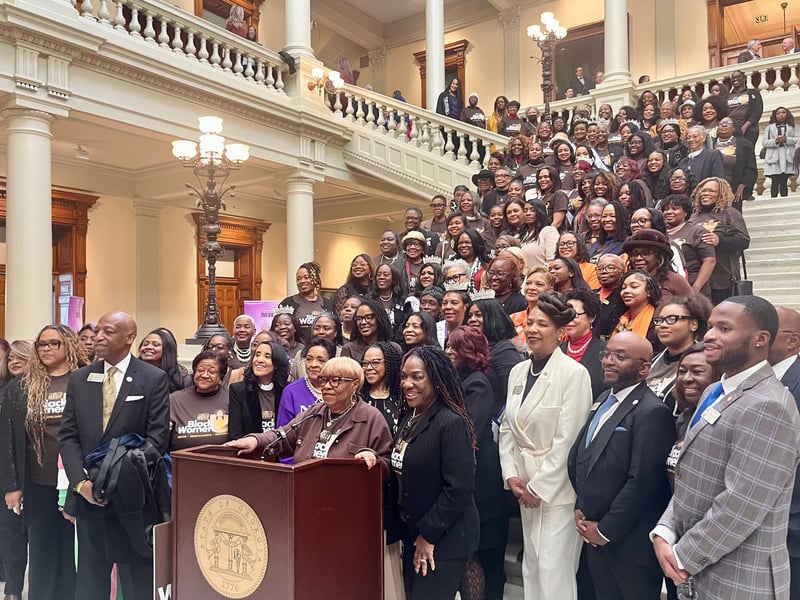
ATLANTA (CN) — Local social activists and corporate lobbyists alike swarmed the Georgia Capitol building as lawmakers returned to the gold dome Monday to kick off the 2026 legislative session.
Hundreds of faces old and new showed up to raise support for issues they believe should be addressed by their elected representatives.
Over 600 people signed up to attend the “Pack the Capitol” event hosted by the ACLU of Georgia to show support for a bill that would enact statewide protections against discrimination in employment, housing and public accommodations.
Advocates with the Georgia Majority for Gun Safety urged lawmakers to revive bills proposed last year aimed at reducing gun violence, as the state wields some of the weakest gun laws in the country and allows permitless carry with no required background checks.
During the 2025 session, a proposed $300 tax credit for Georgians who bought gun safes, purchased trigger locks or completed firearm training passed the House but stalled in the Senate and ultimately failed when lawmakers adjourned early.
In the face of Georgia’s strict ban on most abortions after six weeks of pregnancy, organizers with Reproductive Freedom For All came out to continue advocating for expanding women’s reproductive rights, as well as paid family leave and affordable contraception.
“There is a lot of work to do here,” said Serena Dasaro, an organizer at Reproductive Freedom for All.
The Republican-led Legislature has 40 days in the session — until April 2 — before it must decide on the state’s annual operating budget and propose laws.
While there is immense bipartisan consensus around affordability topping this year’s policy focus, division lingers over the most effective routes to achieve that goal.
“This year, the House is not taking our eyes off of what Georgians across the state have told us matters most, and we’re laser-focused on making life more affordable for our fellow Georgians,” House Speaker Jon Burns, said in a statement.
“From property taxes and housing costs to health care and education, the House is committed to championing commonsense solutions that keep more money in the pockets of hardworking Georgians and create a better, brighter future for each of our neighbors across the state.”
The Republican majority is seeking to ease the cost of living for Georgians by eliminating homestead property taxes and the state income tax entirely by 2032.
During a special committee meeting last week, Republican senators said the plan would cost the state about $3 billion a year and would be mostly funded by the state’s anticipated budget surplus, which was nearly $2 billion last year.
Meanwhile, Democrats and others are concerned that tax cuts could exacerbate the affordability crisis by reducing funding for critical public services such as the Supplemental Nutrition Assistance Program, also known as food stamps.
The Poor People’s Campaign, the Georgia Interfaith Public Policy Center, and others gathered to raise awareness about the impacts of food insecurity on communities and to urge lawmakers to adopt “moral budgets.”
“We know that children cannot thrive if they are hungry,” said Cassandra Henderson, executive director of the Interfaith Children’s Movement.
“Not only is SNAP beneficial to providing food on the table, SNAP funds impact small communities, rural communities, farmers and grocers who rely on what SNAP does. SNAP is not a handout — it affects stability for small communities. Its structural infrastructure that we need in our state to thrive,” Henderson added.
Reverend Lisa Heilig, executive director of Toco Hills Community Alliance, said the groups are feeding at least 750 families each week in the DeKalb County area just outside of Atlanta. She said food pantries and other agencies have struggled over the past year to fill the gap left by federal funding cuts while need has increased.
“Any cuts to SNAP are a huge blow to overcoming food insecurity,” Heilig said. “It not only feeds families, but has a positive economic impact on the entire community.”
Lawmakers will face increased pressure this year as the entire House and Senate will be up for reelection in November.
Several Republicans are battling for higher office positions and Governor Brian Kemp is term-limited from running again.
Hundreds of Black women, including Democratic Representatives Viola Davis and Doreen Carter, stood in solidarity with the Georgia Black Women’s Roundtable to promote voter turnout and political engagement.
“We’re here today because Black women have been the forefront of progress in this state for justice, equity and opportunity. This is another historic occasion where Black women have come together to advocate for our issues,” said Helen Butler, convener of the Georgia Black Women’s Roundtable and executive director of the People’s Agenda.
Butler highlighted the rising unemployment rate for Black women and reports of about 300,000 Black women leaving the country’s workforce between February and April last year following federal job cuts and the dismantling of diversity, equity and inclusion programs.
“Legislators, we ask that you listen to what we have to say because we are coming to really vote our issues. We plan to bring back industries that will help our communities through our legislators,” Butler added.
 Follow @Megwiththenews
Subscribe to our free newsletters
Our weekly newsletter Closing Arguments offers the latest about ongoing trials, major litigation and rulings in courthouses around the U.S. and the world, while the monthly Under the Lights dishes the legal dirt from Hollywood, sports, Big Tech and the arts.