
 Search Articles


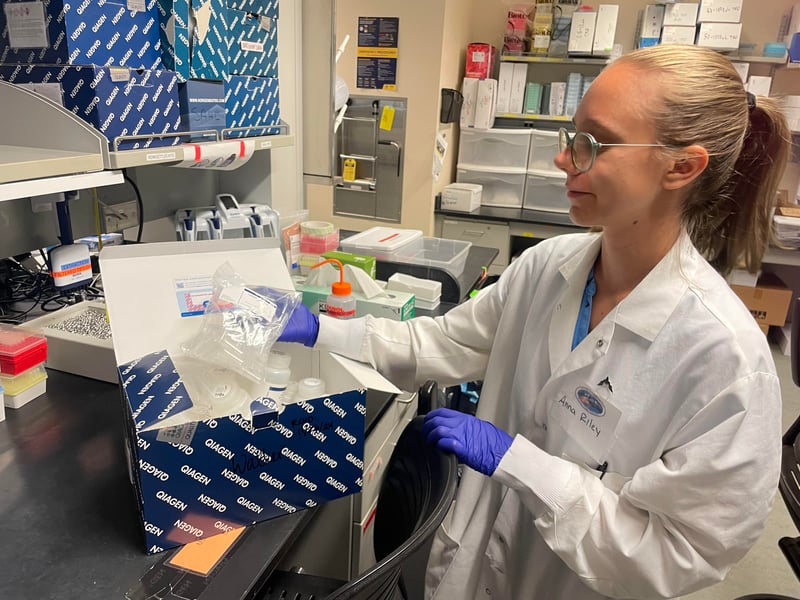
SAN DIEGO — Attorneys sparred in San Diego federal court on Wednesday over whether a biotech company violated the privacy of its clients, who say it disclosed their sensitive genetic information to multiple third parties without their consent.
In their 2024 complaint, a class of Verogen clients accused the company, which specializes in forensic genetics, of disclosing their genetic data without consent to law enforcement agencies, Meta and Qiagen, a different biotech company based in the Netherlands that bought Verogen.
Verogen and Qiagen asked U.S. District Judge James Simmons, a Joe Biden appointee, on Wednesday to dismiss the case on procedural grounds, saying that the users hadn’t showed how they were harmed by any potential disclosures.
The management of Verogen’s genetic database never changed after the sale, Kristine Argentine, a Chicago-based attorney of Seyfarth Shaw, argued for the defendants. Much of her argument relied on the claim that Verogen’s client data remained in the original company’s control.
“They uploaded their information to be shared with other users of the website,” she told Simmons. “None of that changed. The use of the information was still exactly the same.”
She also said that the clients agreed to Verogen’s terms and conditions, which mentions the possibility of a sale to another entity.
But the plaintiffs say Verogen retroactively revoked their consent selections after its $150 million sale to Qiagen in 2023.
“In this case, there was no information provided to anybody that their data was going to be given to Qiagen,” attorney Frank Hedin, of Miami law firm Hedin LLP, argued in court. “There was no opportunity for people to say ‘no’ to this or delete their information. Whether or not Verogen disclosed genetic data to Qiagen, that’s the crux of this case. It’s the most sensitive you can imagine.”
According to the plaintiffs in their class action, Verogen clients had to create a profile and upload their genetic information to Verogen’s online database, gedmatch.com, which contains about 2 million other profiles. Users were allowed to opt out of certain privacy options, such as law enforcement searches.
The company’s genetic data were its most valuable asset, Hedin said.
“This wasn’t some super profitable company,” Hedin said. “Why would they pay $150 million for a company that wasn’t generating any profit? The reason they did it was for the data. It just doesn’t make sense that Qiagen would pay that kind of money if they weren’t gaining access to that kind of data.”
The plaintiffs also said that Qiagen’s management of their genetic data allowed law enforcement to access it through a loophole, or glitch, as early as 2019. This glitch allowed law enforcement agencies to view the genetic data of clients, even if they had chosen to opt out of law enforcement searches.
Argentine argued that this loophole, while real, is a mischaracterization. It did not provide unfettered access to the Verogen client data, as the plaintiffs claimed, she said. Rather, it allows law enforcement the ability to compare select DNA profiles to others.
The plaintiffs failed to show in their complaint that they were subjected to any harm by law enforcement’s use of the database and that the claim was speculative, she added.
“We have no knowledge which law enforcement may have used this loophole,” she said. “Was it for violent crime? Was it for misidentified human remains? All of the information is unattainable. Any argument that it happened is speculative. Concrete injury has to be real and not abstract."
Simmons was also skeptical of the plaintiff’s claims of law enforcement database queries, at one point asking if the loophole was ever used in the states where the plaintiffs reside. That information was not clear.
The plaintiffs also claim that Qiagen allowed Meta to surveil their online activity through tracking software known as the Meta Pixel. The plaintiffs write that their sensitive genetic information was sent to the social media company that identified them as Verogen clients without their consent.
But Argentine argued that Meta installed its Meta Pixel after the dates that the 10 named plaintiffs uploaded their genetic data to the database. Furthermore, she said that their information is anonymized and doesn’t readily identify user profiles.
The 10 named plaintiffs cited the developing legal framework governing genetic data in their home states — Alaska, Illinois, New Hampshire, New Mexico and Oregon — as the legal basis for their claims against Verogen. Each of these state laws prohibits the collection, disclosure or use of genetic information without the individual’s consent.
Attorneys declined to comment after the hearing was over. Simmons did not make a ruling on the case on Wednesday.
Subscribe to our free newsletters
Our weekly newsletter Closing Arguments offers the latest about ongoing trials, major litigation and rulings in courthouses around the U.S. and the world, while the monthly Under the Lights dishes the legal dirt from Hollywood, sports, Big Tech and the arts.