
 Search Articles


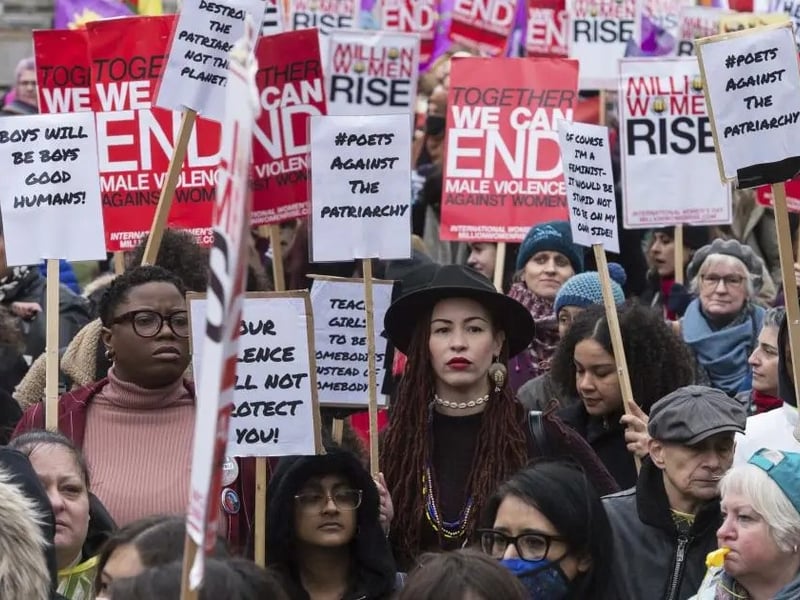
MANCHESTER, England (CN) — A growing body of research shows young men in the U.K. are moving toward conservative and anti-establishment politics, while young women are becoming more liberal and radical in their views.
Researchers say the gender gap among Generation Z is wider than in any previous generation, and risks reshaping British politics as the voting age is set to be lowered to 16.
The trend is part of a wider international shift: A generation once expected to be broadly progressive is splitting along gender lines — socially, politically and culturally.
Global gender tensions
A 30-country study by Ipsos UK and the Global Institute for Women’s Leadership found that Gen Z men and women are more divided on gender roles and feminism than any generation before them.
The study, which covered Europe, North and South America, Asia and Australasia, found that 53% of Gen Z women identified as feminists, compared to just 32% of Gen Z men — with the 21-point gender gap the largest among any age group surveyed.
Young men were more likely to say efforts to promote equality had gone too far, with some saying men are now being discriminated against. At the same time, both genders were more likely than older cohorts to feel there is rising tension between men and women in their country.
“The battle of the sexes has emerged as a salient force within Gen Z,” said Kelly Beaver, chief executive of Ipsos UK. Despite a majority saying gender equality is important, “we continue to see divergent attitudes toward gender equality more broadly, particularly among this younger cohort.”
Professor Heejung Chung, who leads the Global Institute for Women’s Leadership, said that the media and politicians often fuel the divide, “framing the advancement of women as the cause of broader societal grievances, such as the decline of well-paid, secure jobs.”
The study also found that Gen Z men were less optimistic about their future than women, reflecting concerns about the influence of the “manosphere” — a loosely connected network of online communities that promote hypermasculine, anti-feminist ideologies.
The manosphere and separate spaces
In the U.K., this concern is echoed in research warning that boys and young men are in crisis.
The Centre for Social Justice, an independent think tank that studies the causes of Britain’s social problems, said in the report: “Boys and girls no longer walk the same path from childhood to adulthood … with their interests, values and aims in life increasingly incompatible with each other.”
The report highlighted that, “young men and boys across the U.K. are seeking new modes of masculinity,” often found online through influencers within the manosphere.
This is not only leading young people to occupy separate online spaces; they’re socializing and dating less.
Ofcom, the country’s media regulator, reported a drop in dating app usage. It found that Tinder has lost almost 600,000 U.K. users since 2023, while Bumble fell by 368,000, Hinge by 131,000 and Grindr by 11,000.
The media regulator said the overall number of adults using dating apps remained steady, but that the drop appeared to be driven by Gen Z.
Despite many young people breaking up with dating apps in preference for more traditional, offline ways of meeting, the overall trend of sexual activity is declining.
These growing areas of separation have already been reflected in voting patterns in the U.S. and Germany, where elections showed young men significantly more likely than young women to support right-wing parties.
“Gen Z men are significantly more likely than other groups to believe that efforts toward women’s equality have gone too far, with many even believing that these efforts have led to discrimination against men,” said Beaver.
“These divisive sentiments are coupled with less optimism for the future of today’s young men, compared to that of young women."
Beaver urged for “nuanced conversations” to “find ways to bridge this divide and ensure that progress toward gender equality benefits everyone, without leaving anyone behind.”
 Follow @jayfranklinlive
Subscribe to our free newsletters
Our weekly newsletter Closing Arguments offers the latest about ongoing trials, major litigation and rulings in courthouses around the U.S. and the world, while the monthly Under the Lights dishes the legal dirt from Hollywood, sports, Big Tech and the arts.