
 Search Articles


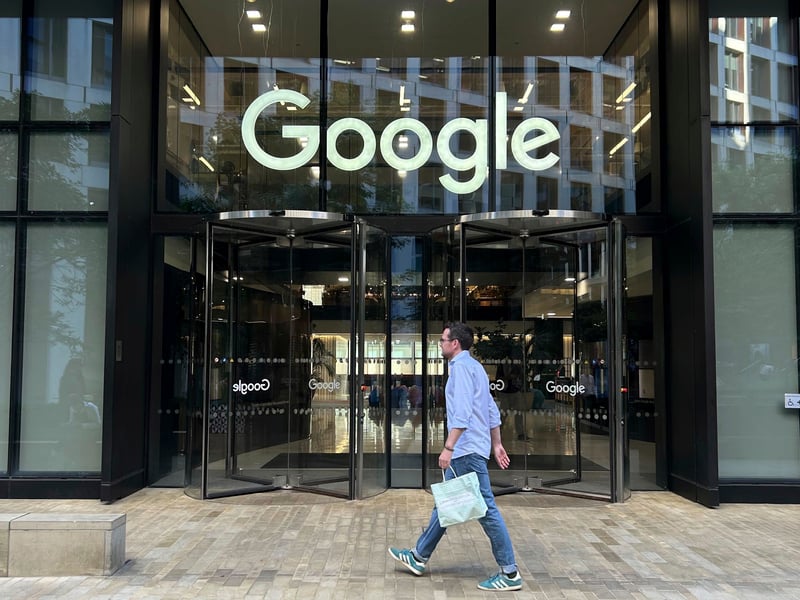
WASHINGTON (CN) — The Federal Trade Commission, news publishers and a bipartisan coalition of former antitrust enforcers, among others, filed amicus briefs on Monday in the landmark antitrust trial over Google’s internet search monopoly to push for their preferred remedy.
U.S. District Judge Amit Mehta finished hearing witness testimony in the remedy phase of the trial on Friday and scheduled closing arguments for May 29, with an ultimate decision expected in August.
The Barack Obama appointee granted motions from 17 interested parties — including economics and law professors, Google employee unions, the Chamber of Progress, the Computer & Communications Industry Association, the American Economic Liberties Project, Anthropic and more — to file amicus briefs.
The FTC lent its support for the Justice Department’s proposal that Mehta order the divestiture of Google’s Chrome browser and potentially Android, bar multibillion-dollar deals to make its search engine the default option on other browsers and syndicate its search index to help rival engines match Google’s quality.
Google has argued vehemently that the government’s proposals would harm consumers and put their data and the nation’s security at risk.
According to the Justice Department, the troves of user data allow Google to improve personalized search results, thus increasing usage and increasing the data collected from users, creating a cycle that prevents rivals from competing.
The FTC rejected Google’s concerns, noting its “strong interest” in ensuring companies protect consumer privacy, and said the Justice Department was in line with the commission’s privacy and data-security orders.
To meet those standards, the commission recommended the formation of an independent technical committee to oversee the data syndication process, which the FTC said would work with either party throughout.
With Google, the committee would help the company remove any personally identifiable information tied to the user-side data, as well as recommend when to apply “anonymization or privacy-enhancing techniques.”
On the flip side, the committee would act as an independent auditor for any competitor that could receive Google’s data. Such rivals would have to agree to regular data security and privacy audits by the committee as well.
Another brief filed by the News/Media Alliance, a nonprofit trade association that represents over 2,200 news, magazine and digital publishers, focused on Google’s search referral traffic and practice of extracting concessions from publishers for improved referrals.
Google’s introduction of artificial intelligence to its search engine — in the form of “AI Overviews,” which provide summaries to users’ queries crawled from existing websites, often news sites — “threaten to eviscerate the vital search referral traffic on which publishers depend,” the organization said.
According to a February study by Bain & Company, AI-powered search reduces search referral traffic by 25%, and 60% of searches end without users clicking another website.
The organization warned that a looming “AI Mode” feature would be especially harmful.
“Google is preparing to move its ‘AI Mode’ from its beta Labs into Google Search to provide a more fuller narrative experience that expands Google’s capture of user interest at the expense of the journalism that powers Google’s results,” the alliance said.
As a result, news publishers have taken steps to prevent rival AI and search companies from crawling their sites, forcing the companies to negotiate for access to their content, something Google refuses to do, the alliance said.
AI has become a central issue at the remedy stage of the antitrust trial — the technology was not prevalent in search during the liability phase in 2023 and 2024 — but the Justice Department has declined to suggest any related remedies due to the quick development of the technology.
The media alliance urged Mehta to address AI as the next phase of competition in search in his ultimate decision.
Several former antitrust enforcers from the Justice Department and the FTC during the Richard Nixon, Gerald Ford, Jimmy Carter, Ronald Reagan, George H.W. Bush, Bill Clinton, George W. Bush, Barack Obama and Donald Trump administrations also filed a brief to “clarify the legal standard” in antitrust cases.
They pointed to U.S. v. Microsoft, the D.C. Circuit case that marked the most recent major antitrust action, where the appellate court made clear there must be a “causal connection” between a monopolist’s conduct and its maintenance of a monopoly for major remedies like divestiture.
The enforcers noted that the D.C. Circuit shot down many similar remedies in the Microsoft case, in part due to the government’s failure to prove that the tech companies’ conduct — regarding its efforts to prevent PC manufacturers from downloading browsers other than Internet Explorer — was actively harming competition.
“Because there is no unlawful acquisition of monopoly power to unwind here, the court should approach plaintiffs’ proposed divestiture remedies with caution,” the enforcers wrote. “As the Microsoft court explained, ‘One apparent reason why courts have not ordered the dissolution of unitary companies is logistical difficulty. A corporation, designed to operate effectively as a single entity, cannot readily be dismembered of parts of its various operations without a marked loss of efficiency.’”
 Follow @Ryan_Knappy
Subscribe to our free newsletters
Our weekly newsletter Closing Arguments offers the latest about ongoing trials, major litigation and rulings in courthouses around the U.S. and the world, while the monthly Under the Lights dishes the legal dirt from Hollywood, sports, Big Tech and the arts.