
 Search Articles


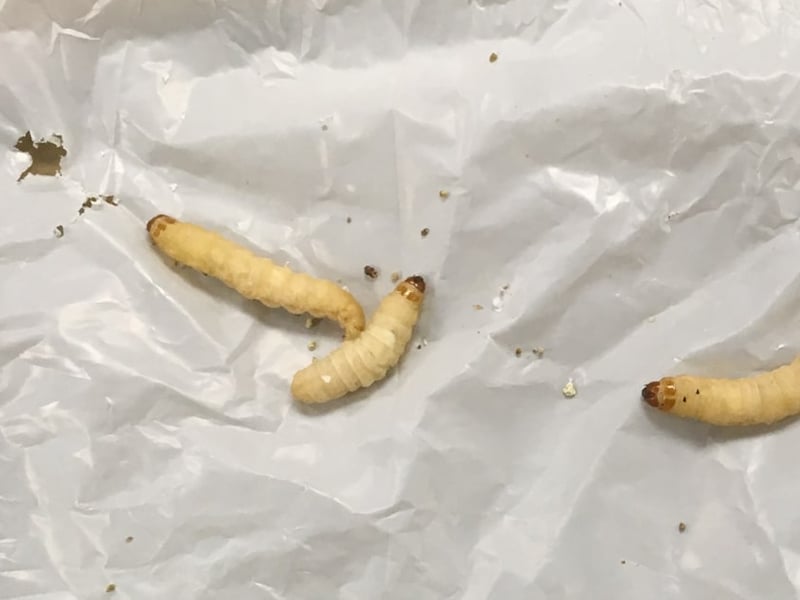
(CN) — Each year, 100 million tons of polyethylene plastic are produced globally, and in the battle against plastic pollution, a research team looked to bugs for help.
Polyethylene plastic is the most common variety of plastic in the world, as it’s used in shopping bags, electrical components and other everyday items because of its elasticity, durability and chemical resistance. Bryan Cassone and his research team said that chemical resistance makes plastics so hard to dispose of that it could take decades, even hundreds of years, to fully degrade the world’s plastic.
That is why the team took inspiration from a 2017 study on “plastivore” insects to tackle plastic pollution, according to theresearch it presented Tuesday at the Society for Experimental Biology Annual Conference in Antwerp, Belgium.
Very hungry caterpillars
In a 2017 study, a different research team reported that greater wax moth caterpillars, also known as waxworms, typically eat honeycomb, but they can also degrade and metabolize low-density polyethylene plastic, or LDPE, within 24 hours of ingestion.
The 2017 study researchers believed that a combination of waxworms’ voracious appetite and chemical similarities between honeycomb and plastics — including long-chain hydrocarbons — gave the caterpillars the unique ability to biodegrade LDPE.
Based on those findings, Cassone and his colleagues tried to see if they could understand the impact of a plastic diet on the waxworms’ health and if waxworms could be a sustainable solution to plastic pollution.
“Around 2,000 waxworms can break down an entire polyethylene bag in as little as 24 hours, although we believe that co-supplementation with feeding stimulants like sugars can reduce the number of worms considerably,” said Cassone, a professor of insect pest and vector biology in the Department of Biology at Brandon University, Canada. “However, understanding the biological mechanisms and consequences on fitness associated with plastic biodegradation is key to using waxworms for large-scale plastic remediation.”
A supplemented diet
Utilizing techniques from the fields of animal physiology, material science, molecular biology and genomics, the team studied the waxworms’ bacterial microbiome and their potential for large-scale plastic biodegradation, and they co-supplemented nutrients by mixing them into LDPE powder or embedding them into plastic films.
That is how the team learned that waxworms can metabolically process plastics, break them down into lipids and then store them as body fat.
“This is similar to us eating steak — if we consume too much saturated and unsaturated fat, it becomes stored in adipose tissue as lipid reserves, rather than being used as energy,” said Cassone.
One problem — waxworms on a plastic diet tend to die quickly.
“They do not survive more than a few days on a plastic-only diet, and they lose considerable mass,” said Cassone. “However, we are optimistic that we can formulate a co-supplementation that not only restores their fitness to natural levels but exceeds it.”
Nutritious plastic (or is it?)
The team suggested that a more efficient supplement delivery, like a spray, could contribute to a large-scale application of waxworms eating away plastic pollution. As for the potential surplus of insect biomass because of plastivore insects, the team proposed feeding waxworms to fish if the former is nutritious for the latter.
The team believes that successfully supplementing waxworms’ diet with plastic — while sustaining their fitness and consumption rates similar to their natural honeycomb diet — could aid future plastic bioremediation. Besides their ability to break down plastic, waxworms are ideal specimens because they are highly tractable in laboratories and facilities, have high reproductive capacity, require a small footprint relative to biomass and are very hungry.
However, it is unclear how environmentally detrimental this kind of diet is or whether residual microplastics from LDPE breakdown remain, so some long-term effects remain a mystery.
 Follow @kndrleon
Subscribe to our free newsletters
Our weekly newsletter Closing Arguments offers the latest about ongoing trials, major litigation and rulings in courthouses around the U.S. and the world, while the monthly Under the Lights dishes the legal dirt from Hollywood, sports, Big Tech and the arts.