
 Search Articles



MANCHESTER, England (CN) — England has just come through its fourth heat wave of the summer, with temperatures topping 86F in several regions, exposing the growing impact of climate change across the country.
The Met Office, the country’s weather service, said South West England, the South West Midlands, North West England and East Anglia all met the threshold for a heat wave: three consecutive days above 77 F, rising to 82 F in London.
Wales has also seen four rounds of prolonged heat this summer, while Scotland and Northern Ireland have each recorded three. Wildfires have also scorched large swaths of Europe.
The string of heat waves has had wide-ranging effects.
Trains faced cancellations and speed restrictions as dried-out soil caused tracks to dislodge. Farmers have warned of weaker crop yields, while firefighters are dealing with record numbers of wildfires.
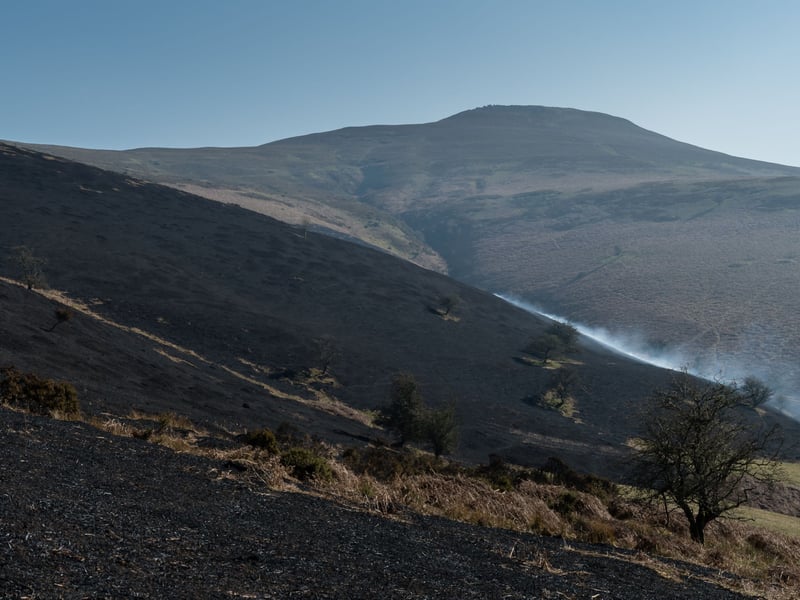
Fire and rescue services in England and Wales have responded to 856 wildfires so far this year, according to the National Fire Chiefs Council. By the end of July, wildfire numbers were 663% higher than the same period last year, and above the previous record set in 2022.
In Scotland, record fires burned across 29,000 acres of moorland in the Highlands, roughly the size of San Francisco. Flames also tore through Arthur’s Seat, a popular hiking hill that climbs above the city of Edinburgh.
A drought is also setting in. After one of the driest springs since records began in 1836, England is experiencing “nationally significant” water shortfalls, according to the National Drought Group, with hosepipe bans in place for millions of people.
Farmers say harvests have been hit, with wheat and barley yields down in parts of Norfolk.
The National Farmers Union has called for water to be treated as a “national strategic priority,” adding that, “Now is the time to start having open and honest conversations.”
Increasing acknowledgement but lacking preparation
Experts say these recurring heat waves are part of a wider shift that the country is not ready for.
“The U.K. is not prepared for the impacts of climate change including heat waves,” said Anna Beswick, a climate adaptation and resilience specialist at the Grantham Research Institute at the London School of Economics. “We respond to extreme events like heat waves when they happen, rather than taking action to reduce risks.”
Overheating buildings is one major concern.
“More than half of U.K. homes currently suffer from overheating risk,” Beswick said, a number projected to increase. There are regulations in place for new properties, but she urges the government to “act urgently” to reduce the risks in existing buildings.
Research from the Met Office puts the country on course to exceed 104 F in the coming years. England first hit that milestone in 2022, a year that also brought its hottest average annual temperature on record, 50 F.
Public concern is growing. “People’s risk perceptions of extreme heat have increased,” said Christina Demski, deputy director of the Centre for Climate Change and Social Transformations. “I would say a majority of people believe heat waves are, to some extent, linked to climate change.”
Despite the growing awareness, there remains a gap in concern. “Hot weather still has many positive associations and is often viewed as long awaited and something to be enjoyed,” said Demski.
Lee from Wales said when he grew up in the 1980s and the temperatures rose, “The weathermen would say, it’s going to be a lovely week, get your bucket and spades, light the barbecue.”
Laura from Bristol said she’s heard lots of sarcastic comments about the concerns. “I don’t think people understand what the term ‘heat wave’ means,” she said. “The warnings are put out so people are aware that it’s going to feel unbearably uncomfortable, especially for the elderly.”
Demski said many people struggle to cope with rising temperatures — often groups already facing struggles, such as the elderly, those with low incomes and people without steady jobs.
The U.K. has cut carbon emissions by half of 1990 levels, phased out coal in 2024, and is committed to net zero by 2050. But the government’s advisers warn the country is not ready for what lies ahead.
The Climate Change Committee’s latest assessment found that despite progress, adaptation planning remains “piecemeal and disjointed,” with risks outpacing resilience efforts.
Place-based adaptation
Beswick said lessons from locally led projects in Scotland and Ireland could help communities across the U.K. prepare for rising heat.
The national climate risk assessment has identified 61 threats, but she said government planning remains too weak and broad to capture how those risks differ from place to place.
“Inner London boroughs are more likely to experience acute heat risk affecting large numbers of residential properties than rural communities in the northeast of Scotland,” she said. “However, rural communities in the northeast of Scotland may be more affected by changes in water supply and availability due to low summer rainfall.”
She said place-based adaptation, where local groups and agencies shape their own responses, is key. It enables “stakeholders in cities, regions and rural communities to understand how climate risks, including heat risk, will affect their places and to develop actions that align with local needs and priorities,” she said.
Citizen assemblies have emerged in recent years in response to climate risks. While Demski agrees with involving more people in decision-making, she cautions the long-term effectiveness of assemblies.
“It’s been great to see more deliberation on how to address climate change and that people from across the U.K. have been able to take part in those deliberations,” she said. “However, I think it’s fair to say that there is limited evidence that climate assemblies have meaningfully shaped climate policy decisions in the U.K., although some have done more than others.”
Closing the gap
“There is a big gap between the level of funding needed to adapt to climate change and the amount of resources available,” Beswick said.
She pointed to work underway at the Grantham Research Institute to assess the costs and benefits of adaptation, with the aim of helping the government unlock finance and overcome barriers to investing in resilience.
For individuals, the most powerful actions are not always the most visible. Demski said people often focus on recycling or reducing waste, while overlooking bigger changes in diet, travel and energy use.
Only 9% of people choose diet as a top change to mitigate climate change compared to other options.
“Engaging people with more impactful changes to lifestyles and society more broadly will require a multi-pronged approach,” she said, adding that consistent policies and clear signals from the government are needed to make those changes “easier, cheaper and more normal.”
The challenge, Demski said, is to design climate action that feels fair and connects with what people already care about: their health, finances and wellbeing.
Courthouse News reporter James Francis Whitehead is based in England.
 Follow @jayfranklinlive
Subscribe to our free newsletters
Our weekly newsletter Closing Arguments offers the latest about ongoing trials, major litigation and rulings in courthouses around the U.S. and the world, while the monthly Under the Lights dishes the legal dirt from Hollywood, sports, Big Tech and the arts.