
 Search Articles


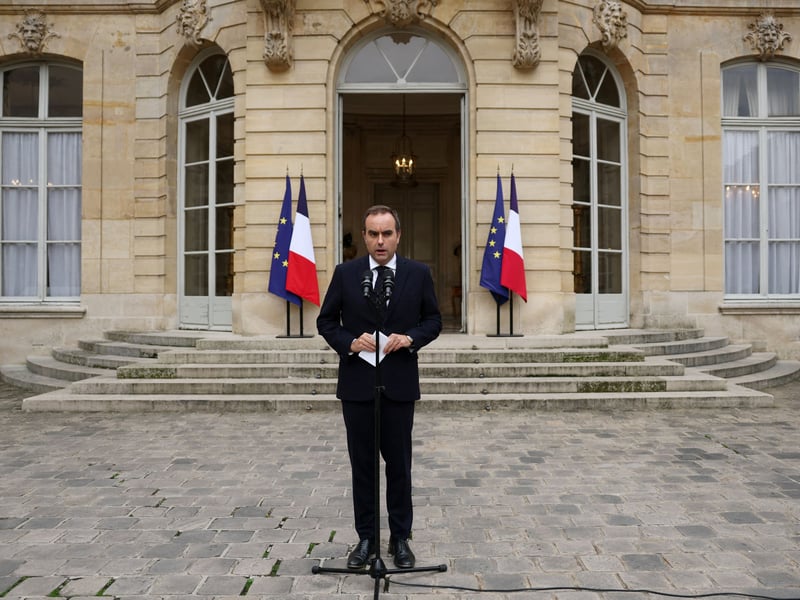
NÎMES, France (CN) — In a deepening of France’s political crisis, freshly named Prime Minister Sébastien Lecornu officially resigned Monday morning, hours after revealing his cabinet Sunday night.
Lecornu — President Emmanuel Macron’s fourth prime minister since legislative elections last year — was appointed Sept. 9 after his predecessor, François Bayrou, got the boot in a confidence vote he’d called in an attempt deal with the country’s crippling debt issues.
What will happen next is unclear. Macron’s approval rating is at an all-time low, social unrest is mounting and the country is once again left without a government. The political deadlock in Parliament continues with no group holding a majority, leaving Macron in difficulty no matter who he chooses as a replacement.
“The political parties continue to adopt a posture as if they all had an absolute majority in the National Assembly,” Lecornu told reporters outside of the Matignon residence in Paris on Monday morning. “And basically, I found myself in a situation where I was ready to compromise, but each political party wants the other political party to adopt its entire program.”
In his first speech in the role, Lecornu had promised a radical shakeup that would break the cycle. But when he revealed his cabinet Sunday, there wasn’t a shakeup at all; most ministers kept their roles. Lecornu faced immediate backlash, even from within his group’s ranks.
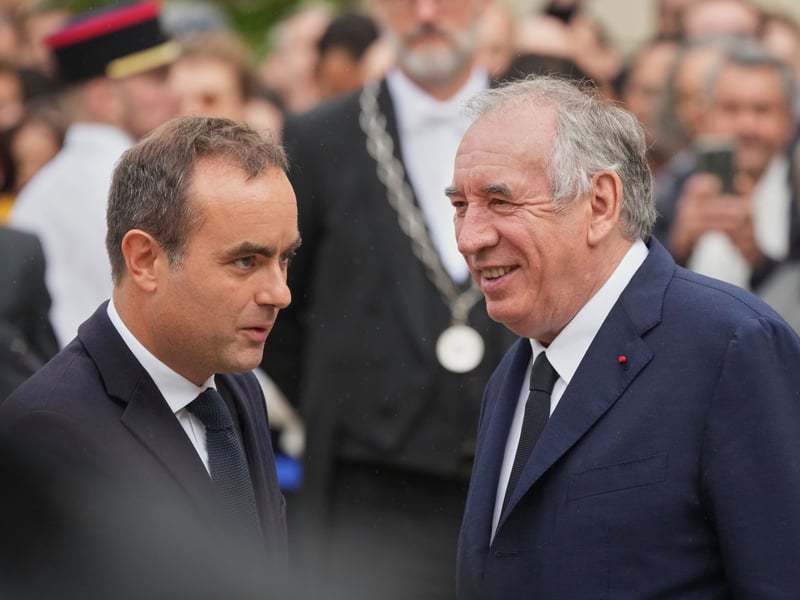
“The composition of the government does not reflect the promised break,” said Bruno Retailleau on X Sunday night. He heads the conservative Republicans party and was reappointed as minister of the interior.
Retailleau was among those blasting Lecornu for his decision to bring back former Finance Minister Bruno Le Maire to serve at the defense ministry, with critics saying that under his watch France’s public deficit soared. At the end of the first quarter of 2025, France’s public debt stood at 3.346 trillion euros ($3.9 trillion), or 114% of GDP.
France without a government is a familiar state; pressure is mounting on Macron to make some sort of substantial change — resign, or hold new legislative elections.
“I call on the president of the republic to dissolve the National Assembly … we are at the end of the joke, the farce has gone on long enough,” extreme-right leader Marine Le Pen told the French news channel BFM TV. She was backed her protégée Jordan Bardella, who added that “there can be no stability without a return to the polls.”
Jean-Luc Melenchon, the far-left leader of France Unbowed, called for Macron’s impeachment.
Experts aren’t convinced that either of these solutions would get France out of its deadlock, given that new legislative elections would likely deliver a similar politically divided result to today.
“I think we’re wrong in saying that a presidential election, that the dissolution of the government, will resolve the issue,” Ludovic Renard, a political scientist at Sciences Po Bordeaux, told Courthouse News. “We’re going to find ourselves in the same situation once again if there is a [new] president, even if he appoints a prime minister … It’s not certain that he will have a clear majority in the National Assembly, and so we’re going to have a prime minister who will once again, since there is no longer a majority democracy in France, have to play a special role in forming a coalition.”
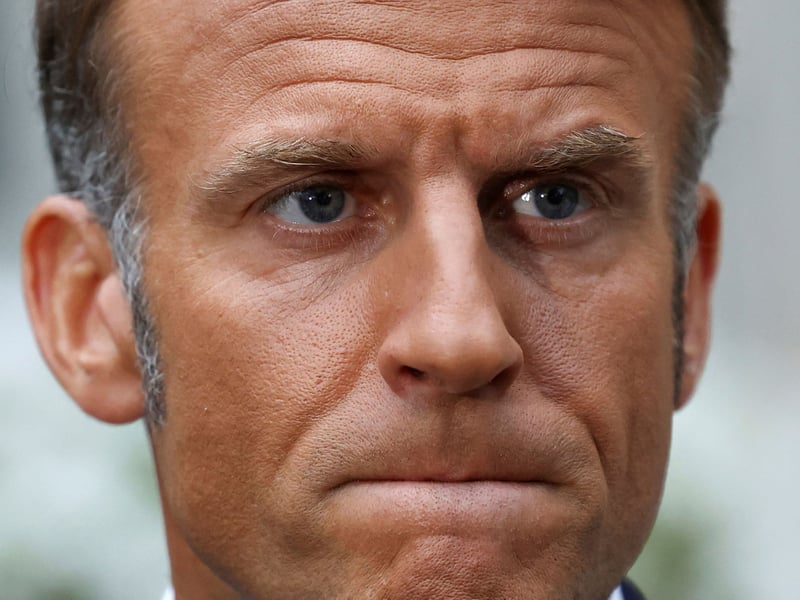
Macron sent the country into a political tailspin in June 2024, when he announced the dissolution of the government and called for snap legislative elections. The result divided Parliament into three roughly even blocs of left, right and center, weighed down on both ends by extremes with considerable political power. Each side has clear demands, and if they’re not met, they threaten a motion of censure.
This has backed every recent prime minister into a corner. Any proposals that are too right-wing prompt a motion of censure from the left, and vice-versa.
 Follow @lilyradz
Subscribe to our free newsletters
Our weekly newsletter Closing Arguments offers the latest about ongoing trials, major litigation and rulings in courthouses around the U.S. and the world, while the monthly Under the Lights dishes the legal dirt from Hollywood, sports, Big Tech and the arts.