
 Search Articles


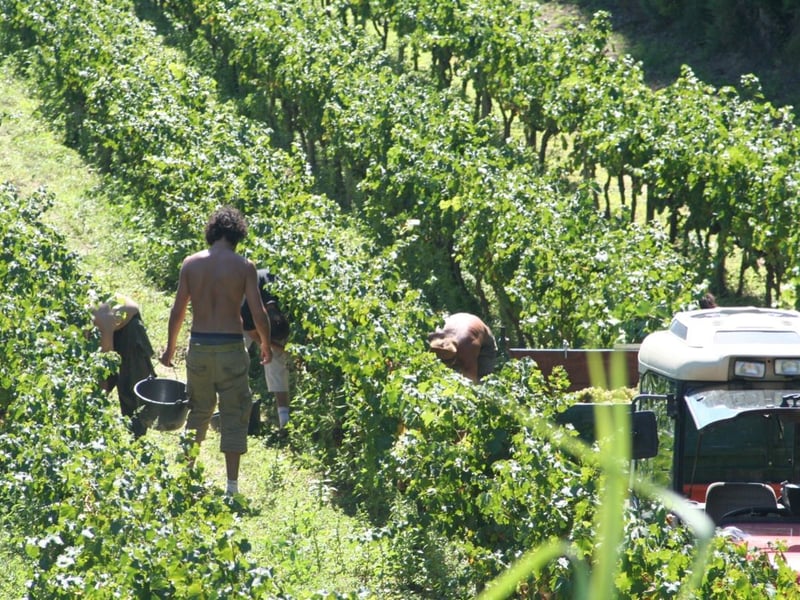
MARSEILLE, France (CN) — Beneath the warm light that canopies the lavender fields and vineyards of Provence — an area in southern France that exports the largest share of its world-renowned rosé to the U.S. — winemakers are worried.
U.S. President-elect Donald Trump, who called “tariff” the most beautiful word in the dictionary, has said he will boost taxes by 10-20% on imports across the board. In an industry already suffering from the effects of climate change, overproduction and changing consumer tastes, memories of a previous Trump wine tax are still fresh as French producers gear up for another possible hit.
“We’re apprehensive about the beginning of January when he comes into power, to know if his policy is going to retax at 25% or not,” Vincent Constant, a winemaker at the Provençal Domaine Ray Jane, told Courthouse News. “Suddenly importers are trying to get the wine to start moving again, and are hurrying up a little before January, to get around the taxes.”
There are hundreds of wineries scattered across the region, many of which have been passed down through generations. Since 45% of Provence’s rosé goes to the U.S., producers are concerned that American consumers will balk at the higher prices tariffs would bring.
Jérôme Bauer is the president of the National Confederation of Wine Producers and Wine Brands with Controlled Designations of Origin, a trade union known as CNAOC, which represents 70% of French viticulture. Bauer comes from a family of winemakers.
“We have 14 hectares (about 35 acres) of vines in Herrlisheim near Colmar, which I farm with my sister and brother,” he told Courthouse News. “It’s clear that the reinstatement of an additional tax on our wines in the U.S.A. will generate dramatic consequences on many farms and on the entire rural fabric that depends on them.”

Laurent Bunan is a third-generation winemaker at Provence’s Domaines Bunan in La Cadière d’Azur, a medieval hilltop village near the sea. The vineyard exports to the U.S.
“Of course, it worries us because the American market is an important market for us — we sell our wines in about fifteen states,” he told Courthouse News. “We have already experienced these tax increases which, at the time, had hurt us a bit.”
Bunan is more broadly worried about the impact of higher taxes on the entire sector.
“So it’s certain that it will cause a general increase in the sale prices of wines,” he said. “Afterwards, wine and the importation of wine into the United States is also an important market that employs a lot of people — a lot of importers, distributors, transporters.”
French winemakers have already gotten a taste of tariffs under the first Trump administration.
In 2019, Trump imposed a 25% tax on still wines in response to a spat between Boeing and the French-owned Airbus. The Federation of Exporters of Wine and Spirits, known as FEVS, said that 2020 saw a loss of roughly 400 million euros worth (about $422.6 million) of American imports of French wines.
This represents a big portion of the market. The United States, which is the biggest market for French wine exports, accounts for roughly 3.6 billion euros ($3.8 billion) in value.
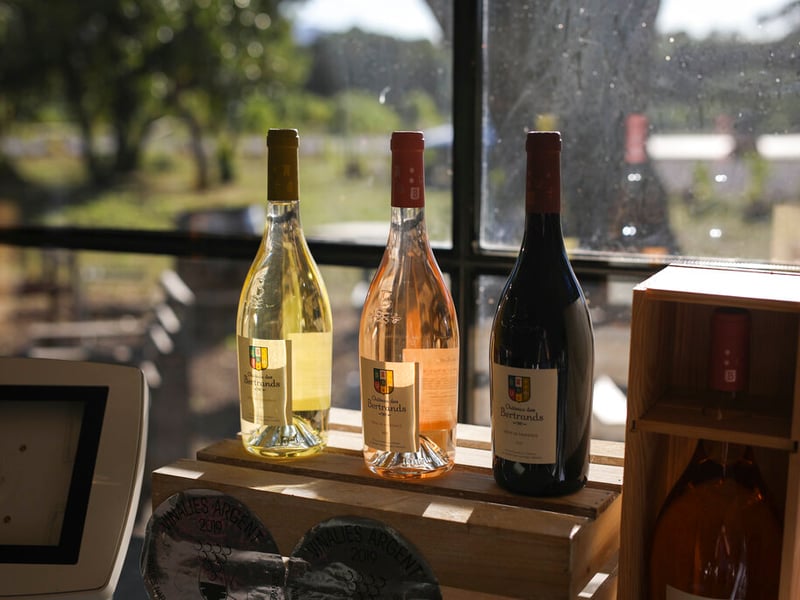
However, winemakers are optimistic that this tariff — which would affect all countries, except for China, which Trump wants to tax at 60% — would level the playing field.
“The only advantage this year is that all European wines will have the same tax; the last time Trump taxed wines, it was only French wines and therefore Italian wines and Spanish wines were not taxed,” Bunan explained. “The Italian wines and the Spanish wines benefited from this, at the time, and the Italians, who are very good traders, seized the opportunity to sell a little more — now, I think we will all be in the same boat.”
Foued Cheriet, a researcher and professor at the Institut Agro Montpellier, said that other events in recent years, including the United Kingdom’s exit from the EU, also helped winemakers adjust their methods.
“We carried out work on the effects of Trump taxes, Brexit and the Covid crisis on French wine exports two years ago, and what we observed was that producers had anticipated Brexit well — they had changed their storage methods, their logistics, their delivery methods,” he told Courthouse News.
He said that winemakers could try to increase their presence in other markets outside the United States.
Cheriet said French wine in particular could have been targeted because of its sentimental value to the country. The wine industry is “punished” because it’s a symbolic product of France and Europe in general.
Cheriet, Bunan and Bauer are all concerned about wine getting wrapped up in the geopolitics between the U.S. and Europe.
“More fundamentally, and here I’m coming back to an even more radical solution, Europe and the United States should still settle the differences outside of wine,” Cheriet said. “The dispute over taxes three years ago was Airbus and Boeing.”
Bauer shared a similar sentiment.
“We’re worried because we don’t want to be held hostage to another geopolitical conflict in the sector’s leading export market — the U.S.,” he said.
But it all comes down to what happens in January.
“We know Trump, who is fickle, and who can change his policy very quickly,” Bunan said.
 Follow @lilyradz
Subscribe to our free newsletters
Our weekly newsletter Closing Arguments offers the latest about ongoing trials, major litigation and rulings in courthouses around the U.S. and the world, while the monthly Under the Lights dishes the legal dirt from Hollywood, sports, Big Tech and the arts.