
 Search Articles


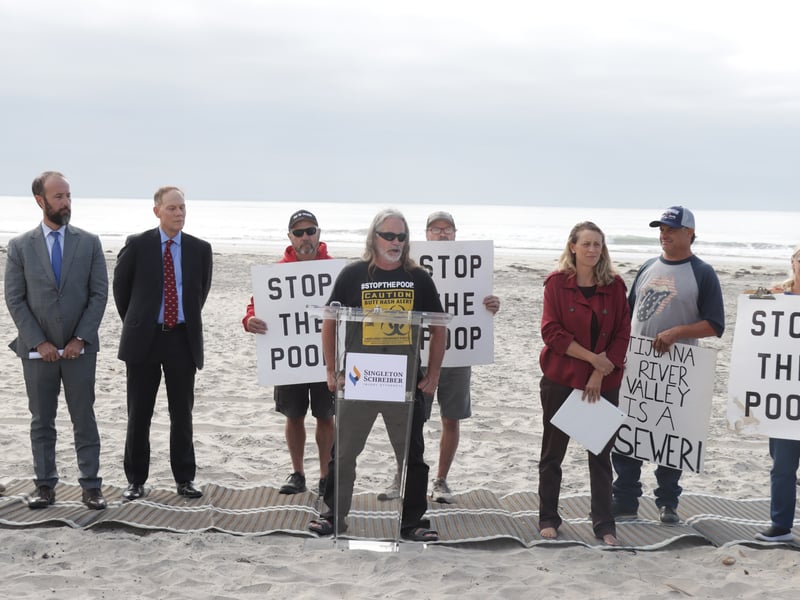
SAN DIEGO (CN) — Decades of neglect by a French company operating a federally funded wastewater treatment plant on the U.S.-Mexico border has led to billions of gallons of sewage and toxic chemicals in the Tijuana River, according to nearby residents who in a lawsuit decried the serious ecological and human health devastation.
The plant is supposed to treat wastewater from Tijuana and then dump it into the Pacific Ocean at Imperial Beach, California. But according to the residents, misconduct, reckless behavior and negligence — including not investing in or maintaining the sewage plant’s infrastructure — Veolia Water West Operating Services has discharged fecal bacteria, heavy metals and chemicals banned in the U.S. like DDT, benzidine, and polychlorinated biphenyls (PCBs) into the Tijuana River.
That toxic slurry hasn’t just lead to the death of a bottlenose dolphin and caused the eradication of the river’s fish population. Residents of Imperial Beach, which the river runs through, claim the pollution has caused hundreds of days of closure of city and state beaches, foul noxious odors throughout the city and gastrointestinal diseases among residents — some who’ve ventured into the waves and others who’ve simply breathed the air.
“Defendants, including one or more officers, directors, and/or managers, know that allowing contaminated water to spread into the air, soil, water, and enter plaintiffs’ properties would cause a significant risk of injury and illness. Defendants acted recklessly and with conscious disregard to human life and safety, and this recklessness and conscious disregard was a substantial factor in bringing about plaintiffs’ harm,” the plaintiffs say in their complaint, filed Tuesday in San Diego Superior Court.
The pollution in the air, water, and soil means residents can’t drink their water, shower or even open their windows without exposing themselves to the sewage, E. coli, the virus that causes Covid-19, hepatitis A, human norovirus, and other viruses, they claim.
“This is despicable and oppressive conduct. Plaintiffs thus seek punitive damages in an amount sufficient to punish defendants’ long history of deliberate disregard for plaintiffs’ safety,” the residents say in the lawsuit.
The plaintiffs’ claims against Veolia include negligence, public and private nuisance, trespass and battery, violations of health and safety laws, and failure to comply with the permit that allows the plant to operate.
The suit is the first attempt to use California’s nuisance law to bring a mass action against a polluter and get them to change their behavior according to the plaintiffs’ attorney Brett Schreiber, of the law firm Singleton Schreiber, at a press conference on the beach in Imperial Beach on Tuesday.
“If we bring people together and do it at scale, we can cause real societal change, and so that’s what we’re doing,” Schreiber said. “There is power when the people lock arms and stand up together.”
San Diego County Supervisor Terra Lawson-Remer also spoke at the press conference and said next week she will bring a proposal to the Board of Supervisors to have the county either file a parallel suit or join an existing suit, like the one filed by residents of Imperial Beach.
Baron Partlow, local resident, founder of a local activist group called Stop the Poop and one of the plaintiffs said he just wants to hit the waves.
“I just feel I have been assaulted and criminally trespassed on when I cannot take my grandson to the beach as a world-class bodysurfer and teach him how to bodysurf,” Partlow said.
A spokesperson for the Veolia North America’s Municipal Water division called the suit meritless and said that in the face of a growing population in Tijuana, the plant has done its best.
“The overwhelming cause of the odors and pollution affecting Imperial Beach is the excessive and uncontrolled sewage flows from Tijuana, much of which never even enters the South Bay plant,” Veolia spokesperson Adam Lisberg said in an email. “In the last 15 years, the population of Tijuana has grown nearly 30%, and infrastructure in the city has not kept pace. This plant was not built to endure these conditions: the uncontrolled flows of wastewater and the damage from mud and debris have overwhelmed the capacity of the plant and impacted its performance. This situation needs to be improved with stronger cross-border collaboration and holistic problem-solving at the local, state and federal levels."
Called the South Bay International Wastewater Treatment Plant, the facility was created under a joint U.S.-Mexican body called the International Boundary and Water Commission to treat sewage from Tijuana, Mexico.
But Tijuana’s growing population and industrial economy hasn’t matched investment in the city’s sewage system. Broken, inoperable and underperforming sewage treatment plants on one side of the border and a breakdown of critical infrastructure at the plant in San Diego in 2021 has led to increased flows of sewage.
When Hurricane Hilary hit the region in August 2023, it brought the sewage systems in Tijuana and along the border close to collapse.
During and after the storm, 2 billion gallons of contaminated water flowed across the border, according to the commission.
In their complaint, the Imperial Beach residents claim there’s been a tenfold increase in toxic waste in the river over the last three years.
Last month, elected officials from across San Diego celebrated the announcement of the renovation of an important piece of infrastructure at the plant called “Junction Box-1.”
When it’s operable, it’s supposed to control the amount of wastewater coming into the plant from Tijuana before it’s treated and sent to the Pacific Ocean. Since 2021 though, the box — which sits feet away from the border wall — has been inoperable, meaning mounds of sewage passed through the plant without being treated.
With funding from the commission, the plant will soon be able to repair the box and install two gates on a pipe that brings wastewater from Mexico into the plant, allowing it to treat 25 million gallons of sewage per day, with an expected completion date of sometime in spring 2025.
The cities of Imperial Beach and Chula Vista and even the San Diego Port Commission have sued both the commission and Veolia over neglect and maintenance failures at the sewage treatment plant, but those cases have just sought injunctive relief and civil penalties. No one has “sought to compensate the residents of Imperial Beach who suffer daily from exposure to noxious odors, toxic chemicals, raw sewage, hazardous waste, pollutants, and pathogens,” the residents say in their complaint.
Attorneys Gerald Singleton and Knut Johnson of the San Diego firm Singleton Schreiber represent the residents.
Subscribe to our free newsletters
Our weekly newsletter Closing Arguments offers the latest about ongoing trials, major litigation and rulings in courthouses around the U.S. and the world, while the monthly Under the Lights dishes the legal dirt from Hollywood, sports, Big Tech and the arts.