
 Search Articles


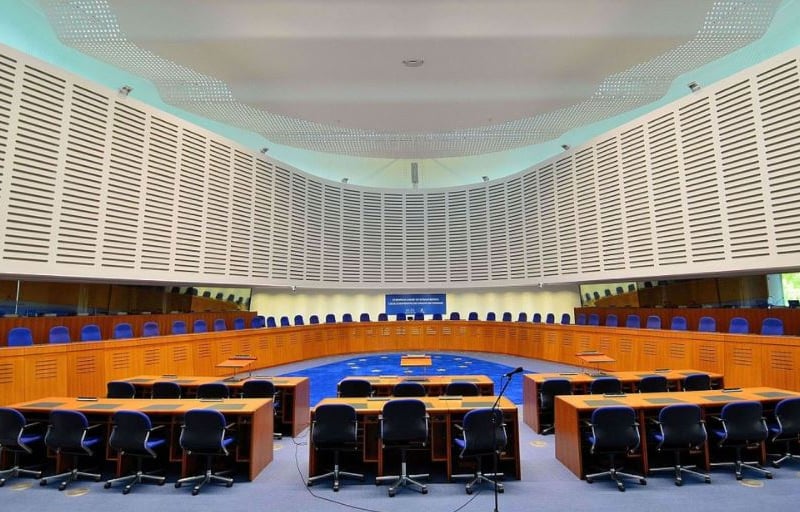
MARSEILLE, France (CN) — The European Court of Human Rights decided on Thursday that journalists’ and lawyers’ challenges to French intelligence-gathering techniques were inadmissible, ruling that they should have exhausted other avenues before bringing their cases.
Association confraternelle de la Presse Judiciaire and Others v. France combined 14 plaintiffs — including journalists for Le Monde and other newspapers, lawyers and professional associations — arguing that France’s spy services violated the right to respect for private life and freedom of expression.
“The court found that, at the time the applicants lodged their applications, an effective remedy had been available to them before the Conseil d’État under Article L. 841-1 of the Domestic Security Code,” the court said in a news release. “Furthermore, the applicants had not established the existence of any special circumstances exempting them from the obligation to make use of that remedy.”
The applicants lodged a complaint in 2015 under Article L. 833-4 of the Domestic Security Code, asking the court to “verify whether any intelligence-gathering techniques [were being] or [had] been unlawfully used to monitor them.”
Spain’s María Elósegui was the president of the panel of seven judges presiding over the case.
The ruling comes at a moment of heightened concern for freedom of the press in France, and in particular, the protection of sources’ anonymity.
On Wednesday, dozens of watchdogs, media outlets and independent journalists released an open letter to the government recommending changes in the law protecting the confidentiality of sources, which was introduced in 2010. The collection says the law doesn’t go far enough.
“Something quite important is happening in France at the moment, which is that we’re seeing more and more often, unfortunately, journalists who are arrested, summoned, spied on by the authorities,” Laurent Richard, the founder of Forbidden Stories — which continues the investigations of other reporters who have been silenced — told Courthouse News. “This is in total violation of a principle that is essential for any journalist: It is the principle of the confidentiality of sources and the protection of our sources.”
Richard explained that the issue also threatens the safety of sources and the public’s right to information.
“There is no journalism without the secrecy of sources, the ability to protect those who speak to us, those who inform us, those who give us documents in the name of the general interest,” Richard said. “And if this principle of confidentiality is violated, is broken, it’s a threat to our system and our democratic balance, of which freedom of the press is a fundamental pillar.”
In recent years, numerous reporters have been investigated, surveilled and detained as authorities seek to obtain their sources.
Ariane Lavrilleux, an investigative journalist for Disclose, is the most public face of the issue.
In 2021, Disclose released a series of articles on a French counter-intelligence operation called “Sirli.” Disclose said that hundreds of documents reveal Egypt used information from this operation to kill smugglers along Libya’s border.
The documents also suggested that France was complicit in almost 20 of the bombings that led to the deaths of hundreds of civilians.
Two years later, Lavrilleux was detained.
The DGSI — France’s domestic intelligence agency that fights terrorism, espionage and cyber-attacks — searched Lavrilleux’s home, and she was brought into custody for 39 hours, sparking protests in Paris.
Prior to her arrest, Disclose said that Lavrilleux “was physically monitored during business and private trips; her mobile phone was geolocated in real time; her bank accounts were scrutinized, as were her train ticket purchases and her private communications on social media X.”
On Friday, Lavrilleux will go to court in Paris. She faces up to five years in prison and a 75,000 euro ($77,000) if convicted.
Alexandre Buisine, the secretary general of the National Journalist Union known as SNJ, told Courthouse News: “We see the perversity where a journalist like Ariane Lavrilleux will be questioned by an investigating judge on Friday … because she effectively revealed the diversion of French military resources in Egypt to target opponents of the Egyptian regime.”
Buisine questioned the wisdom of spending time and resources surveilling journalists.
“Her access to the investigation file showed her that she had been monitored by the anti-terrorism unit, so we can still ask ourselves the question — does the anti-terrorism unit have nothing better to do in France than to monitor the journalist, his comings and goings, his bank accounts, his activity?” he said.
In December, a dozen police officers crashed a meeting between journalist Philippe Miller and a source. The authorities seized his notebook, phone and computer, and detained him for 48 hours — the maximum allowed in France without arrest.
“The government is using a kind of double-talk that poses a huge problem,” Richard said. “On the one hand, it says that it’s in favor of freedom of the press, it celebrates freedom of the press … and at the same time it spies on and follows a French journalist when she is about to reveal the secrets of the Ministry of Defense.”
Increasing restrictions on press freedom extend beyond putting pressure on journalists to reveal their sources.
In 2020, the French Parliament tried to introduce an article within its new Global Security Law that would have banned filming and photographing police officers. Critics argued that the initiative would help cover up police abuses and restrict journalists from doing their jobs. The proposal was eventually dropped.
In 2015, France adopted the controversial Intelligence Bill that made it easier for the government to surveil journalists without detection and with less oversight. The law sparked a response from Amnesty International.
“The surveillance measures authorized by this law are wildly out of proportion,” Gauri van Gulik, Amnesty’s former deputy director for Europe and Central Asia, said in a statement. “Large swaths of France’s population could soon find themselves under surveillance on obscure grounds and without prior judicial approval.”
 Follow @lilyradz
Subscribe to our free newsletters
Our weekly newsletter Closing Arguments offers the latest about ongoing trials, major litigation and rulings in courthouses around the U.S. and the world, while the monthly Under the Lights dishes the legal dirt from Hollywood, sports, Big Tech and the arts.