
 Search Articles


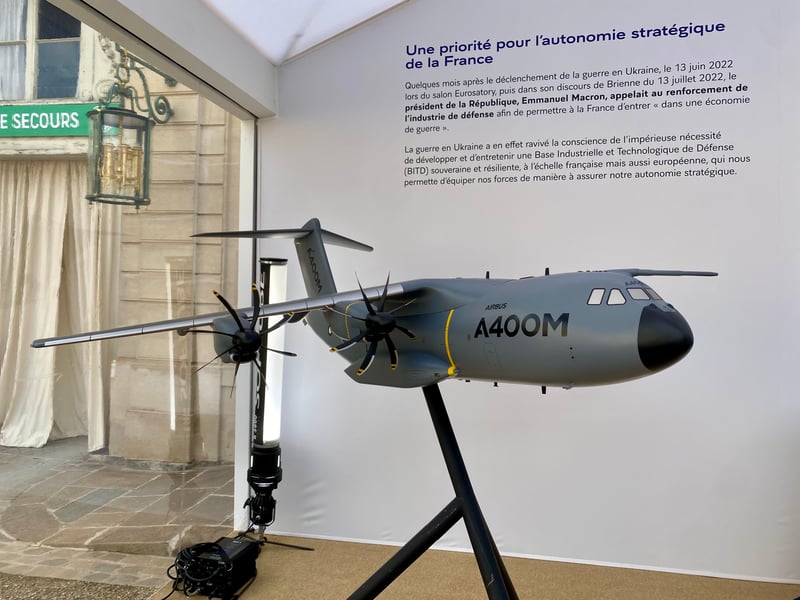
PARIS (CN) — On Saturday morning in the courtyard of the Élysee Palace, where French President Emmanuel Macron usually greets the world’s most powerful heads of state, members of the public snapped selfies and gazed at models of explosive artillery munitions and an Airbusmilitary transport plane.
“The war in Ukraine has indeed revived awareness of the urgent need to develop and maintain a sovereign and resilient Defense Industrial and Technological Base (DITB),” a sign over the models read. “Not only at the French level, but also at the European level, enabling us to equip our forces in a way that ensures our strategic autonomy.”
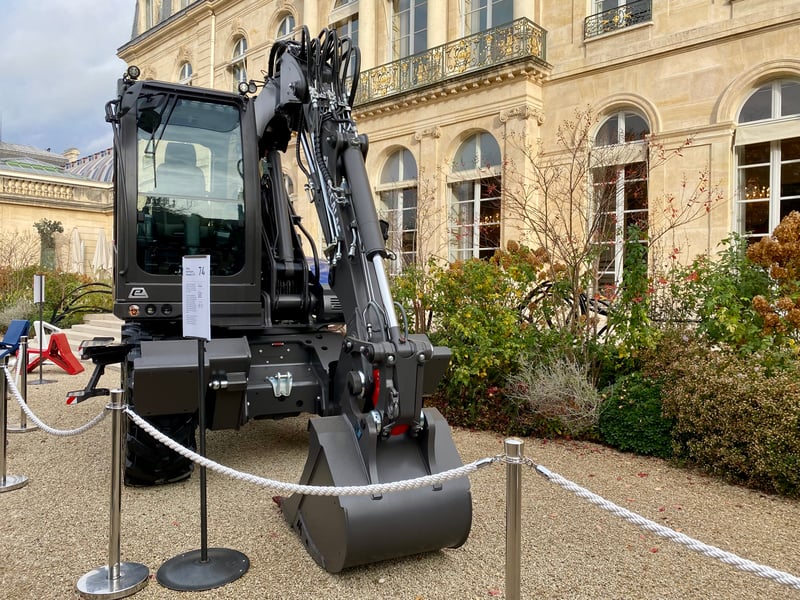
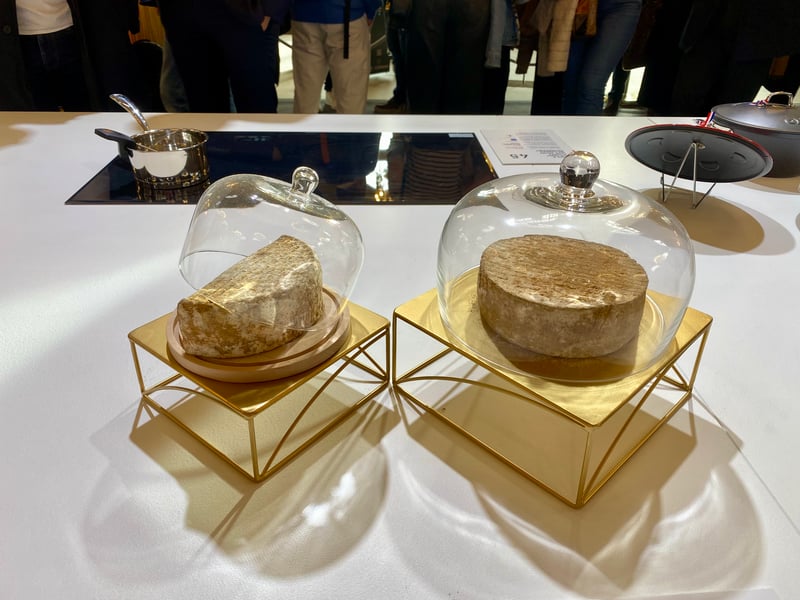
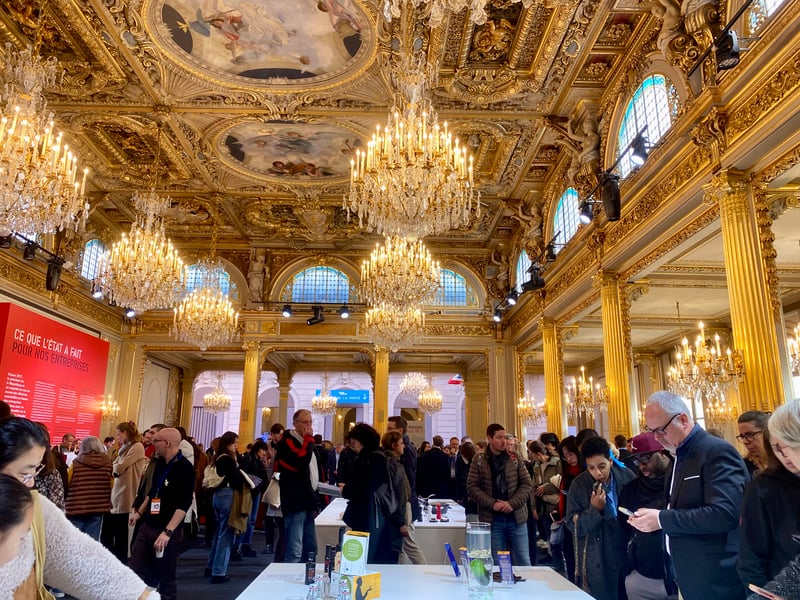
The event is part of the fifth edition of “The Great Exhibition of Made in France,” a showcase of domestically produced goods launched during Macron’s second term. Kombucha, cookies and cheese sit under glass cases on white-clothed tables, but defense and industrial items dominate the display, including an electric tractor, a robot firefighter and an ammunition assembly line.
As Macron places greater emphasis on French and European sovereignty, analysts say the exhibition also spotlights France’s independent manufacturing base and helps divert attention from the country’s persistent economic troubles.
“Promoting one’s own achievements and stimulating investment in the high-tech sector is an element of economic patriotism, a conscious attitude of supporting the national economy by choosing domestic products, services, and companies, and pursuing policies that favor the development of local enterprises,” Tomasz Mlynarski, a political scientist and Poland’s former ambassador to France, said. “At the same time, [The Great Exhibition of Made in France] fits very well into the broader concept of European industrial autonomy, even though it is a national event.”
Catherine Hoeffler, a professor and director of the Sidjanski Center for European Studies at the Global Studies Institute, University of Geneva, said Macron has made a major push to draw large industries to France, especially in the tech sector.
“So it’s about showing to the outside world that ‘Made in France’ is doing well, that there’s a political will to support the relocation of certain industries or activities in order to strengthen the security of supply chains—security that we’ve lacked in some areas recently,” she explained. “And this is also happening, of course, in a context of political crisis, with a very significant debt, which weakens France’s economic image as a country that is economically secure and prosperous.”
The concept of European strategic autonomy is not new; it’s rooted in a legacy of French political economy that goes back centuries, Hoeffler said. But certain more recent events — like the pandemic and the Russia-Ukraine war — have added fuel to the narrative.
“It already started with 2016 after the first crisis with Russia and Ukraine, when there was a global strategy made by the EU regarding their foreign policy, new external relations… and France pushed for putting this concept of strategic autonomy into the strategy,” Maxime Lefebvre, diplomat and professor of international relations at the ESCP business school, said. “And in the context of the pandemic, the European Union has said ‘we must become more autonomous in many economic sectors where we are too dependent — the example was health, because we were very dependent on masks, vaccines, these kinds of things.”
France also believes Europe remains too dependent on the U.S., Mlynarski explained, and that developing greater combat capabilities aligns with the Trump administration’s expectation that Europeans take greater responsibility for their security.
“France is trying to take advantage of the current uncertainty in transatlantic relations (during Donald Trump’s presidency) to put more pressure on discussions about the need to increase Europe’s autonomy from the United States,” Mlynarski said. “The slogan of ‘strategic autonomy’ adopted by French diplomacy serves to promote the vision of the EU as a power capable of conducting global politics on an equal footing with the United States, China, and Russia.”
The competition extends beyond politics into trade relations; Zoltan Feher, a non-resident fellow at the Atlantic Council who just published a report on France’s policy on China, described how France is trying to maintain its relationship with its “economic competitor and systemic rival.”
“China is actively threatening some French industries like the electric vehicle industry, but China has also been threatening some of the food production industries, like with the punishing tariffs on brandies… so France is trying to strike a balance between keeping its trade relations open and active with China and also trying to balance that relationship, which has become heavily imbalanced in the past decade,” he explained. “But I think what the exposition does is to show that France’s products are unique — France has some unique niche advantages in world trade.”
 Follow @lilyradz
Subscribe to our free newsletters
Our weekly newsletter Closing Arguments offers the latest about ongoing trials, major litigation and rulings in courthouses around the U.S. and the world, while the monthly Under the Lights dishes the legal dirt from Hollywood, sports, Big Tech and the arts.