
 Search Articles


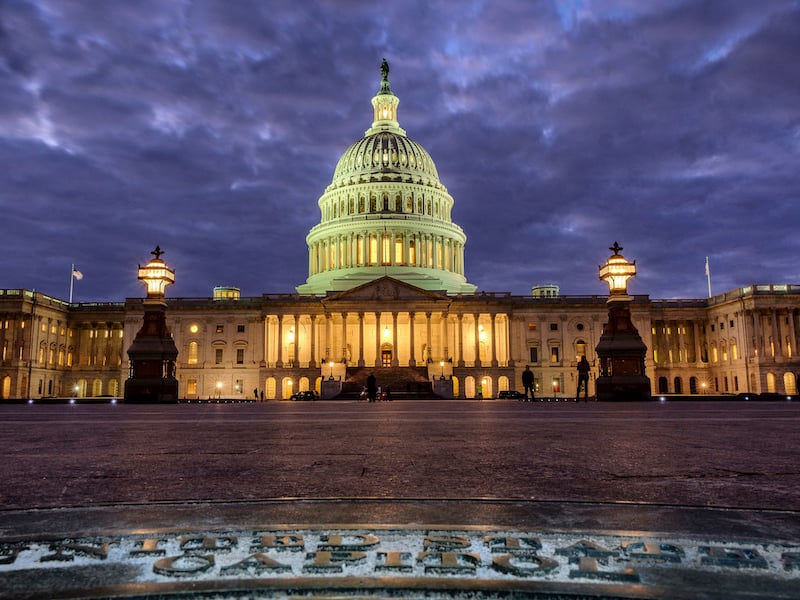
WASHINGTON (CN) — As lawmakers stare down what is sure to be a contentious budget debate following Congress’ annual August recess, some House Republicans vowed to oppose a fiscal contingency long used to stave off a government shutdown.
The Freedom Caucus, a voting block of conservative Republican lawmakers chaired by Pennsylvania Congressman Scott Perry and Ohio Representative Jim Jordan, said that they would oppose a stopgap measure “that continues Democrats’ bloated Covid-era spending and simultaneously fails to force the Biden Administration to follow the law and fulfill its most basic responsibilities.”
At issue are the dozen appropriations bills that will fund the federal government for 2024, which Congress will only have a few weeks to pass once legislators return to Washington. The Senate is expected to convene again Sept. 1, but the House won’t be back in session until Sept. 12. The 2023 fiscal year ends Sept. 30.
It wouldn’t be the first time lawmakers have flirted with the fiscal deadline, which, if crossed, would trigger a government shutdown. To avert such an outcome, Congress has traditionally used a short-term budget patch known as a continuing resolution. If passed as a clean bill — without amendments — the stopgap spending legislation temporarily keeps federal funding at existing levels. Congress can employ more than one continuing resolution while it negotiates a permanent budget — since 2010, nearly 50 such bills have been enacted.
Now, however, amid complaints from Congress’ right flank about excessive spending, the group of conservative Republicans are pouring cold water on the idea of passing such a clean continuing resolution before the fiscal year elapses.
“As Congress continues to work to pass appropriations bills, we must rein in the reckless inflationary spending, and the out-of-control federal bureaucracy it funds,” wrote members of the House Freedom Caucus in a press release Monday.
Supporting a clean budget patch would affirm current spending levels, which the caucus said were “grossly increased” by the 2023 omnibus spending bill passed in December.
The conservative voting bloc laid out its demands for any proposed stopgap spending legislation, including a provision that would enact border security legislation passed by the House in May and language that does away with what they called “cancerous woke policies” in the Pentagon — seemingly referring to a Department of Defense policy that reimburses service members who travel for abortions.
The Freedom Caucus will also fight “any blank check” for Ukraine’s defense against the Russian invasion proposed as part of a continuing resolution, they said.
“[W]e will oppose any attempt by Washington to revert to its old playbook of using a series of short-term funding extensions designed to push Congress up against a December deadline,” the caucus said, “and we will use every procedural tool necessary to prevent that outcome.”
The Freedom Caucus has said that Congress should pare away the federal budget, which they see as inflated by additional spending spurred by the Covid-19 pandemic. The voting bloc wants to see the federal top line returned to 2022 levels, or about $1.5 trillion, “without the use of gimmicks or reallocated recissions,” they said Monday.
Connecticut Representative Rosa DeLauro, the Democratic ranking member of the House Committee on Appropriations, did not immediately return a request for comment on the Freedom Caucus’ demands. DeLauro has previously suggested that intraparty squabbling among Republicans could stall negotiations on the 12 appropriations bills awaiting a vote in Congress.
The Freedom Caucus has already proven to be a thorn in the side of congressional Democrats and even Republican leadership when it comes to fiscal issues. In May, the voting bloc attempted to use its leverage over House Speaker Kevin McCarthy to push him to the right on negotiations over the federal debt ceiling. After McCarthy and President Biden reached an eleventh-hour compromise on the government’s borrowing limit, some members of the Freedom Caucus who were unhappy with the terms of the deal retaliated against the speaker on the House floor in June, blocking votes in the lower chamber for days afterward.
The Freedom Caucus’ vow to oppose a clean continuing resolution is sure to stoke fears of a government shutdown on Capitol Hill. If Congress fails to approve the 2024 budget or pass a stopgap spending bill by Sept. 30, the resulting shutdown would put thousands of non-essential federal workers on furlough and bottleneck government services.
 Follow @BenjaminSWeiss
Subscribe to our free newsletters
Our weekly newsletter Closing Arguments offers the latest about ongoing trials, major litigation and rulings in courthouses around the U.S. and the world, while the monthly Under the Lights dishes the legal dirt from Hollywood, sports, Big Tech and the arts.