
 Search Articles


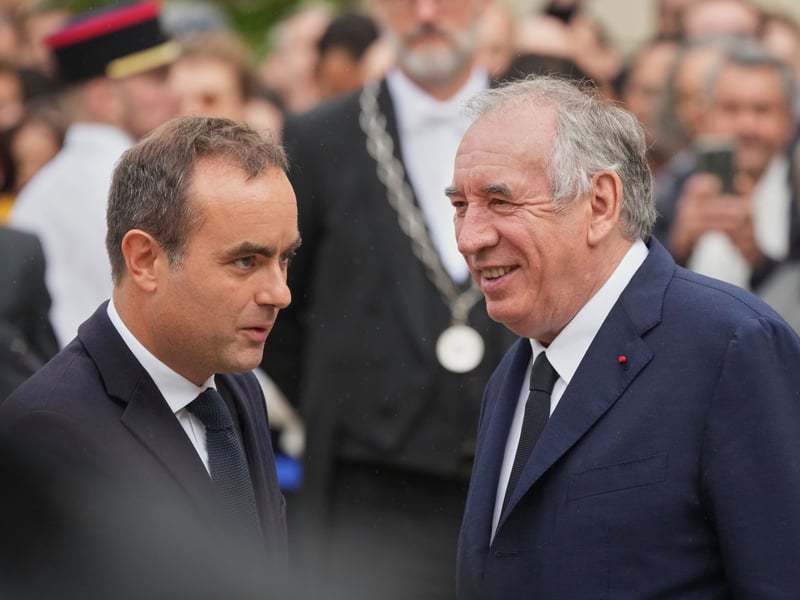
MARSEILLE, France (CN) — French President Emmanuel Macron is continuing to push his domestic agenda and fight to bring down the nation’s burgeoning deficit despite increasing calls to appoint a left-wing prime minister, dissolve the government or resign.
On Wednesday, he appointedSébastien Lecornu — a young, right-wing loyalist — as the country’s third prime minister of the year, and the seventh since Macron’s first term in 2017. The move sparked fury on both extremes of the political spectrum, and two days in, Lecornu is already fending off numerous threats of censure.
Manuel Bompard, one of the loudest voices of the far-left France Unbowed party, said the group will file a motion of censure “on the first day of the parliamentary session in the National Assembly” on Oct. 1 if the new prime minister doesn’t call for a confidence vote before then. Losing such a vote is what brought down his predecessor, François Bayrou, on Monday.
Bayrou pleaded with Parliament to accept his suggestions to trim the budget deficit, including axing two public holidays, to no avail.
In parallel, Jordan Bardella — the leader of the extreme-right National Rally, known as RN— said that while the party won’t necessarily pursue an immediate takedown, it will also put forward a motion of censure if Lecornu doesn’t break from former policies, particularly on immigration.
In a tripolar Parliament where no group holds an absolute majority, the name of the game will be compromise. Since he took office on Wednesday, Lecornu has been in a rotation of meetings with leaders across the board.
“The problem now is to see if he will have more room for maneuver, the possibility of reaching an agreement with other parties than the two previous heads of government,” Gérard Grunberg, a political research director at the French National Center for Scientific Research, told Courthouse News.
“He was probably one of the best possible choices in a rather small space … . He’s someone who has proven himself, who is a true politician, who has had a political career, who is close to the president of the republic.”
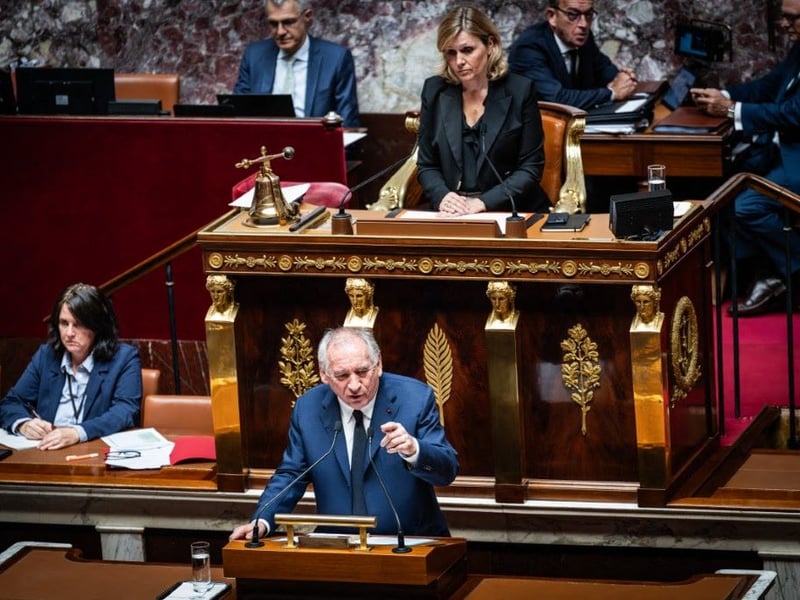
Lecornu was born in 1986 in Eaubonne, a commune with roughly 26,000 residents about an hour north of Paris. Throughout his teens, he considered joining the army or becoming a monk. He started working as an activist for the Gaullist conservative Union for a Popular Movement party, known as UMP, when he was 16 years old.
He worked his way up the ranks of right-wing politics and the army — he has been a colonel in the gendarmerie since 2017, when Macron began his first term and Lecornu joined the president’s cabinet. He’s stayed put, rotating through various ministerial roles to become the government’s longest-serving sitting minister.
“Macron continues to appoint people who are close to him, so Lecornu is someone who comes from the right, whom Macron now knows well, who has been in government since 2017,” Olivier Costa, a political scientist and director at the Center for Political Research at Sciences Po, told Courthouse News. “He’s the only minister who has remained in the government since Emmanuel Macron’s arrival, so he appointed him because he has confidence in him and to pursue his political line.”
But at a time when Macron’s popularity is at a record low, the appointment has drawn sharp criticism. The left is furious that Macron continues to appoint right-wingers for the role, even though the left-wing coalition won the most seats in the 2024 snap legislative elections. There’s more general concern that it was a choice of personal favoritism and a reward for Lecornu’s loyalty.
Former Prime Minister Dominique de Villepin told France Info on Thursday that Macron “must show less arrogance and listen more to the French people” before invoking the close personal relationship between him and Lecornu.
“We’re not going to forever play the role of little boys who amuse the president, a glass of whisky in hand, telling stories, or mocking this or that political figure," he said, adding “that’s what they’ve indulged in, both of them, over the years.”
“He shouldn’t be Mr. President’s good lapdog,” de Villepin said.
Marine Tondelier from the Greens party told France Bleu on Thursday that if Macron continues to appoint prime ministers from his inner circle, then “the next prime minister will be Brigitte Macron.”
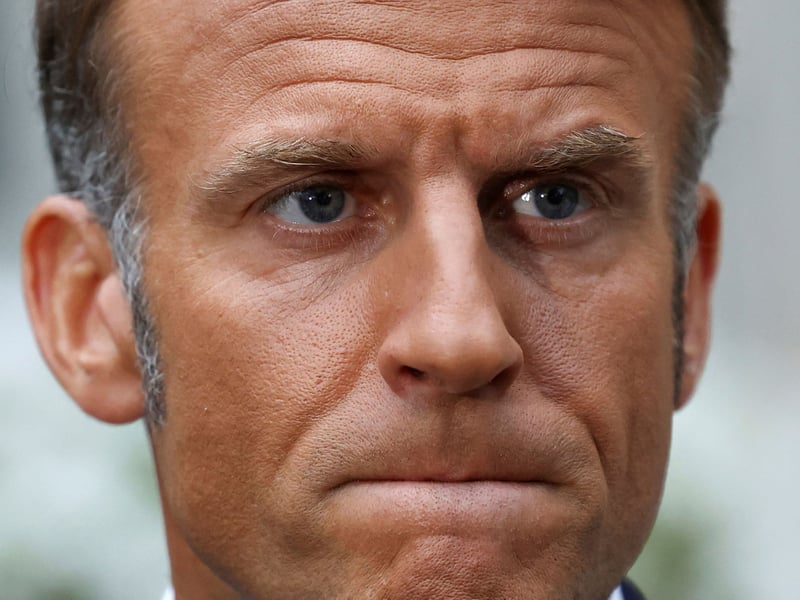
For years, Macron has been criticized for being out of touch with the French people, and going against the weight of popular opinion. But experts caution that if Lecornu isn’t ready to make serious concessions, his tenure will likely be short.
“The message he’s sending with Lecornu is, ‘I want to continue with the same policy over and over again,’” Arnaud Mercier, a political scientist and professor in communication sciences at the Panthéon-Assas University Paris II, told Courthouse News.
“Macron continues to refuse to unravel anything he has created since 2017 … If he wants to protect himself from a return to the polls, he really has an interest in giving Lecornu the autonomy to make concessions that allow for benevolent neutrality from part of the opposition.”
It’s unclear what would happen if Lecornu can’t pull that off. But voices calling for new legislative elections, Macron’s resignation and even a complete overhaul of the current political regime are growing louder.
“We’re in a fairly major political crisis, and it’s not at all certain that we’ll be able to resolve it without a new crisis of new legislative elections, meaning a dissolution of the Assembly if a new motion of censure is passed,” Grunberg said.
But he argues that we might already be in a new political regime.
“A Sixth Republic doesn’t mean anything, because in a way, we’re almost already in it to the extent that it’s now the political parties in Parliament who will form the government,” Grunberg said. “It’s no longer just the president who will choose, he’s obliged to negotiate with the parties — so we’re closer to a parliamentary system than a presidential one.”
Courthouse News reporter Lily Radziemski is based in France.
 Follow @lilyradz
Subscribe to our free newsletters
Our weekly newsletter Closing Arguments offers the latest about ongoing trials, major litigation and rulings in courthouses around the U.S. and the world, while the monthly Under the Lights dishes the legal dirt from Hollywood, sports, Big Tech and the arts.