
 Search Articles


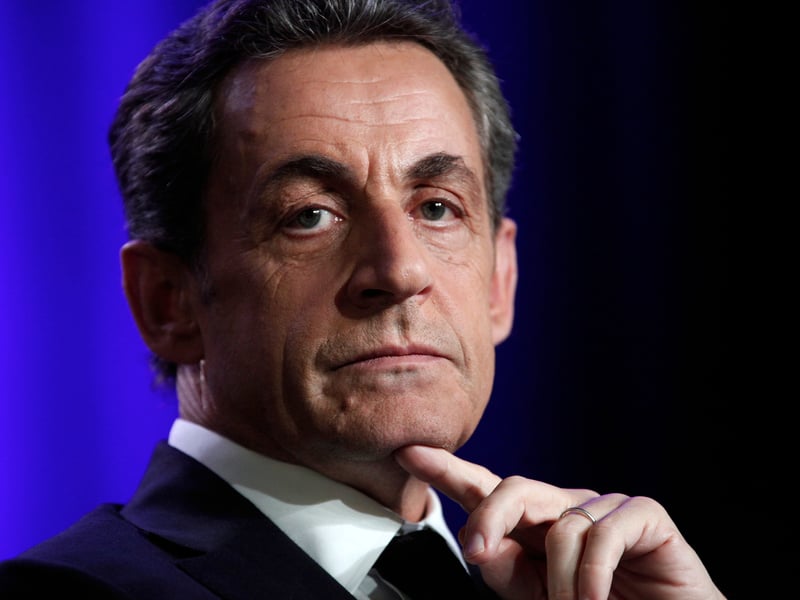
PARIS (CN) — France’s highest court rejected former French President Nicolas Sarkozy’s appeal Wednesday over an illegal campaign financing conviction surrounding his unsuccessful presidential run in 2012.
Sarkozy was sentenced to a one-year prison term, with six months suspended. He is expected to serve out the sentence wearing an electronic monitoring bracelet or under house arrest, to be confirmed in the coming weeks.
The case had already been brought to the Paris appeals court, which upheld the conviction in 2024. Sarkozy then brought it to the Cour de Cassation, which examined whether the judicial procedure respected the law, rather than the substance, of the case.
“The Court of Cassation upheld the Court of Appeal’s decision that convicted a presidential candidate, his campaign manager, and two directors of the political party that supported him for illegal campaign financing,” the court said in a news release Wednesday. “The candidate, his campaign manager and the two directors of the political party that supported the candidate are therefore definitively convicted.”
The case has become known as the “Bygmalion” affair, in reference to the former events management company.
In France, presidential candidates cannot spend more than 22.5 million euros, or roughly $26 million, on their campaigns. The court found that Sarkozy benefited from almost double that amount through a “double billing” fake invoice scheme.
Throughout Sarkozy’s run for reelection, Bygmalion organized frequent lavish rallies and parties. Under French law, these costs should count as part of the campaign budget; instead, they were billed to Sarkozy’s party, the Union for a Popular Movement, now known as Les Républicains. Investigators also found invoices for events that never took place.
Sarkozy has fervently denied any knowledge about the scheme, and his signature does not appear on any of the invoices. However, the Cour de Cassation said “the candidate personally gave his consent to his staff to incur campaign expenses on his behalf, even through he knew that these expenses would lead to exceeding the limit set by law,” which was enough to uphold the conviction.
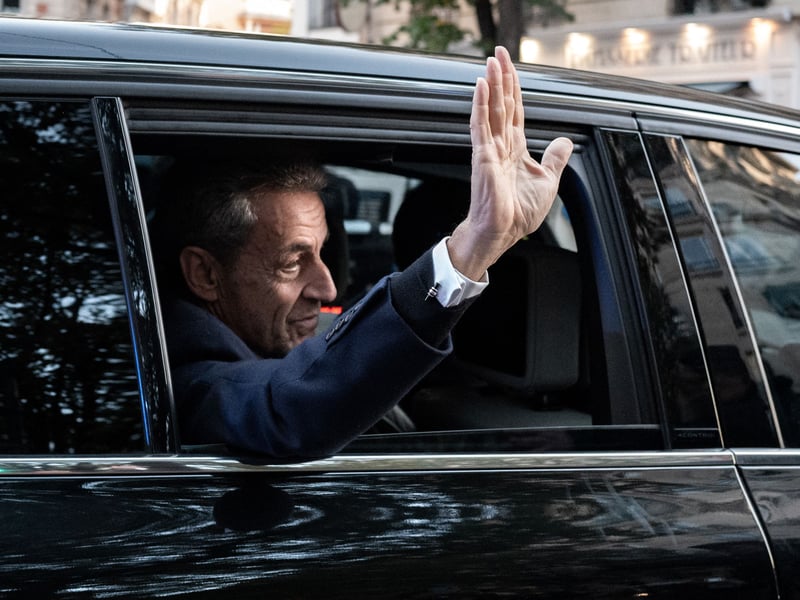
The appeal has landed at a tumultuous judicial moment for Sarkozy, who recently became the first former president to serve time behind bars over a separate campaign financing case. The three weeks he spent in La Santé prison was controversial. Many people were pleased to see a president isn’t above the law, others see Sarkozy’s legal battles as political vengeance.
Marine Le Pen, the extreme-right leader of the National Rally party, has voiced outrage over Sarkozy’s sentencing. She is currently navigating her own legal troubles, and is set to appeal an embezzlement conviction in January 2026.
“Of course, parties like the National Rally and Sarkozy’s supporters will say it’s a witch hunt or the judges, but that’s political combat,” Ludovic Renard, a political scientist at Sciences Po Bordeaux, said. “Deep down, society does not accept arbitrary behavior.”
Olivier Costa, a political scientist and director at the Center for Political Research at Sciences Po, believes Sarkozy’s legal troubles could lay the foundation for him to make a deal with the extreme-right, should they continue to gain more power.
“This rhetoric is very popular with the National Rally because they can say, ‘Look, Marine Le Pen was convicted, but it’s just like Sarkozy. … It’s only judicial persecution and biased media against the president because they don’t like his ideas,’” he said. “So all of this is a conspiracy."
The National Rally is making unprecedented gains in Parliament. A recent poll found if presidential elections were held today, Le Pen’s protegéeJordan Bardella would win. The election is now set for April 2027. If the party secures an absolute majority in Parliament, Costa argues, it could try to enact an amnesty law.
“The National Rally has every interest in doing this because if the law applies to Sarkozy, Marine Le Pen, and maybe others; it avoids showing that it’s just to save Marine Le Pen,” he said. “Moreover, Jordan Bardella needs Sarkozy’s political support to convince the traditional right to vote for him.”

Michel Maffesoli, a prominent sociologist who wrote the book “Sarkologies” about the former French president, has noticed a shift in how people view the justice system.
“I think that more and more — and we see this in a lot of journalistic analyses — there is a growing disconnect between the justice system and the people, and that the people increasingly no longer trust [it],” he said. “And we have seen recently, in cases involving murders, terrorist attacks, rapes, how the justice system has been, to put it simply: lenient.”
To Maffesoli, this falls into a broader phenomenon of the “failure of the elites,” whom he defines as those who are supposed to represent the people. In his view, they’re becoming increasingly disconnected from reality.
“I believe there will be populist uprisings,” he said. “The Yellow Vests were one expression, and we may see other forms of revolt or insurrection against the elites, particularly against the justice system and against politics.”
 Follow @lilyradz
Subscribe to our free newsletters
Our weekly newsletter Closing Arguments offers the latest about ongoing trials, major litigation and rulings in courthouses around the U.S. and the world, while the monthly Under the Lights dishes the legal dirt from Hollywood, sports, Big Tech and the arts.