
 Search Articles


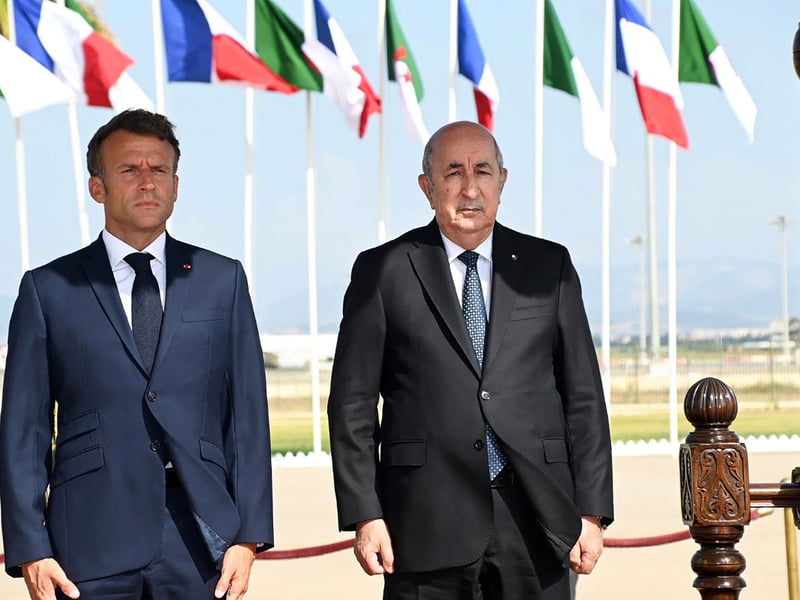
MARSEILLE, France (CN) — France is escalating its rhetoric toward Algeria in a snowballing diplomatic crisis after what President Emmanuel Macron labeled an Islamist attack pushed the immigration debate back onto center stage.
Some experts say France’s strongman stance in the deepening feud is driven by the centrist government’s attempt to appease the extreme-right anti-immigration National Rally. The RN, headed by Marine Le Pen, is experiencing unprecedented popularity and influence.
Saturday, an Algerian man fatally stabbed a passerby and injured police officers and others near a market in the eastern city of Mulhouse. A local prosecutor said the unnamed 37-year-old suspect was on a terrorist watch list and under legal obligation to leave French territory. France had earlier tried to deport him, but Algeria refused the request.
On Friday, Macron told journalists during a visit to the Portuguese city of Porto, “We won’t make progress if there’s no work, we can’t talk to each other through the press, that’s ridiculous, it never works like that.”
“(Relations) shouldn’t be subject to political games,” he said.
He said he hoped “millions of French people born to Algerian parents” would not be “caught up in these debates.”
After the stabbing incident, French Prime Minister François Bayrou held emergency meetings in Paris.
“The drama in Mulhouse was possible because this Algerian citizen was under orders to leave the country and was presented for repatriation 14 times … and each time refused,” Bayrou told a news conference.
The prime minister gave the Algerian government four to six weeks to accept the repatriation of people that France wants out. If Algeria doesn’t meet this deadline, Bayrou vowed to review longstanding bilateral agreements on Algerian residency in France.
“[Bayrou] is fragile in the face of a conservative right, in the face of the extreme right, which have become very important — if he’s still in government, it’s thanks to their votes,” Hasni Abidi, director of the Study and Research Center for the Arab and Mediterranean World, told Courthouse News. “And the question of Algeria has always been an issue of French national politics.”
The relationship between the two nations has always been complex — Algeria is a former colony of France. But Abidi says now, tensions are unprecedented.
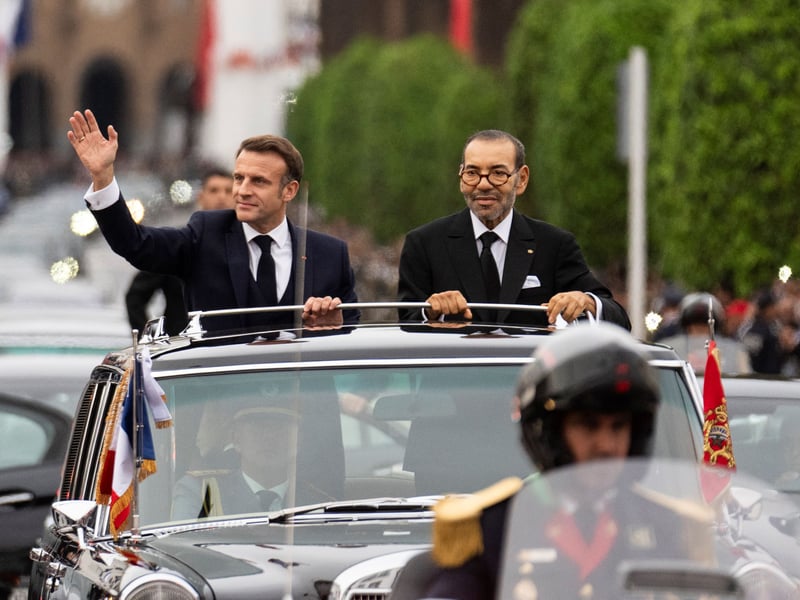
The catalyst was in July 2024, when Macron sided with Morocco on the issue of the disputed Western Sahara territory. This was a first for any French president, and prompted Algeria to withdrawal its ambassador to Paris. Tensions continued to increase in the following months.
Gérald Darmanin, France’s right-wing minister of justice, is also adding fuel to the fire.
“Mr. Darmanin speaks of a showdown, of striking blows, of sanctions — never, never before have we heard these words,” Abidi said. “So we have new terms, a new unusual language in the relationship between these two countries.”'
Algeria’s diplomatic approach suggests that it’s in a more comfortable position than France on the dispute. While French ministers are outspokenly sounding alarm bells, the Algerian Ministry of Foreign Affairs responded with a straightforward news release rejecting France’s “threats and ultimatums,” and said it will conduct itself with calm, moderation and restraint.
“Above all, there are French companies, hundreds of companies that operate on Algerian soil, and the volume of trade has reached about $12 billion,” Abidi said. “So that is why Algeria is ultimately in a much more comfortable position in this crisis than France.”
But the threats might not be so much aimed at Algeria as they are crafted to appease France’s extreme right, Rachid Tlemçani, a researcher at the University of Algiers specializing in international relations and regional security, told Courthouse News.
“Algeria, from colonialization until today, has always been a question of domestic politics,” Tlemçani said. “Each government has made concessions to the extreme-right RN by nibbling away at the migration agreements — for the RN, the issue of national security is deeply linked to immigration, particularly to the Muslim community, led by the Algerians.”
Bayrou needs the right’s support; he has been hanging on by a thread since becoming prime minister in December. He has narrowly avoided six motions of censure. Although the RN is France’s third largest governing bloc, if they decide to join a motion of censure — or issue their own, like when they successfully toppled Bayrou’s predecessor — they could cause France’s government to collapse.
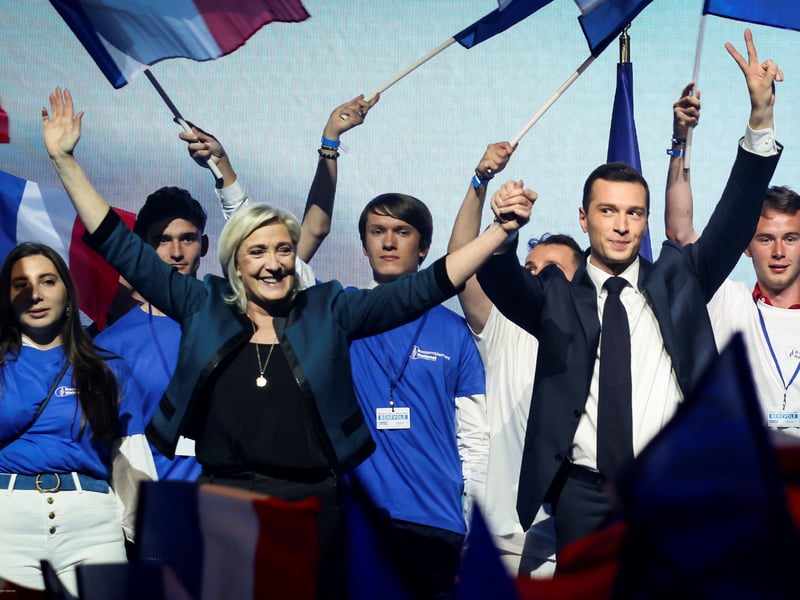
The RN has never carried so much weight in the French political sphere, which is largely the result of a successful rebranding campaign by Le Pen. In the past few years, she has tried to detach the party from the legacy of her late father, Jean-Marie Le Pen, whose xenophobic and antisemitic rhetoric landed him the nickname of the “Devil of the Republic.”
The campaign has obviously worked. The RN won an unprecedented number of seats in the European Elections, and looked primed to win France’s legislative elections in July after a strong showing in the first round. The left eventually united against the right-wing RN, taking more seats. But much of the recent immigration discourse seems designed to appease the RN.
“We have the impression that President Macron is completely overwhelmed by the right and the extreme right,” Abidi said. “So ultimately, the RN has its positions applied without it being in power. … It’s in a position of triumph today because its ideas are at work.”
 Follow @lilyradz
Subscribe to our free newsletters
Our weekly newsletter Closing Arguments offers the latest about ongoing trials, major litigation and rulings in courthouses around the U.S. and the world, while the monthly Under the Lights dishes the legal dirt from Hollywood, sports, Big Tech and the arts.