
 Search Articles


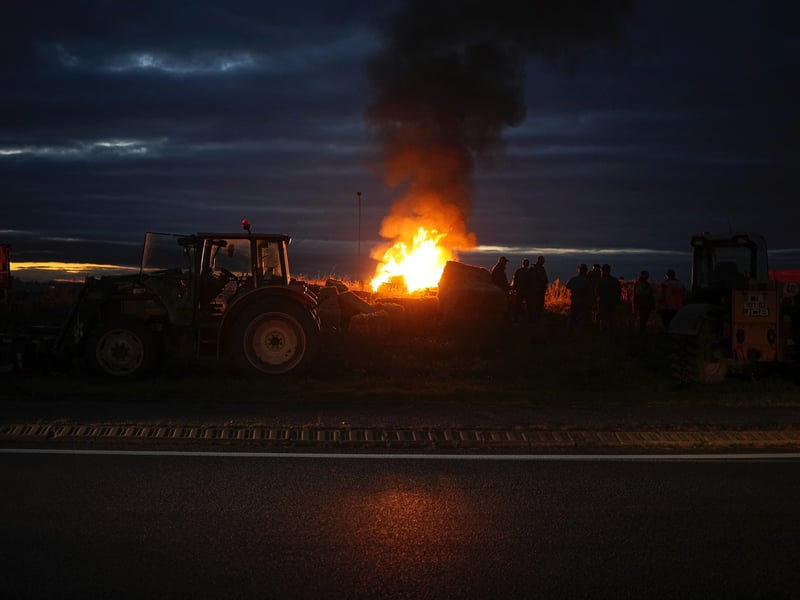
MARSEILLE, France (CN) — As the European Union and South American trading bloc Mercosur move closer to inking a landmark free-trade deal, France is spearheading a fight to foil 25 years of negotiations amid concerns over agriculture, the environment and European sovereignty.
French politicians and farmers have been protesting the deal for weeks, dumping manure in front of a public office, blocking highways across the country, and storming through city centers with tractors. Unions are promising chaos.
The movement has dominated headlines and united politicians across the spectrum, who voted against the deal in Parliament Tuesday.
Poland officially followed suit on Tuesday. Experts say Austria, Belgium, Ireland, Italy and the Netherlands might not be far behind. An agreement is possible at a summit in Uruguay in early December, but if more countries rally against confirmation, the deal risks falling apart.
Food production is the crux of the issue.
“They’re afraid of competition from Mercosur farmers; the farms in Brazil are farms like in the United States,” Olivier Costa, a director at the Center for Political Research at Sciences Po, told Courthouse News. “They’re gigantic, industrial and European farmers — especially the small ones — are absolutely not capable of being competitive on the market for wheat, chicken, beef and so on.”
Mercosur’s full members include Brazil, Argentina, Uruguay and Paraguay.
“In France, agriculture is a very important subject — maybe not so much in the economy, but in political life, in the French imagination,” Costa said. “Politicians are very afraid of farmers mobilizing, and that’s always been the case.”
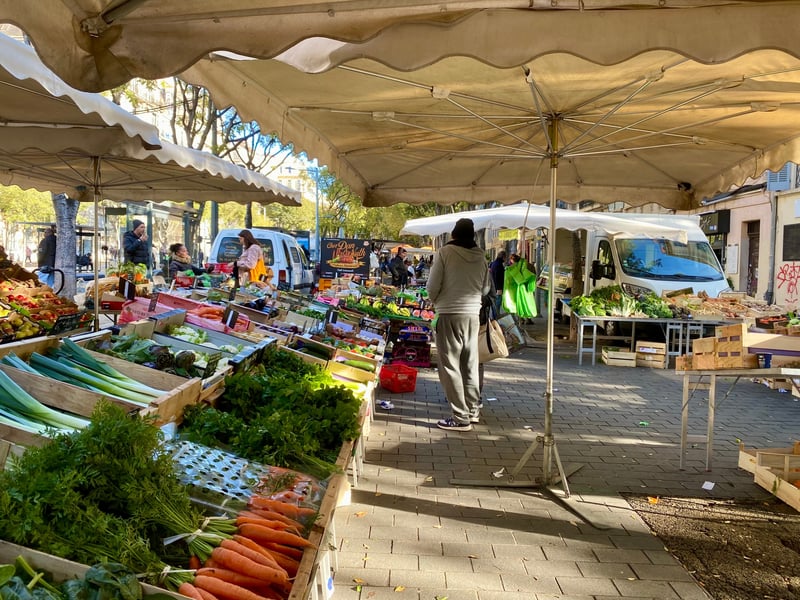
On Tuesday morning, Pascal Massu sold farm-raised rotisserie chickens and sausages at the Réformés Canebière market in central Marseille. He supports the protest movement, he told Courthouse News, as he chatted with a friend hanging around his stand.
“In France, we have the best products in the world and we’re destroying that,” Massu said. “That’s why people have to protest it and protect it.”
ThisEU and Mercosur have been negotiating since 1999. If the deal goes through, it would be the largest free-trade agreement ever concluded by either side, reaching 800 million people and accounting for roughly $44 billion of imports and exports.
The agreement would cut about 90% of the tariffs on products traded between the EU and Mercosur. The goods at stake include European cars, machinery, pharmaceuticals, industrial equipment and agri-food products. Proponents say the bloc would gain market access and lucrative business opportunities.
Under the deal, Mercosur could export an additional 99,000 tons of beef to the EU — the issue that hits closest to home for multiple reasons. French farmers, already under financial stress, are worried about facing even higher levels of competition, including from areas with less stringent laws.
While French farmers have to work within a stack of EU regulations — from the use of pesticides and hormones to environmental criteria and labor laws — it would be difficult to confirm whether Mercosur farms comply with the same standards, even if they agree to abide by them.
“The problem is that agri-food coming from Brazil or other countries doesn’t have the same verification at all, they don’t have controls like France, here we’re checked at all levels,” Massu said, his voice rising, his back against rotisserie chickens slowly turning in the oven. “In countries like that, they do what they want — they’re going to give them antibiotics, they’re going to make them fat with materials that are restricted in France.”
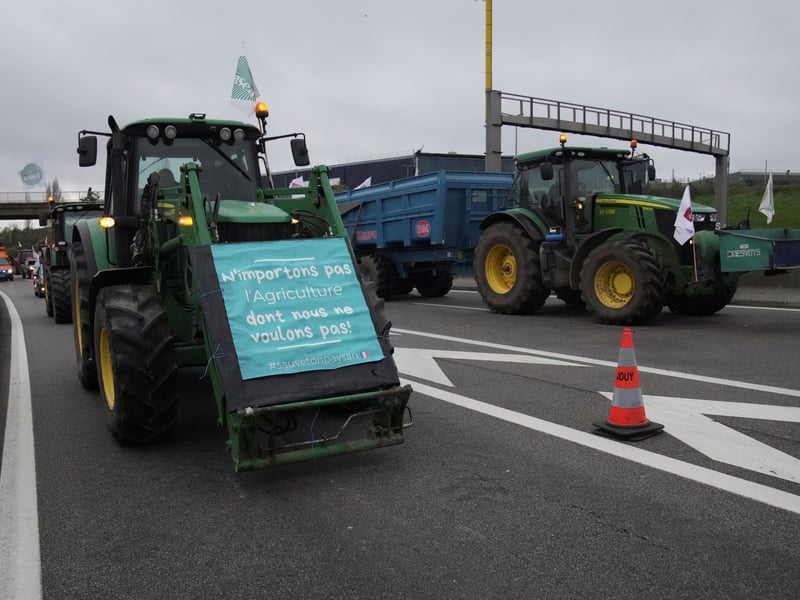
Costa argues the deal’s fragility is partly due to changing priorities after decades of negotiations, with issues like the rise in global protectionism, concern for social and environmental impact, and European sovereignty growing in importance.
French Agriculture Minister Annie Genevard has publicly opposed the EU-Mercosur deal, citing risks of deforestation and health concerns linked to hormone-treated meat. A European Commission audit flagged hormone use in Brazilian beef exports.
President Emmanuel Macron has also criticized the agreement unless South American producers meet EU standards.
Demonstrations aim to pressure the French government and EU officials to block or renegotiate the agreement.
“We know that if there’s a free trade agreement with Mercosur, it will encourage the production of palm oil or more beef, and it will continue to encourage the deforestation of the Amazon,” Costa said. “There’s also the problem of transporting all of this across oceans — there are people who are saying that we must stop buying things from the other side of the world, and that it doesn’t make sense.”
The Covid-19 pandemic and Russia’s war on Ukraine also exposed the importance of Europe becoming more autonomous.
“We discovered that the EU is very fragile, that it’s not capable of producing its own food, its own medicines, that we don’t know how to manufacture electronic chips, we don’t know how to manufacture vaccines — so today there are somewhat geostrategic reflections, which say the objective for the union is to be self-sufficient or sovereign,” Costa said. “Because if there’s another crisis, if the borders are closed again, we will risk finding ourselves in difficulty.”
Some of the EU’s biggest players are enthusiastic about the deal. Though Germany originally opposed the agreement — citing concerns on environmental protection and animal welfare — it now leads the pro-deal camp.
Costa says that since with cheap gas from Russia off limits and tariffs from the Trump administration looming, Germany now sees an opportunity to boost its automobile and industrial exports to South America.
German Chancellor Olaf Scholz has previously said, “The Mercosur agreement is groundbreaking for diversifying and strengthening the resilience of our economy." EU Commission president Ursula von der Leyen called the deal “an agreement of great economic and strategic importance.”
Mercosur’s full members have all expressed support for the deal, citing the positive impact it should have on trade and economic growth while diverting reliance away from China.
The EU’s executive European Commission negotiates terms for its 27 member states, which would each have to ratify a signed agreement, giving France and Poland a potential veto.
But the commission is considering splitting the deal into two parts — one solely on trade and economics, and the other on political cooperation initiatives — so it would only take a qualified majority vote to pass. To form a blocking minority in this case, France would have to get at least four member states onboard.
In the runup to the Mercosur summit, France isn’t backing down and the protests are raging on, reminiscent of the economic justice movement in 2018 nicknamed for participants’ safety jackets.
“Now in our work, we don’t live, we survive,” Massu said. “We have to maintain the yellow vests and revolt, stop being sheep.”
 Follow @lilyradz
Subscribe to our free newsletters
Our weekly newsletter Closing Arguments offers the latest about ongoing trials, major litigation and rulings in courthouses around the U.S. and the world, while the monthly Under the Lights dishes the legal dirt from Hollywood, sports, Big Tech and the arts.