
 Search Articles


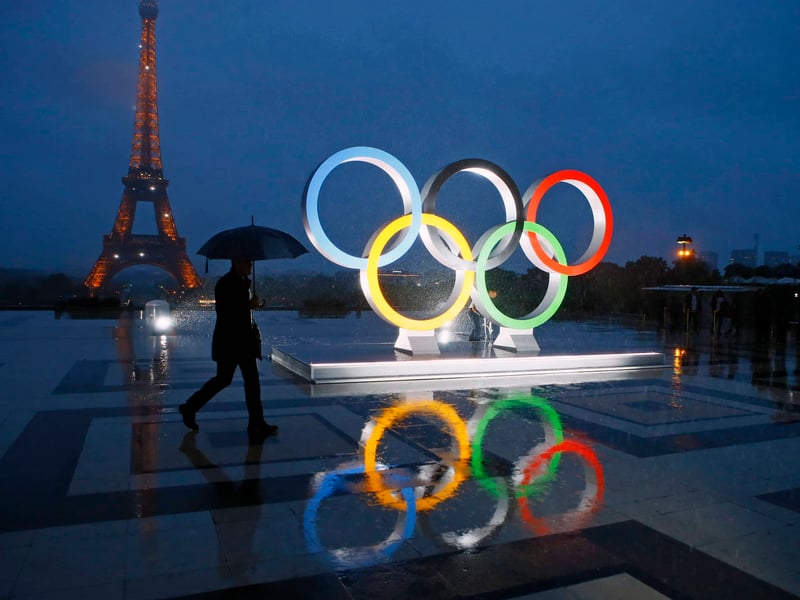
MARSEILLE, France (CN) — On Friday, 1.5 billion people are expected to watch the opening ceremony of the Paris Olympics on television. The Seine will be its centerpiece; for the first time ever, the show will be held outside of a stadium on the banks of the river. It’s a bold move that has sparked security concerns, while drawing praise for symbolically making the festivities more open and inclusive.
These values run in stark contrast to the current political situation in France. In its modern history, it has never been so disjointed. But while French President Emmanuel Macron may be publicly calling for an “Olympic truce" during the games, which run from July 26 to August 11, some experts argue putting politics on pause during this show of unity could play into his favor.
“So Emmanuel Macron can play on the somewhat utopian idea for you, like an Olympic truce, meaning that at a given moment, we stop the political fights,” Gilles Vieille-Marchiset, a sports sociologist at the University of Strasbourg, told Courthouse News. “We [say we] put aside personal struggles to make room for sports, which is a myth; because often, politicians have used these sporting spectacles to, on the contrary, accentuate their power.”
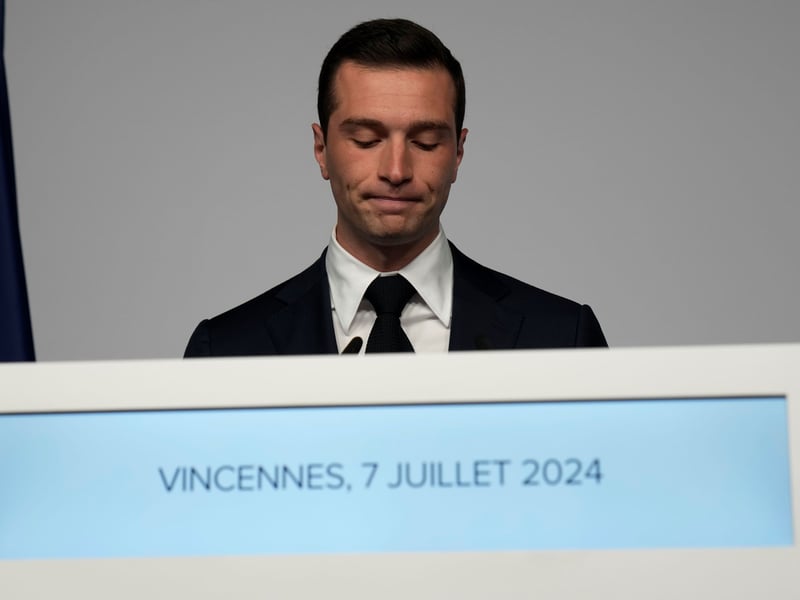
On June 9, when Macron announced the dissolution of France’s National Assembly — the lower and most powerful chamber of parliament — the country was sent into a political tailspin. Parties had just weeks to campaign before two rounds of snap elections on June 30 and July 7. The left scrambled to build a coalition, which becamethe New Popular Front, that would challenge the leadingfar-right National Rally. No one expected that they would win, but the coaltion came out with a relative majority, beating the National Rally and Macron’s centrist coalition.
But the political mayhem is far from over. Macron has been resistant to name a new Prime Minister from the ranks of the New Popular Front, and has announced that the new government would not be formed until after the end of the Olympics in mid-August. Left-wing activists have led demonstrations in major cities across France, and politicians have denounced Macron’s tact as undemocratic.
“It’s not because the president of the French Republic has asked for a political truce that all of these questions disappear,” said Michel Wieviorka, a French sociologist and former president of the International Sociological Association, in an interview with Courthouse News.
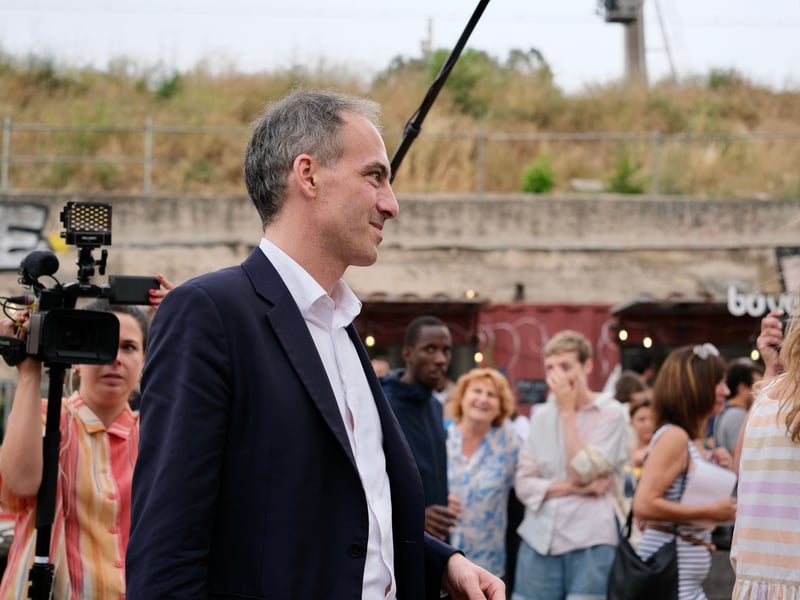
The games are coinciding with the most crucial moment in modern French politics.
“The Olympic Games have been prepared for a very long time, but they are approaching at a time when France has entered an extremely serious political crisis,” Wieviorka said. “And this decision created real political chaos.”
Although large swaths of France celebrated that the far-right National Rally, led by Marine Le Pen and her protégée Jordan Bardella, didn’t win a parliamentary majority — the party still holds a somewhat taboo place in the French imagination as it nearly doubled its seats and took a record high of the popular vote. On the other side of the spectrum, the left had struggled to convey an image of unity amid its inability to name a candidate for prime minister for over 10 days.
“So all this contributes to a situation of institutional political chaos of crisis, and does not facilitate a climate of euphoria for the Olympic Games in Paris,” Wieviorka added.
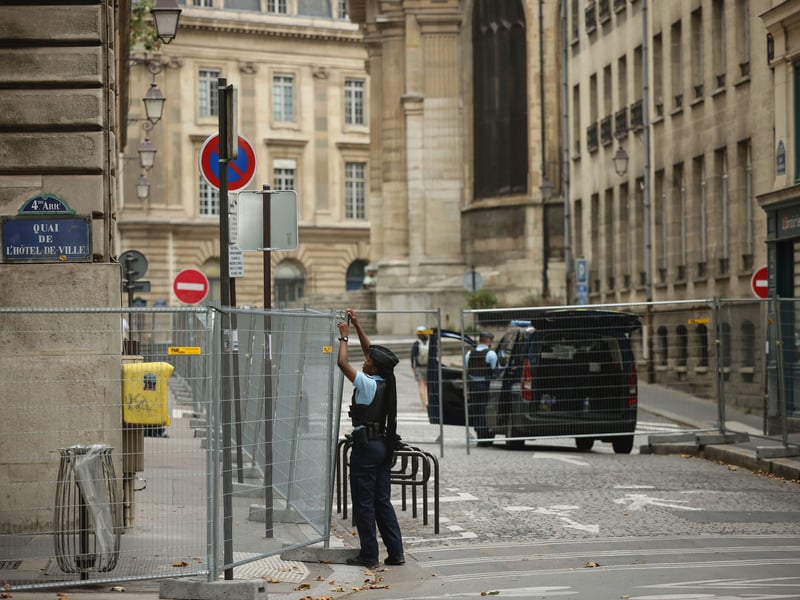
Throughout the next few weeks, all eyes will be on Paris. The opening ceremony is arguablyits biggest security test, in which France will be deploying controversial AI surveillance technologies and upward of 45,000 police officers. More generally, France has promised that these games would be the greenest yet: roughly 15,000 athletes will be using washable cutlery, sleeping on cardboard bed frames and eating locally sourced meals. Economically, the games are expected to generate between 6 and 11 billion euros in net economic benefits for Paris.
The games have historically been tightly tied to politics.
“They’re a display, a form of showcase for a country, to show its particular know-how; the Paris Olympic Games are used in particular by Emmanuel Macron to show the greatness of France,” Vieille-Marchiset said. “This is nothing new; the Olympics have always been used in this way, whether by authoritatrian or democratic regimes, as a form of political instrementalization of a sporting spectacle.”
But it’s impossible to ignore the disconnect between what will be presented on the global stage, and what’s really happening on the ground in France.
“Given this political instability, it could be problematic in relation to the image that the current government wants to give of France,” Vieille-Marchiset said.
Wieviorka says this could provide an opportunity for the French population to unite amid a period of extreme governmental distrust, and a catastrophic political situation.
“The Olympic Games could have a value of social bond, bringing together all of society on the occasion of this event, which means that the whole world will watch France for several weeks — and we saw that there was a strong demand for this kind of social connection,” Wieviorka said.
 Follow @lilyradz
Subscribe to our free newsletters
Our weekly newsletter Closing Arguments offers the latest about ongoing trials, major litigation and rulings in courthouses around the U.S. and the world, while the monthly Under the Lights dishes the legal dirt from Hollywood, sports, Big Tech and the arts.