
 Search Articles


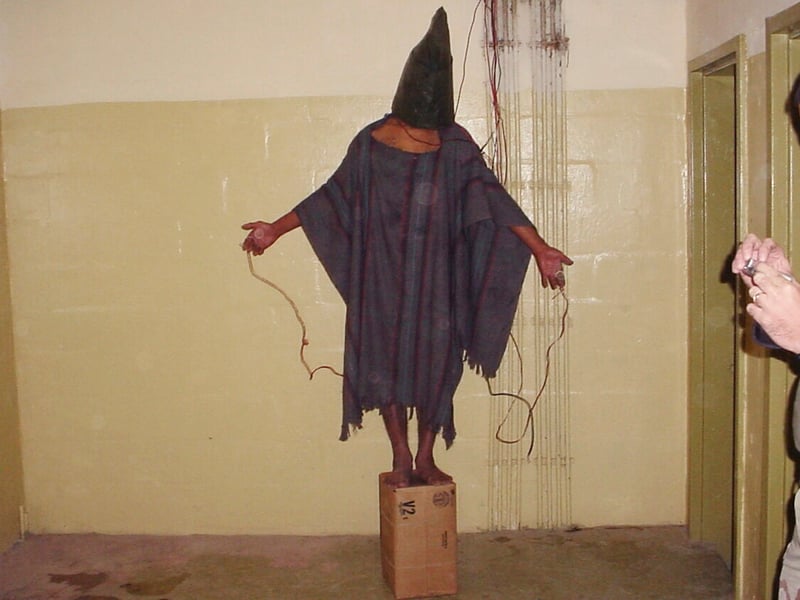
RICHMOND, Va. (CN) —The Fourth Circuit Thursday upheld a verdict against a Virginia-based military contractor accused of violating international norms through the torture of Iraqi detainees at Abu Ghraib prison.
After over 15 years of litigation and five appeals to the Fourth Circuit, a jury found CACI Premier Technologies liable for $42 million in damages to an Iraqi journalist, a fruit vendor and a school principal in 2024 for conspiracy to commit torture and conspiracy to commit cruel, inhumane and degrading treatment under the Alien Tort Statute. Senior U.S. Circuit Judge Henry Floyd, a George W. Bush appointee, rejected a plethora of threshold and merit challenges.
“This is a huge moment, a win that builds a foundation for a new precedent in the U.S. This will cause a positive difference in the future. Those who believe they are above the law will now think twice before violating human rights,” plaintiff Salah Al-Ejaili, a journalist, said in a statement. “Thank you to the U.S. legal system and thank you to everyone who had anything to do with this win.”
Photos and videos that news outlets leaked in 2004 from Abu Ghraib prison of naked, hooded people posed in human pyramids, on leashes and being sexually assaulted during the Iraq war sparked international outrage. A report from Major Generals George Fay and Antonio Taguba outlined how CACI employees worked with U.S. soldiers to “soften up” detainees. Middle school principal Suhail Al Shimari claimed CACI and its co-conspirators threatened him with dogs, deprived him of food and subjected him to electric shocks. Fruit vendor Asa’ad Zuba’e testified that the detainers beat his genitals with a stick and held him in a solitary cell in conditions of sensory deprivation for almost a year.
“We are gratified yet again that the Fourth Circuit rejected CACI’s cynical arguments for impunity for its responsibility for the torture of our clients, which the jury confirmed in a historic judgment last year,” Baher Amzy, legal director of the Center for Constitutional Rights, representing the plaintiffs, said. “Our courageous clients have waited so long for recognition and justice, and we are happy for them that this judgment affirmed their entitlement to it.”
CACI lodged an extensive list of threshold reasons that case shouldn’t have proceeded to trial, including that it is entitled to derivative sovereign immunity, that the Federal Tort Claims Act preempts the plaintiffs’ claims, that the case concerned state secrets impacting CACI’s ability to defend itself and that the case is nonjusticiable under the political question doctrine because it requires the court to weigh military decisions.
CACI questioned the credibility of the military criminal investigative reports, claiming they contained hearsay and relied on statements previously obtained by the Army Criminal Investigation Division, made by people who were themselves under investigation and whose credibility the generals could not evaluate.
“The record shows that the generals interviewed over 200 individuals, collected over 9,000 documents and utilized analytical tools to collect and analyze relevant data in conducting the investigations and compiling the reports,” Floyd said. “We conclude that CACI does not come close to making the requisite showing to overturn an evidentiary ruling, which we may do only if it is ‘arbitrary and irrational.’”
Floyd rejected the sovereign immunity argument, ruling that the United States, which is entitled to sovereign immunity, did not authorize the torture at issue. The government court martialed U.S. troops who worked with CACI to torture detainees.
CACI argued that conspiracy to commit torture and corporate liability aren’t appropriate causes of action under the statute. The statute provides relief for torts that violate norms of customary international law that occur within the United States. Floyd reasoned that the United States enjoyed territorial jurisdiction over the Iraqi prison. Floyd further said that enough of the conduct, including hiring, issuing security clearances and mishandling or ignoring reports of possible torture, all occurred in the continental United States.
Floyd also rejected CACI’s claim that the legislative branch, rather than the judicial branch, is the appropriate branch to weigh in on foreign policy issues.
“We are convinced that this case does not offend the authority of the other branches of government,” Floyd said. “Given Congress’ approbation of causes of action related to torture under the ATS, and because allowing this case to proceed lacks any potential to negatively affect foreign relations, it poses little if any threat to the separation of powers.”
U.S. Circuit Judge Marvin Quattlebaum, a Donald Trump appointee, dissented primarily on jurisdictional grounds.
“The issue in this case is not whether interrogators committed atrocities on detainees held at the Abu Ghraib prison during the aftermath of the Iraq War. The issue is not whether CACI Premier Technology, Inc. should have known about and prevented the atrocities. The issue is not even whether there is evidence that CACI officials in the United States knew about the Abu Ghraib atrocities and failed to stop them,” Quattlebaum said. “No. The question we must decide is whether federal courts have subject matter jurisdiction over three alleged victims’ claims under the Alien Tort Statute for conspiracy to commit torture and conspiracy to commit cruel, inhuman and degrading treatment based on those atrocities at Abu Ghraib. We do not.”
Representatives of CACI did not respond to a request for comment. CACI announced over $8 billion in revenue in fiscal year 2025 and continues to contract with the federal government.
Subscribe to our free newsletters
Our weekly newsletter Closing Arguments offers the latest about ongoing trials, major litigation and rulings in courthouses around the U.S. and the world, while the monthly Under the Lights dishes the legal dirt from Hollywood, sports, Big Tech and the arts.