
 Search Articles


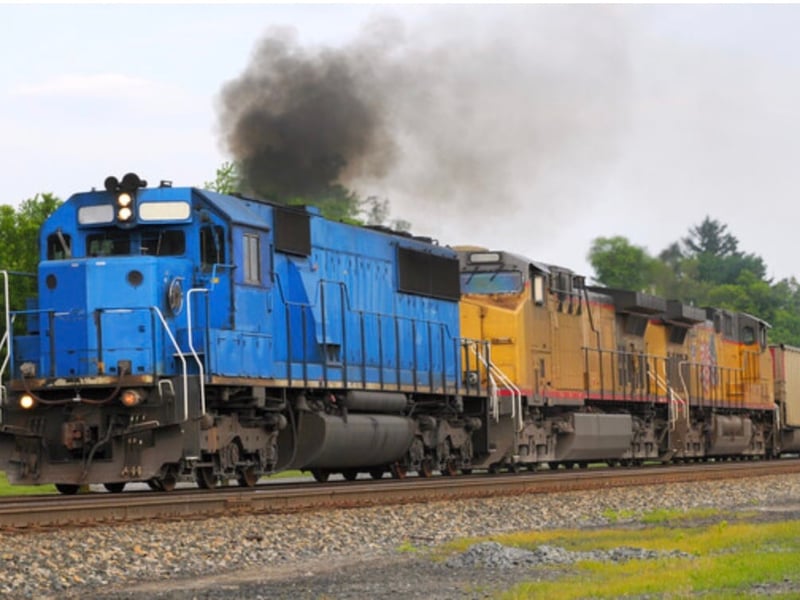
(CN) — A Fourth Circuit panel affirms the Association of American Railroads has standing to sue Virginia officials over a law intended to improve internet access in rural areas.
U.S. Circuit Judge Pamela Harris, a Barack Obama appointee, writes in a 24-page opinion that the trade association has standing for a preemptive challenge to the law, which permits broadband internet providers to run fiber optic cables under railroad tracks for a predetermined fee.
The panel rejects a separate property rights claim, however.
U.S. Circuit judges Harvie Wilkinson III, a Ronald Reagan appointee, and Allison Rushing, a Donald Trump appointee, join in the decision.
The association argues the 2023 law is a “super-charged eminent domain scheme” that runs afoul of the Interstate Commerce Commission Termination Act (ICCTA).
The state’s attorneys counter that lengthy delays and “exorbitant” fees by the railroads have historically needlessly delayed cable construction, cutting off rural communities from faster internet service that is critical to education, health and industry.
The circuit court offers no opinion on the case’s merits but finds that the association has standing to argue on behalf of its members that the law’s cumulative burden would harm rail transportation.
“The factual question is the impact of Virginia’s statute on rail transit writ large — and an industry trade association should be well-positioned to present facts related to a statute’s cumulative effect on the industry it represents,” Harris writes.
Neither the Association of American Railroads nor the Virginia Attorney General’s Office immediately responded to requests for comment about the decision.
Under the 2023 law, broadband providers can submit an application to railroad companies to build fiber optic cables under tracks when it is “necessary” to do so. The broadband providers must file an application explaining the scope of the work and provide a default $2,000 licensing fee to the railroad company.
The railroad company can petition the State Corporation Commission to order additional compensation or address safety concerns.
The Association of American Railroads challenged the law in the Eastern District of Virginia, but the suit was dismissed last year by U.S. District Judge David Novak, a Trump appointee.
Central to the judge’s ruling was the question of standing. The association speculated the statute would unreasonably burden rail operations, ignoring that the statute specifically prohibits impediment of operations and provides a mechanism for relief if hardships or safety concerns arise, Novak wrote.
The association needed a case where the law violated the rights of a member to challenge it, the judge ruled.
An attorney for the association argued at an appeal hearing in January that the problem did not arise from any single cable installation, but instead the cumulative burden of thousands of installations combined with a rushed process that made it difficult to ensure crossings are properly engineered and safe.
Harris notes that such an “aggregate” theory of unreasonable interference was not recognized as grounds for an ICCTA preemption, but it was persuasive enough to justify standing.
The appellate court denies the association standing on a property rights claim, however.
The association argued the licensing fees required of internet providers fell far short of just compensation to install cables, but the court found that the claim was too fact-specific for the association as a whole to allege. A member railroad company, which possessed the “particularized proof” of market rates for various railroad crossings, was better suited to bring such a claim.
 Follow @SteveGarrisonPC
Subscribe to our free newsletters
Our weekly newsletter Closing Arguments offers the latest about ongoing trials, major litigation and rulings in courthouses around the U.S. and the world, while the monthly Under the Lights dishes the legal dirt from Hollywood, sports, Big Tech and the arts.