
 Search Articles


RICHMOND, Va. (CN) — NASCAR should not have been compelled to allow two teams suing it to compete under favorable terms, a panel of Fourth Circuit judges found Thursday morning.
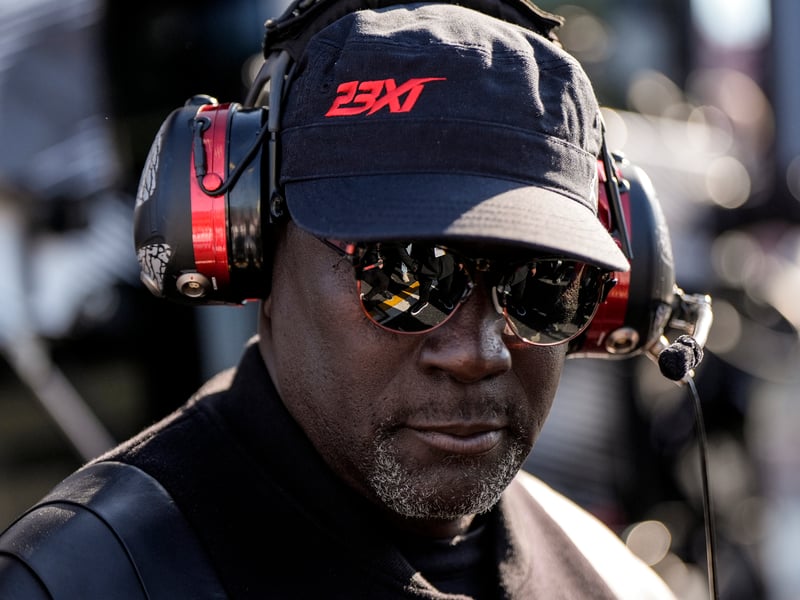
Front Row Motorsports and 23XI Racing — partially owned by basketball legend Michael Jordan — had convinced a lower court that they would be facing financial ruin should the court not step in and require NASCAR to allow the teams to compete in 2025 under a charter agreement, which granted them guaranteed entry into races as well as merchandising and broadcasting profits.
The lower court required NASCAR and its owner James France to give the teams an agreement that excluded a litigation release clause the teams presented as proof of the racing body’s monopoly. The parties had previously agreed to allow 23XI and Front Row Racing to participate as open teams, which have to qualify for each race, and the court’s compelled charter contract vastly benefited the teams.
The appeals court differed in their findings Thursday, vacating the lower court’s injunctions and holding the lower court “abused its discretion” in its decision.
“While the plaintiffs’ complaint alleged years of conduct and contract provisions that they claimed were anticompetitive, thus attacking NASCAR’s entire business model, they requested at the same time that the district court order that they ‘be permitted to participate in NASCAR Cup Series events under the terms of the 2025 Charter Agreement (with the exception of the release),’” U.S. Circuit Court Judge Paul Niemeyer said in his opinion, which Judges G. Steven Agee and Stephanie Thacker joined.
“The plaintiffs therefore requested to participate in the very business that they sought to dismantle.”
The panel seemed skeptical when the teams made their arguments in May, challenging how the teams could ask the court to institute a contract with NASCAR while simultaneously claiming that NASCAR’s contract is anticompetitive.
“You can’t have your cake and eat it too,” Niemeyer, a George H.W. Bush appointee, told the teams, emphasizing that if they didn’t feel the contract was fair, they could sue, but if they wanted to operate under the terms of the contract, they should have signed it and given up their ability to sue.
In his opinion Niemeyer challenged the teams’ potential for future success over their antitrust claims, writing that it is unlikely for their argument to prevail.
“It is not clear, let alone indisputably so, that the antitrust theory advanced by the plaintiffs and adopted by the district court is likely to succeed on the merits, as necessary for a preliminary injunction,” he said, but added that the panel “express no view” on the case beyond the injunction.
Jeffrey Kessler, attorney for Front Row Motorsports and 23XI Racing, urged the panel in May to maintain the injunction, saying that it would cause “havoc” to vacate it during the stock car racing season, which ends in November.
He said Thursday that he was disappointed in the decision, and that the teams are working to determine their next steps.
“This ruling is based on a very narrow consideration of whether a release of claims in the charter agreements is anti-competitive and does not impact our chances of winning at trial scheduled for Dec. 1,” he said. “We remain confident in our case and committed to racing for the entirety of this season as we continue our fight to create a fair and just economic system for stock car racing that is free of anticompetitive, monopolistic conduct.”
Counsel for NASCAR and its owner France told the court that the teams would still be able to race if the injunction were vacated, as they would have qualified for every race they participated in at that point even if they had competed as open teams, without guaranteed race entry.
23XI Racing and Front Row Motorsports sued in October 2024, claiming that the racing giant has a monopoly on the industry and is forcing teams to sign anticompetitive contracts. They would be able to enter into much more lucrative contracts if there were competition in the industry, they said, but NASCAR has bought out high-quality tracks and acquired its closest competitor.
NASCAR filed a counterclaim in March, saying that the teams “engaged in active threats and coercive behavior” to maintain an “illegal cartel” to pressure NASCAR for better contracts. The racing company, which filed the countersuit under the same antitrust legislation, the Sherman Act, claimed the teams should not have worked together to push for more beneficial terms.
The two teams are expected to argue for the dismissal of NASCAR’s counterclaims before federal court in Charlotte later in June.
A representatives for NASCAR did not immediately respond to a request for comment.
 Follow @SKHaulenbeek
 Follow @shaulenbeek.bsky.social
Subscribe to our free newsletters
Our weekly newsletter Closing Arguments offers the latest about ongoing trials, major litigation and rulings in courthouses around the U.S. and the world, while the monthly Under the Lights dishes the legal dirt from Hollywood, sports, Big Tech and the arts.