Search Articles


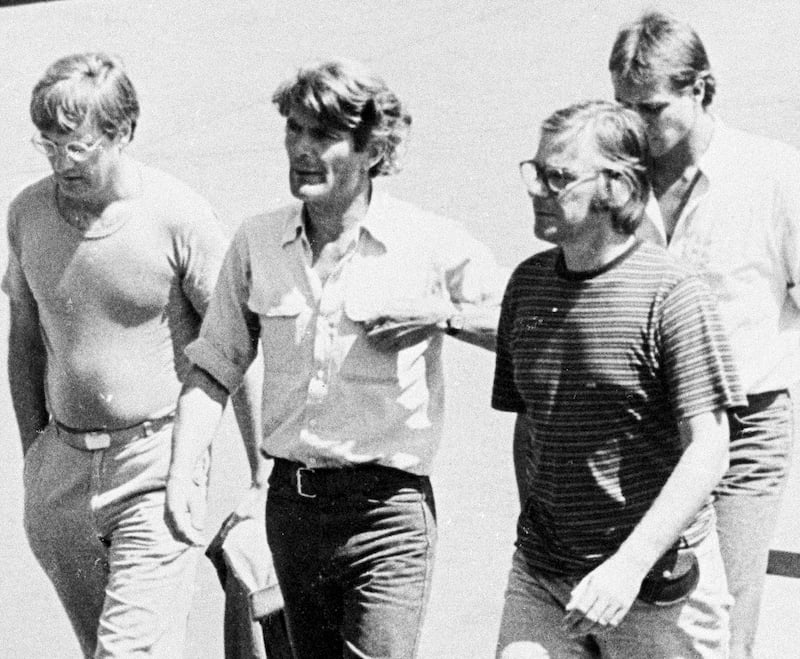
RICHMOND, Va. (CN) —A Fourth Circuit panel has rejected a former Salvadoran colonel’s attempts to escape liability for the 1982 killings of four Dutch journalists, handing a victory to the brother of one victim.
That former colonel, Mario Reyes Mena, is accused of ordering his troops to ambush and kill the journalists and their guides.
In an opinion on Wednesday affirming a lower court, the panel said that actions violating basic international norms — also known as “jus cogens” norms — are not entitled to legal immunity. Such acts include torture, slavery, arbitrary detention and summary executions.
“Reyes Mena is alleged to have known about the Dutch journalists’ travel plans, participated in a meeting to plan an ambush on them and, as the commanding officer, ordered their extrajudicial killing,” U.S. Circuit Judge Paul Niemeyer, a George H.W. Bush appointee, said. “This alleged conduct violates a jus cogens norm, and therefore it may not be protected by conduct-based foreign official immunity.”
In making its decision, the appeals court leaned on Supreme Court precedent in Samantar v. Yousuf. In that 2010 ruling, the high court determined that victims could sue former Somali Prime Minister Mohamed Ali Samantar for his role in mass killings.
Lawyers representing Gert Kuiper, whose brother Jan was killed by the Salvadoran Security Forces, said he is looking forward to moving the case forward. Kuiper had sued Mario Reyes Mena, who now resides in Virginia, under the Torture Victims Protection Act.
“Today’s decision in the Fourth Circuit brings us one step closer to accountability,” attorney Jason Hipp of the firm Foley Hoag said. “It upheld the court’s clear precedent on immunity, denying former foreign officials the opportunity to evade accountability for grave crimes like extrajudicial killing.”
The deadly ambush occurred during the country’s brutal civil war, which lasted from 1979 until 1992. The conflict pitted the American-backed government and its army, the Salvadoran Security Forces, against Soviet-backed guerilla fighters.
After the war ended, a United Nations Truth Commission found that 75,000 civilians had been killed, most of them by the Salvadoran government.
Among the dead were teachers, union leaders, university students, human rights activists, priests, nuns and journalists. According to the Committee to Protect Journalists, 26 reporters were killed in just the two years leading up to the ambush.
At the time, Jan Kuiper was working for Interkerkelijke Omroep Nederland, a Dutch radio and television broadcaster affiliated with the Protestant Church in the Netherlands.
He and three colleagues were planning to cover the vast human rights abuses committed by the Salvadoran government. According to Gert Kuiper, Reyes Mena received word of their presence and sent out a patrol, which shot and killed the reporters along with several local guides.
The Salvadoran government initially attempted to cover up the ambush, telling U.S. military personnel that the killings were not an ambush but rather a defensive response to guerrilla aggression. The government said it didn’t know the group it killed contained foreign reporters.
In court filings, Reyes Mena described himself as an agent of a sovereign government carrying out an authorized military operation.
The Fourth Circuit said that didn’t legally protect him.
“We conclude that the alleged conduct, if proved, would amount to a violation of the jus cogens norm of international law prohibiting extrajudicial killing and therefore that such a violation would preclude conduct-based foreign official immunity,” Niemeyer said.
The Salvadoran government enacted an amnesty law in 1993, shielding military forces from liability in the bloody civil war.
In 2016, the Salvadoran Supreme Court declared the amnesty law unconstitutional. In 2022, Reyes Mena was indicted by his own government over the ambush. He has remained in the United States to avoid prosecution. Neither the current Salvadoran government nor the United States has advocated for his immunity.
George W. Bush appointees Judge Steven Agee and Judge Roger Gregory completed the panel. Attorneys representing Reyes Mena did not respond to a request for comment.
Subscribe to our free newsletters
Our weekly newsletter Closing Arguments offers the latest about ongoing trials, major litigation and rulings in courthouses around the U.S. and the world, while the monthly Under the Lights dishes the legal dirt from Hollywood, sports, Big Tech and the arts.