
 Search Articles


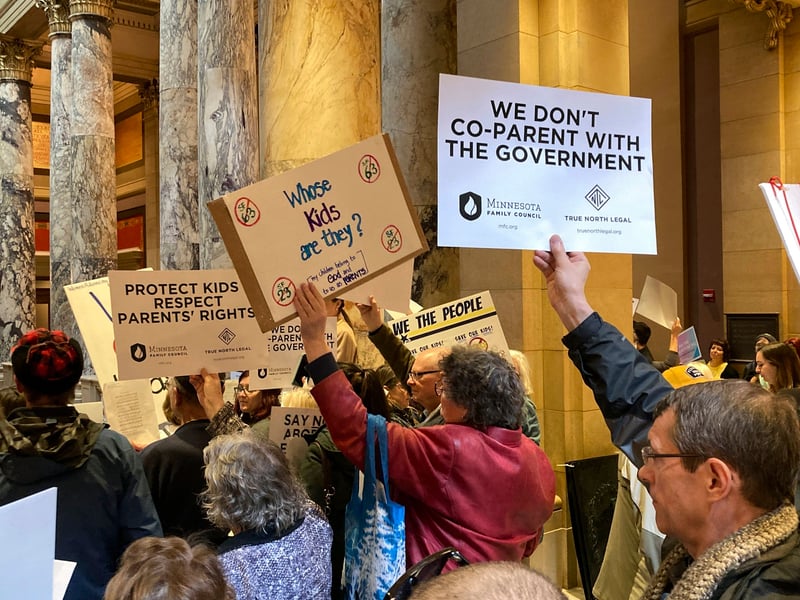
RICHMOND, Va. (CN) — A majority of a Fourth Circuit panel ruled Wednesday that parents are not entitled to pull their children out of elementary school lessons involving LGBTQ-inclusive books.
“There’s no evidence at present that the board’s decision not to permit opt-outs compels the parents or their children to change their religious beliefs or conduct, either at school or elsewhere,” U.S. Circuit Judge Steven Agee, a George W. Bush appointee, wrote in the majority opinion. “Simply hearing about other views does not necessarily exert pressure to believe or act differently than one’s religious faith requires.”
Parents of multiple faiths argued in December that the Montgomery County, Maryland, school board’s introduction of the LGBTQ-themed storybooks aimed at brainwashing elementary school children into views on gender, sexual orientation and other themes that contradict the parents’ religious beliefs.
Eric Baxter, vice president and senior counsel at the Becket Fund for Religious Liberty, argued on the parents’ behalf and said they plan to appeal the ruling.
“The court just told thousands of Maryland parents they have no say in what their children are taught in public schools,” Baxter said in a statement. “That runs contrary to the First Amendment, Maryland law, the School Board’s own policies and basic human decency. Parents should have the right to receive notice and opt their children out of classroom material that violates their faith.”
Agee was joined by U.S. Circuit Judge DeAndrea Gist Benjamin, a Joe Biden appointee, in affirming a lower court’s denial of a preliminary injunction allowing them to opt their children out.
Agee wrote that for the parents to clear the high hurdle for a preliminary injunction, they would have to provide evidence that the school asked children to affirm views contrary to their views on gender or sexuality, to disavow opinions on these matters that their religion espouses or otherwise affirmatively act in violation of their religious beliefs.
“It is not our station to determine the pedagogical or childhood-development value of the storybooks or the related topics,” Agee wrote. “Our charge as judges is to ascertain whether the parents have shown a likelihood of success on their free exercise claim, which would require them to show direct or indirect coercion arising out of the exposure."
The parents relied heavily on the U.S. Supreme Court ruling Wisconsin v. Yoder , in which the majority found Amish parents were allowed to remove their children from high school entirely to avoid exposure to ideas against their faith. Agee says the parents read *Yoder * too broadly, insisting the specifics of the case, namely the uniqueness of the Amish faith, make it a narrow holding.
The parents argued that the board’s refusal to allow prior notice and an opportunity to opt out of the storybooks could not withstand strict scrutiny, given that the board lacked a compelling interest in its policy.
U.S. Circuit Judge Marvin Quattlebaum, a Donald Trump appointee, wrote that the board’s decision not to allow opt-outs directly targeted families of faith in a dissenting opinion.
“The parents have shown the board’s decision to deny religious opt-outs burdened these parents’ right to exercise their religion and direct the religious upbringing of their children by putting them to the choice of either compromising their religious beliefs or foregoing a public education for their children,” Quattlebaum wrote. “I also find that the board’s actions, at least under this record, were neither neutral nor generally applicable.”
The plaintiffs say that almost as soon as the school district integrated the storybooks many teachers, administrators and parents began voicing concerns about their efficacy and age appropriateness. The board claimed the books are intended only to teach English and language arts, and their themes represent the lives of many of its students and families.
The parents do not challenge the board’s adoption of the LGBTQ storybooks or seek to ban their use in Montgomery County Public Schools. Instead, they contend that the cited legal cases require that should be given prior notice and the opportunity to opt-out.
The books in the series include “Uncle Bobby’s Wedding” by Sarah Brannen, where a niece struggles with the fear of losing her favorite uncle after he marries his partner, and “Pride Puppy!” by Robin Stevenson, in which a family attends a Pride parade with a mischievous dog.
“Pride Puppy!” invites pre-K students to search for depictions of terms like drag queen, drag king and intersex, among other vocabulary words. Other books include stories about a transgender child’s rainbow-colored wig and elementary school students deciding to replace girl/boy bathroom signs with non-binary signs.
Agee pointed out that neither party provided any information about how many teachers or school employees have used any of the storybooks in the parents’ children’s classrooms, how often they are being used, what any child has been taught in conjunction with their use or what conversations have ensued about their themes.
Agee did leave the door open for future litigation.
“Proof that discussions are pressuring students to recast their own religious views — as opposed to merely being exposed to the differing viewpoints of others — could serve as evidence that the storybooks are being used in a coercive manner,” Agee wrote. “Those sorts of conversations, if occurring, may veer into the sort of pressures that could constitute coercion, particularly to young children.”
Subscribe to our free newsletters
Our weekly newsletter Closing Arguments offers the latest about ongoing trials, major litigation and rulings in courthouses around the U.S. and the world, while the monthly Under the Lights dishes the legal dirt from Hollywood, sports, Big Tech and the arts.