
 Search Articles


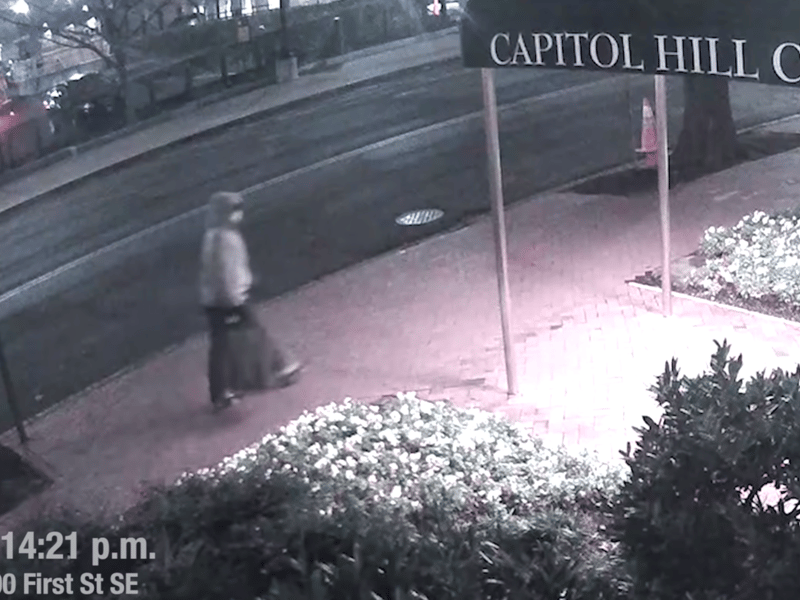
WASHINGTON (CN) — The House on Thursday accused federal law enforcement of making little “meaningful progress” on a yearslong investigation into two pipe bombs discovered on Capitol Hill as lawmakers met to certify the results of the 2020 presidential election, according to a report conducted by the House Committee on Administration.
The pair of improvised explosive devices were placed near Democratic National Committee and Republican National Committee headquarters on Jan. 5, 2021 — just a day before the Jan. 6 Capitol riot. The pipe bombs were not discovered by law enforcement until the next morning as rioters were marching on the Capitol.
Despite the major security threat posed by the devices and the delay in their discovery, the FBI’s ongoing investigation had yet to identify, apprehend or charge any potential suspects, according to Administration Committee. Federal law enforcement has also been tight-lipped with Congress about potential leads in its inquiry.
“The devices placed many lawmakers, staff, law enforcement and residents in harm’s way,” the report said. “Yet, almost four years after the incident, Americans scarcely have any detail about who planted the bombs or why.”
Lawmakers added that the lack of information about potential suspects hampers Congress’ ability to legislate security improvements for the Capitol complex, and that failure to pinpoint a potential perpetrator “ultimately makes all Americans less secure.”
The Administration Committee report painted a dire picture of law enforcement response on Jan. 6, 2021, as U.S. Capitol Police were forced to respond both to the threat of explosive devices near the Capitol and a mob of President Donald Trump’s supporters breaching the building itself. Pointing to testimony from former Capitol Police Chief Steven Sund, lawmakers argued that the pipe bombs had been placed to draw law enforcement resources away from the Capitol building amid the riot.
That diversion, the report contended, was successful in part thanks to “egregious safety and security failures” by the U.S. Secret Service ahead of the Jan. 6 election certification.
Federal law enforcement officers did not discover the pipe bomb placed near the DNC headquarters during their security sweep of the area — even though canine units passed through the area and officers were posted for hours just feet from the device’s location, lawmakers said.
The delayed discovery allowed Vice President Kamala Harris’ motorcade to drive “directly by” the pipe bomb as it entered the Democratic committee headquarters; Harris was inside the building for more than an hour before the pipe bomb was uncovered, the Administration Committee reported.
Another motorcade carrying House Speaker Nancy Pelosi similarly drove by the active pipe bomb.
And even after the device was found, law enforcement did not maintain a secure perimeter around the bomb or successfully stop pedestrians and vehicles from approaching it.
The report noted similar security failures around the cordon for the device outside the RNC, where civilians were allowed to walk down the street near a police bomb robot.
While it was “undeniable” that law enforcement faced a challenge in responding to both the Capitol riot and the pair of active bomb threats, the failure to secure both site perimeters underscores the need to ensure that Capitol Police can “properly respond to multiple critical incidents,” lawmakers said.
In the immediate aftermath of the pipe bomb incident, the FBI took “significant investigative steps” to identify a potential suspect who had been captured on security cameras around the time the devices were placed, the Administration Committee said. But, four years later, the FBI has been unable to identify the suspect “despite access to the most sophisticated law enforcement resources.”
Federal law enforcement has conducted roughly 1,000 interviews, followed up on hundreds of tips and identified as many as three persons of interest — including one person who searched the term “pipe bomb D.C.” online before the incident. The FBI also compiled more than 105 million data points via information from cell carriers, hardware stores and other sources.
“Astoundingly, despite these investigative efforts, the FBI has been unable to identify, arrest and prosecute the suspect,” lawmakers wrote.
The committee also pushed back on claims from the FBI that it had been unable to use cellular data to identify the potential suspect because it had received “corrupted” information from three major cell providers. The cell carriers, whose names were redacted in the survey, disputed law enforcement’s claim.
Lawmakers suggested that the FBI had used the alleged data corruption to sidestep what they wrote was the agency’s “inability” to identify the pipe bombing suspect using cellular data — adding that the FBI has refused to comply with congressional information requests regarding its claims.
“Today’s report highlights why the American people still deserve the full truth,” wrote Georgia Representative and Administration Committee chairman Barry Loudermilk in a post on X Thursday afternoon.
A spokesperson for the Justice Department did not immediately return a request for comment.
Monday will mark four years since rioters breached the Capitol as lawmakers convened to certify President Joe Biden’s victory in the 2020 presidential election. Nine people died as a result of the riot, both on Jan. 6 and in the weeks and months following. More than 170 police officers were injured in the attack.
 Follow @BenjaminSWeiss
Subscribe to our free newsletters
Our weekly newsletter Closing Arguments offers the latest about ongoing trials, major litigation and rulings in courthouses around the U.S. and the world, while the monthly Under the Lights dishes the legal dirt from Hollywood, sports, Big Tech and the arts.