
 Search Articles


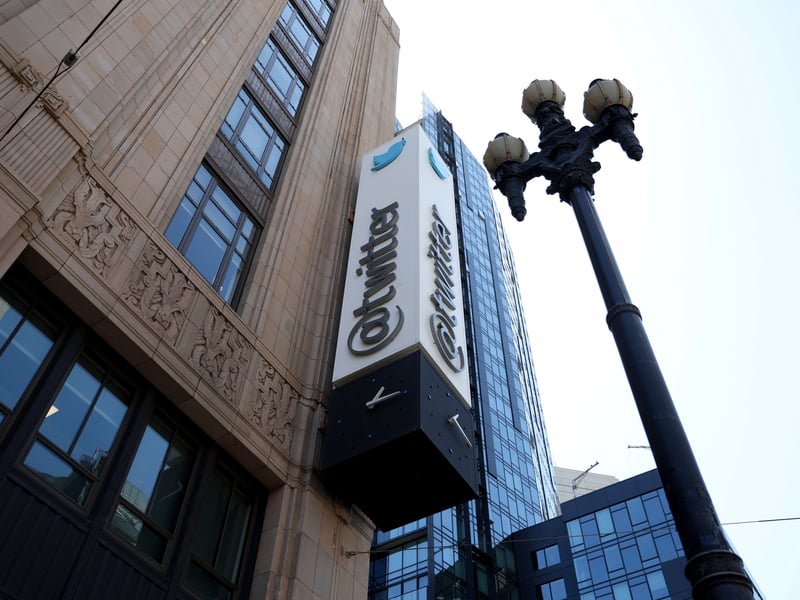
SAN FRANCISCO (CN) — A former Twitter executive explicitly advised the company not to pay bonuses it promised staff members — the same bonuses he is now suing his former employers to receive.
“It would be impossible for him to get on the witness stand and adequately represent the interests of Twitter employees who claim the company wrongfully withheld the bonus,” wrote Wednesday U.S. District Judge Vince Chhabria in his 3-page order denying class status to the employees of Twitter, now known as X, in their case for tens of millions of dollars in bonuses they say weren’t paid out while the company was being acquired by Elon Musk.
The move marks a reversal of fortune for the plaintiff, Mark Schobinger, who previously convinced the judge to agree Twitter’s denial of the bonuses had violated a contract in a separate ruling last year.
Schobinger, the former senior director of compensation for Twitter, filed suit against the social media company on behalf of himself and other current and former Twitter employees last June.
Schobinger, who is based in Texas, claims that employees were not paid a portion of their 2022 bonuses when they were due in the first quarter of 2023, despite repeated promises from senior executives at the company, including Ned Segal, the former chief financial officer of the company. This bonus was to be paid to employees who stayed with the company until the first quarter of 2023.
According to Schobinger, these promises were made both before and after Elon Musk acquired the social media platform in October 2022. Schobinger also said employees considered these promises when deciding whether or not they wanted to leave their jobs with the social media company and that he turned down opportunities from other companies at the time because of the promised bonus.
However, it was revealed during discovery that in November 2022 — several months after Twitter made the promises Schobinger supposedly relied on — he sent a message to Twitter’s head of people experience recommending that the company not pay the bonus.
Three months later, he sent a white paper to other Twitter executives on the subject, saying that not paying a bonus would be a prudent move for the company. There is even evidence that he told Musk directly during a meeting that Twitter should not pay the bonus.
“He might fit nicely into this case as a defendant, but he cannot possibly fit as a named plaintiff,” wrote Chhabria in his decision.
The judge also criticized Schobinger’s recent explanation, highlighting the absurdity of how he could have thought he was entitled to the bonus while also telling the company not to pay it. However, the judge conceded that the truth of the deposition was beside the point.
“Because even if he is telling the truth, his conduct makes him the worst possible candidate to serve as a litigation representative for the other Twitter employees who didn’t get a bonus,” wrote Chhabria.
The Obama-appointed judge also denied a request from Schobinger’s lawyer, Shannon Liss-Riordan of Boston’s Lichten & Liss-Riordan, to substitute a different plaintiff to represent the class of Twitter employees, calling her unfit to represent them.
“Most importantly, the fact that Schobinger’s lawyer thought it was a good idea to file a motion for class certification in the face of this evidence (as opposed to dropping the case or seeking to substitute another plaintiff immediately upon discovering it) shows that she is totally unqualified to serve as class counsel,” wrote Chhabria.
Chhabria said the fact that a large number of proposed class members had signed arbitration agreements with class action waivers also guided his decision to deny the motion.
“We are very disappointed that a federal judge ignored evidence regarding our client’s claim, relied solely on Twitter’s one-sided attack on him, and then put into a court ruling a false allegation against our client,” Liss-Riordan told Courthouse News.
Twitter has previously asserted an unclean hands defense in this case. The unclean hands defense relies on a legal doctrine in California that prevents a plaintiff from receiving relief if they acted unfairly or with deceit concerning the matter in question. The doctrine is based on the principle that no one should benefit from their own wrongdoing.
A case management conference is set for later this month to set a schedule for summary judgment and trial.
Lawyers for both X and Schobinger did not immediately respond to request for comments.
X has been entangled in several suits since Musk’s 2022, including a suit accusing Musk of manipulating Twitter stock and another over unpaid leases for its facilities.
Subscribe to our free newsletters
Our weekly newsletter Closing Arguments offers the latest about ongoing trials, major litigation and rulings in courthouses around the U.S. and the world, while the monthly Under the Lights dishes the legal dirt from Hollywood, sports, Big Tech and the arts.