
 Search Articles


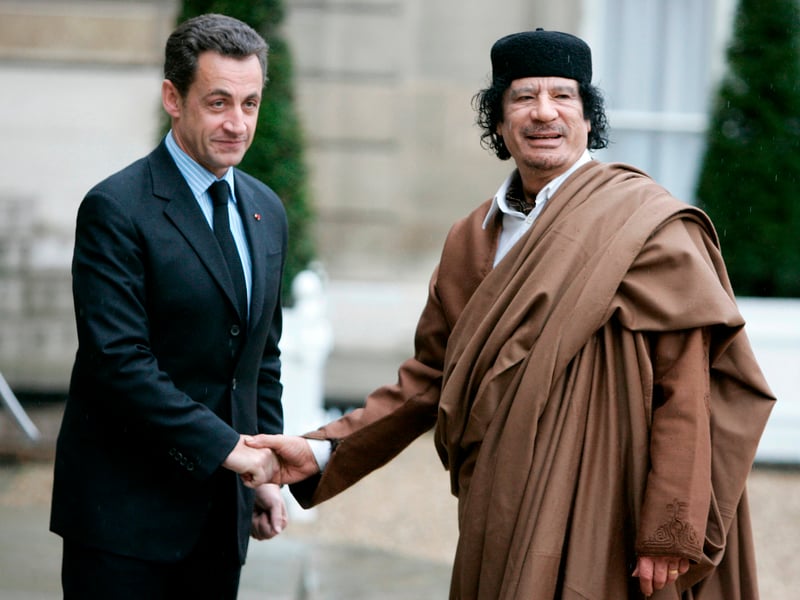
MARSEILLE, France (CN) — Former French President Nicolas Sarkozy’s trial began Monday over charges he accepted millions of euros from former Libyan leader Moammar Gadhafi to finance his successful 2007 presidential campaign.
The case is the latest in a string of legal woes for Sarkozy, whose 2023 conviction for corruption and influence peddling was upheld last month. While some experts argue that this case — coming at a tumultuous moment in French politics, and coinciding with the trial of extreme-right leader Marine Le Pen — will deepen distrust in the country’s political system, others say a disillusioned public may simply look the other way.
Although Sarkozy is no longer active in France’s politics, he remains a prominent and influential conservative figure.
Prosecutors say Gaddafi bragged about contributing 50 million euros (about $65 million in the year’s exchange rate) toward Sarkozy’s campaign and expected diplomatic leverage in return. After Sarkozy won, Gaddafi said in an interview, “It’s thanks to us that he reached the presidency; we provided him with the funds that allowed him to win.”
According to the government, suitcases containing millions of euros in cash were brought into France to fund Sarkozy’s run in what has been deemed a “corruption pact.” The court will investigate whether Sarkozy offered or gave anything in return; rumored favors included lifting an international arrest warrant on Abdullah al-Senussi, Gaddafi’s spy chief.
Sarkozy faces charges of concealment of embezzlement of public funds and criminal association, illegal campaign financing and passive corruption. If convicted, he faces up to 10 years in jail and a 375,000 euro ($389,000) fine. Three former ministers are also on trial, along with eight others. He has always denied the charges.
The trial comes at a shaky moment in France’s political landscape. After President Emmanuel Macron abruptly dissolved the governmentin June, the parliament has yet to find its footing; there have beenthree prime ministers since then, and the National Assembly — the lower house — remains at risk of collapse. Macron has already hinted at dissolving the government again in June, threatening a fresh round of chaos.
“This is the first time in France that a president, to my knowledge, has been convicted of such serious things, for corruption,” Michel Wieviorka, a French sociologist and former president of the International Sociological Association, told Courthouse News. “So it indicates a worsening of the problem of the disapproval of political leaders in public opinion — for me, that is the most important thing.”
This summer, Brice Teinturier — the deputy director of Ipsos in France — said that 85% of people have a negative perception of France’s political leaders.
“This judgment occurs at a time when the political class as a whole is disowned as never before; everyone has the feeling that today’s political actors represent public opinion very little, and that they are all questionable, which I say cautiously.” Wieviorka said. “We are in the midst of a political and institutional crisis in France.”
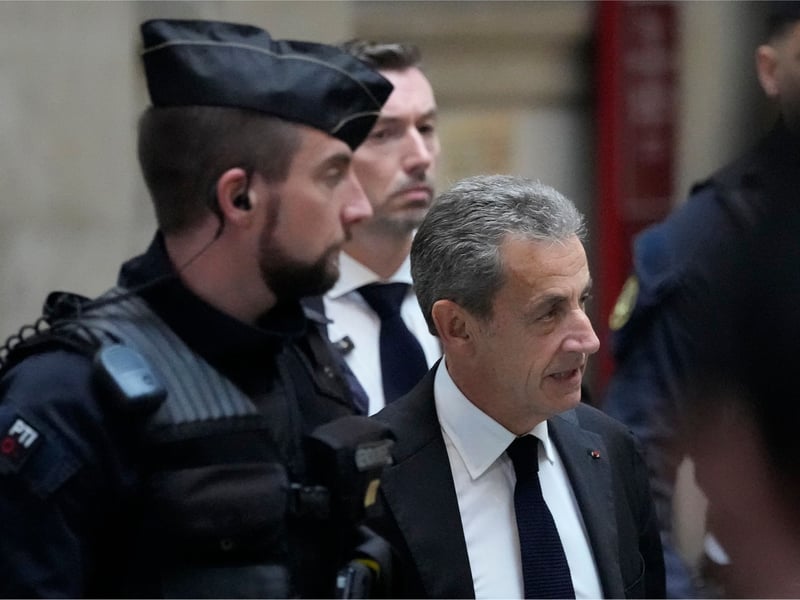
Sarkozy already has to wear an electronic monitoring bracelet after being convicted of corruption and influence peddling, a 2023 ruling that the courts upheld in December — a first for a former French president. Although he was handed a three-year prison sentence, two of the years were suspended, and the courts ruled that Sarkozy could serve the last year with the bracelet. He was also found guilty of illegal campaign financing for his failed 2012 election run.
Sarkozy has said he will take his 2023 conviction to the European Court of Human Rights in Strasbourg.
Some analysts think regardless of the verdict, Sarkozy could benefit from unhappiness with public officials.
“There’s not going to be a political crisis if Nicolas Sarkozy is convicted at the end of the four-month trial,” Ludovic Renard, a political scientist and professor at Sciences Po Bordeaux, told Courthouse News. “Why? Because, in my opinion, there’s a responsiveness of public opinion toward this type of affair that is completely disillusioned in France.”
Renard argues that both internationally and domestically, the trial won’t do lasting damage to Sarkozy, citing the case of Jacques Chirac. In 2011, the former president was found guilty of diverting public funds and abusing public trust. Today, he remains well regarded.
“In public opinion, Jacques Chirac remains the favorite president of the French,” he said. “Even if Sarkozy is convicted … his legal irresponsibility, once again, will more or less be accepted.”
The optics of a former president and potential future one on trial at the same time are distasteful for France. Le Pen is on trial on charges of embezzling EU parliamentary funds; if convicted, prosecutors are asking to ban her from running for public office for five years.
Wieviorka said that the public reaction toward a Le Pen conviction would be much more severe.
“She is a character whose political career is not over, whereas that of Sarkozy, his career is over,” Wieviorka said. “If she is condemned, and especially condemned to ineligibility, there will be a lot of political uproar, you can be sure of that.”
 Follow @lilyradz
Subscribe to our free newsletters
Our weekly newsletter Closing Arguments offers the latest about ongoing trials, major litigation and rulings in courthouses around the U.S. and the world, while the monthly Under the Lights dishes the legal dirt from Hollywood, sports, Big Tech and the arts.