
 Search Articles


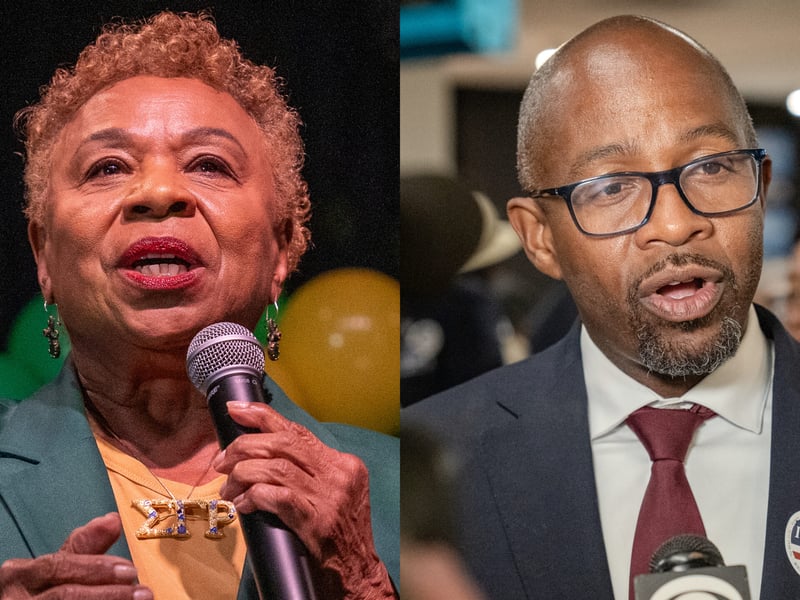
OAKLAND, Calif. (CN) — Former congresswoman Barbara Lee on Saturday won a tight race to become mayor of Oakland, after her opponent, moderate Democrat Loren Taylor, conceded over the weekend.
Lee declared victory in a statementon her campaign website, saying that while ballots will continue to be counted through Tuesday, the results are clear.
“I accept your choice with a deep sense of responsibility, humility, and love. Oakland is a deeply divided city, and I answered the call to run, to unite our community — so that I can represent every voter, and we can all work together as One Oakland to solve our most pressing problems," Lee said.
Taylor said he called the former congresswoman Saturday morning to congratulate her on becoming the next mayor of Oakland.
“While the outcome was not what we worked for and hoped for, I am incredibly proud of the race we ran. Our campaign started as the underdog — most didn’t expect us to come this far or make it this close,” Taylor said in a statement on X.
Early results on election night initially showed Taylor ahead by just over 1,200 votes. Lee fought a close race against former City Council member Taylor that hinged largely on how much voters trusted each candidate to lift Oakland out of its current crisis.
“We need a strong mayor,” Mike Petouhoff, an Oakland voter, told Courthouse News on Election Day.
The election, triggered by the 2024 recall of Mayor Sheng Thao — who was indicted by a federal grand jury on bribery and corruption charges in January — came as Oakland has largely lost faith in city officials.
Nearly 72% of Oakland residents disapprove of the overall job being done by the city’s government, according to a recent survey. Plenty of factors are to blame, and chief among them are crime, homelessness, shuttering businesses and an $87 million budget deficit that City Hall is still scrambling to fix.
“Oakland has some real problems that it has to figure out, and they’re going to be tough problems to fix,” Oakland voter Jared Rickman told Courthouse News on election day.
The Alameda County Registrar of Voters has also faced renewed criticism, as it has in the past, for its slow vote counting process during the special election. In November’s general election, the county was one of the slowest in the entire state when it came to counting votes, drawing the ire of voters impatient for results.
Lee and Taylor agreed on many issues, but where Lee represents traditional progressive strategies for dealing with Oakland’s problems, Taylor had embraced the position of the race’s moderate Democrat.
Elected to the U.S. House of Representatives in 1998, Lee entered the national stage as the only member of Congress to vote against the authorization of force following the Sept. 11 attacks. She opted out of reelection to the House in 2024 to throw her hat into the race for the U.S. Senate seat left vacant by the 2023 death of Dianne Feinstein, though she was knocked out of the Senate race during the primary.
“As your mayor, I will put this city on track to keep our vision for a clean, a safe and a thriving city for all,” Lee told the League of Women Voters in March.
Taylor, a former Oakland City Council member and business advocate who served from 2019 to 2023, had notably taken a more aggressive stance on issues like homeless encampments, which he said he would have moved away from schools and stores by invoking existing laws. He also had a more detailed plan to help Oakland’s businesses.
Taylor had wooed voters with calls to fix what he calls “a broken Oakland.”
“I think it’s a reality to acknowledge that if you say that we are broken, that means you’re looking in the mirror and seeing the structural things that need to change,” Taylor told attendees of a town hall event in early April. “We have to look internally and see what we need to fix so that we can do better.”
The election, though important, had a predictably lower turnout than general or midterm elections. Election officials have scaled back voting centers to better suit the citywide election.
“During a general election, we would have 100 vote centers available. And now, during this special election, we have nine available,” Alissa Brown, an election official with the Alameda County Registrar of Voters, told Courthouse News.
After his concession, Taylor said he hopes Lee will represent everyone in Oakland, including those who voted for him.
“I pray that Mayor-Elect Lee fulfills her commitment to unify Oakland by authentically engaging the 47% of Oaklanders who voted for me and who want pragmatic results-driven leadership,” Taylor said.
The mayor position is short-term and will be subject to another election in November 2026.
Oakland uses a ranked-choice voting system to elect its mayors, allowing voters to rank up to five candidates for a single office in order of preference. Although the practice allows voters to avoid a separate runoff election, it has proved controversial in the past because of the sometimes complicated math involved in tallying votes.
Subscribe to our free newsletters
Our weekly newsletter Closing Arguments offers the latest about ongoing trials, major litigation and rulings in courthouses around the U.S. and the world, while the monthly Under the Lights dishes the legal dirt from Hollywood, sports, Big Tech and the arts.