
 Search Articles


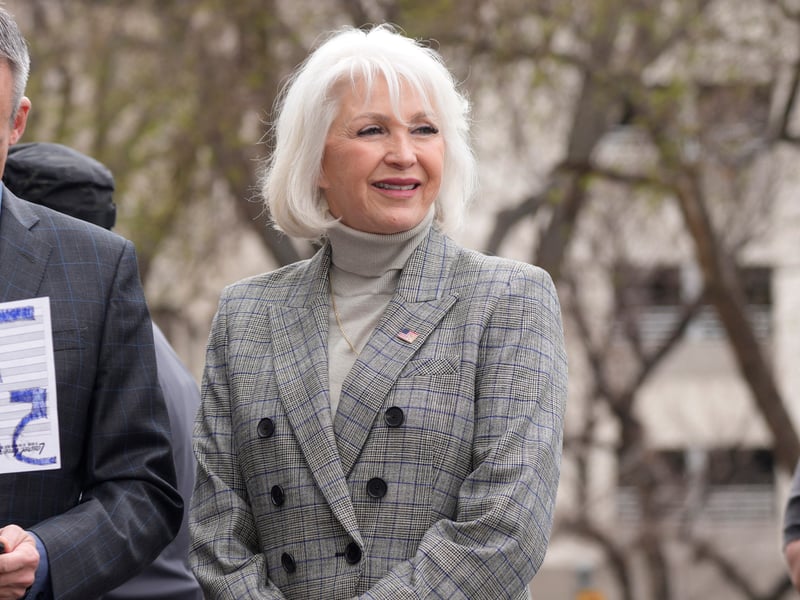
DENVER (CN) — Tina Peters, the former Mesa County, Colorado, clerk-recorder serving nine years in prison for leaking voting machine data, appealed a separate contempt conviction over recording a co-conspirator’s court proceeding on an iPad in 2022.
“Treat my client as if she were some other poor person and not outspoken or a public figure,” attorney John Case urged a three-judge Court of Appeals panel on the third floor of the Ralph Carr Judicial Center in Denver.
Prosecutors say that in May 2021, Peters instructed her deputy clerk Belinda Knisley to turn off security cameras and arranged for an associate to observe and photograph the voting machine trusted build, an update process conducted in person since the machines can’t connect to the internet.
Peters then reportedly sent data and passwords to a Florida-based company for analysis and allowed them to be posted on the social media site Telegram by Ron Watkins, a key player in the QAnon conspiracy movement.
On Feb. 7, 2022, before the district attorney’s office filed charges against Peters, she attended a court hearing in support of Knisley. During the hearing, the district attorney’s staff told 21st Judicial District Judge Matthew Barrett they saw Peters recording the proceeding on an iPad.
The next day, law enforcement seized the device from Peters. On Feb. 24, 2022, the district attorney’s office filed to cite Peters for contempt. Following Barret’s recusal, Fifth Judicial District Chief Judge Paul Dunkelman presided over Peter’s 2023 contempt trial and ultimately ordered her to pay a $1,500 fine.
Peters appealed the contempt conviction, arguing the district attorney’s office failed to meet its burden of proof by not presenting the court order which prohibited recording the court proceeding.
“Not a single witness in this case testified that there was a lawful order,” Case told the appellate panel.
Court of Appeals Judge Stephanie Dunn questioned Case on whether a paper on the door prohibiting recording constituted an order.
Case said he wasn’t there and the record didn’t specify, so he wasn’t going to speculate.
“Who knows? The only person who knows what the order is is Judge Barrett,” Case said.
Judge Christina Gomez asked Case about the claim that Peters lied to Barrett when she denied recording the proceeding, and whether that amounted to contempt.
Case acknowledged lying to a judge inherently violated an order, but noted the iPad hadn’t been admitted as evidence even though it could have proven she hadn’t recorded and therefore hadn’t lied.
“That was the only evidence she could show that proved her innocence and the judge wouldn’t admit it,” Case said.
In response, 21st Judicial District Deputy Attorney Richard Tuttle explained that investigators presented no iPad evidence because they could not get past the password.
Tuttle argued remotely from Grand Junction, citing the difficulties of traversing the mountain corridor during the winter season. He told the panel the notice of the prohibition on recording in Barrett’s courtroom had been posted on the door and was “apparently” laid out in a decorum order, a phrase Dunn was quick to question.
“Your wording is interesting. ‘The decorum order apparently prohibited recording.’ The burden is on the prosecution to prove it beyond a reasonable doubt,” Dunn said.
Gomez then quizzed Tuttle on what court order Peters’ lie violated.
“All dishonesty is an offense to the court regardless of whether there is an order or you are a witness under oath,” Tuttle countered. As an example, Tuttle said a person who lied about being in a car accident as an excuse for being late to court could also be held in contempt.
In closing, Case recalled Aesop’s story of the wolf and the lamb, in which a wolf searches for a reason to eat a lamb, and finding none, eats the lamb anyway.
“That lamb is in the Mesa County Jail and that wolf is in the Mesa County Court,” Case said.
Court of Appeals Senior Judge Daniel Taubman rounded out the panel. All three judges were appointed by Democratic governors: Taubman by Bill Ritter, Dunn by John Hickenlooper and Gomez by Jared Polis.
Dunn did not indicate when or how the court would decide the case but promised an order in due course.
Despite the iPad incident, Barrett eventually presided over Peters’ 2024 criminal trial over the election data leak. A jury found Peters guilty of four felonies and three misdemeanors, for which Barrett sentenced her to nine years in jail. Peters appealed in November.
 Follow @bright_lamp
Subscribe to our free newsletters
Our weekly newsletter Closing Arguments offers the latest about ongoing trials, major litigation and rulings in courthouses around the U.S. and the world, while the monthly Under the Lights dishes the legal dirt from Hollywood, sports, Big Tech and the arts.