
 Search Articles


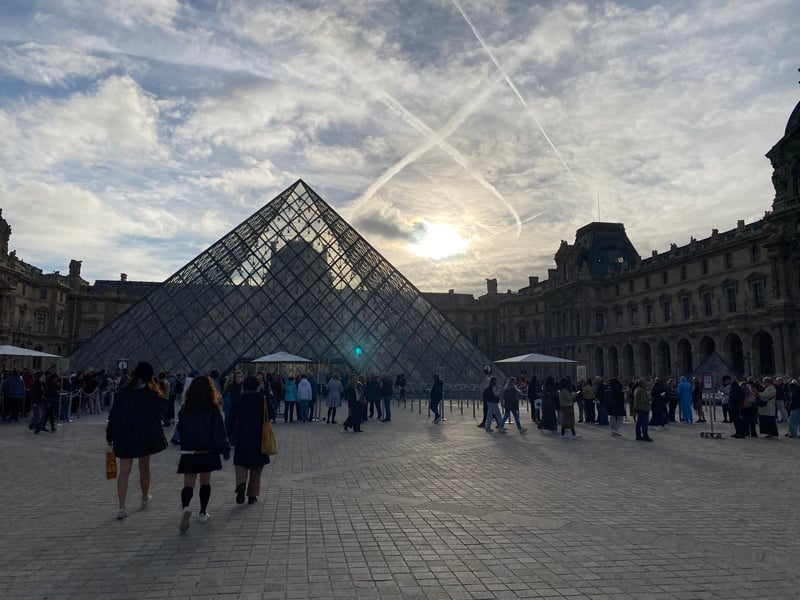
PARIS (CN) — Following one of the biggest jewelry heists in modern history, visitors swarmed into the Louvre’s Apollo Gallery Wednesday to catch a glimpse of the crime scene as the museum reopened to the public.
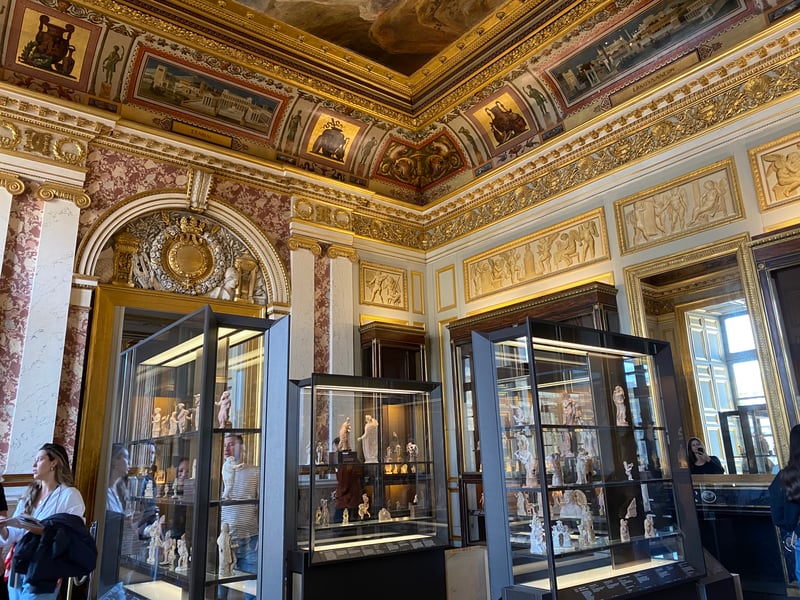
The gallery — on the upper floor of the Petite Galerie — is housed behind a gilded door, framed by marble columns, with ornate moldings on the walls. This is where the museum stores its collection of diamonds and jewels that monarchs have assembled for centuries. But now, it’s in the spotlight for something else — it’s where four thieves made off with an estimated $100 million in jewelry in a spectacular heist over the weekend.
“This is the room!” one tour guide exclaimed on Wednesday, gesturing around the circular space. He told the group he had created a new booklet of visuals last night to add to the tour.
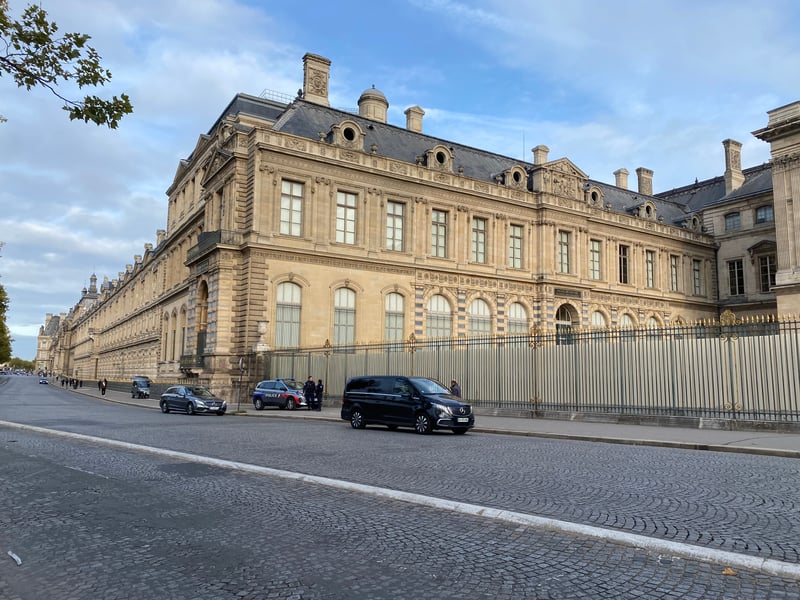
On Sunday morning at 9:30 a.m. — 30 minutes after the museum opened its doors — a truck pulled up outside the Apollo Gallery, which overlooks a busy road running along the Seine. They mounted a “monte-meubles” ladder, commonly used for moving furniture into French apartments, where doorways are narrow. Four thieves, some dressed as building workers, climbed to the window, carved the glass with a disc cutter and broke in to the most visited museum in the world.
There are conflicting reports as to whether the broken window triggered alarms, which has sparked controversy over the museum’s outdated security system. Once inside, the thieves reportedly threatened guards and broke into two glass cases to steal royal jewels. Eight minutes later, they sped away on two motorcycles after trying to set fire to their truck, unsuccessfully.
As of Wednesday, 60 investigators are still working to track down the whereabouts of the thieves and jewels. They made off with eight 19th century pieces; a tiara and brooch that belonged to Napoleon III’s wife, Empress Eugénie, Queen Marie-Amelie and Queen Hortense’s sapphire jewelry set, emerald jewels from Empress Marie Louise and the diamond “reliquary brooch.” They contain thousands of diamonds. Empress Eugénie’s crown, believed to have been dropped when the thieves fled, is damaged.
The crime made headlines around the world. French President Emmanuel Macroncalled it an attack on France’s heritage, and vowed to bring the crime’s perpetrators to justice.
But others are simply in awe.
On Wednesday, an English woman — who asked to go by her first name, Sally — was sitting by the window in the Apollo Gallery, alongside her 18-year-old son. For his birthday, she had already bought them tickets to visit the Louvre specifically for the Mona Lisa. Following the heist, he asked her if they could find this gallery, which is currently blocked to the public by a makeshift wall with “no photo” signs printed on paper.
“Never mind what’s been lost, which was awful, but it was quite clever, ingenious,” she told Courthouse News. “We’ve got to give them credit, it was bold and well thought out.”
Maddie and Gunnar Östhed, who traveled from Utah to Paris for the first time, came through the room a few minutes later. They were happy that no one got hurt, despite what was lost.
“In a weird way when I heard it was an art heist, I was so used to hearing about bombings and shootings, maybe this is bad to say, but I was happy,” Gunnar told Courthouse News. “In the chaos of the world today, I’m happy they didn’t freakin’ throw a bomb in here or something.”
Although the two had already planned to come to the Louvre and this gallery specifically, the recent crime added an unexpected historic element to the visit.
“We just wanted to come here and be here so we could say to our kids and family … I was there in the Louvre, looking at the blocked-off doors,” Gunnar said.
On Wednesday morning, Michael Rooney — an American who retired in Paris four years ago — was standing on the banks of the Seine, taking photos of the Apollo Gallery. Two police officers stood beside its walls. Rooney had come to the museum just to look inside at the gallery where the thieves broke in. He told Courthouse News that the heist was “amazing.”
“I mean, people don’t like robbery, but when something spectacular happens, you gotta tip your hat,” Rooney said. “God bless the French, but security’s never been their thing — but when something like this happens, excuse my language, it really pisses them off.”
Domestically, the heist has sparked political tension with leaders skirting blame. Extreme-right leader Marine Le Pen, who is calling for the president to resign, posted on X that although it’s not the moment to stir controversy, “responsibility requires us to note that our museums and historic buildings are not secured to the level of the threats weighing on them.”
The Louvre’s president, Laurence des Cars, has been sounding alarm bells over the museum’s security in recent years. The museum is understaffed, and in some wings, only a quarter of the area is under video surveillance. On Wednesday, in the section jutting off of the Apollo Gallery, there were three security guards across 12 galleries.
Rachida Dati, France’s minister of culture, has denied responsibility, insisting that the museum’s alarm system and evacuation procedure worked. She deflected blame to the security of the road outside — where the truck drove and parked, which wouldn’t fall under her jurisdiction.
Des Cars addressed France’s Senate for the first time since the heist Wednesday afternoon, and spent hours responding to questions. She remained humble throughout the session, acknowledging the museum’s obvious security shortcomings while attempting to correct the record on why that’s the case.
“We have an aging infrastructure that does not allow us to graft modern, latest-generation equipment, particularly in terms of video and detection, onto an infrastructure that simply does not support it,” she said.
Des Cars also noted this was a new method of attack; in recent years, measures have been implemented to protect against trends such as climate activists throwing soup on artwork.
Des Cars proposed implementing an independent police station within the museum; since the Louvre receives 30,000 visitors and 2,500 employees every say, “It’s a city within a city,” she said. Other measures include updating surveillance cameras and installing a barrier between the museum and the road.
“Museums are not and never will be fortresses,” she said. “They are, by nature, open. They are places of discovery, learning and pleasure.”
 Follow @lilyradz
Subscribe to our free newsletters
Our weekly newsletter Closing Arguments offers the latest about ongoing trials, major litigation and rulings in courthouses around the U.S. and the world, while the monthly Under the Lights dishes the legal dirt from Hollywood, sports, Big Tech and the arts.