
 Search Articles


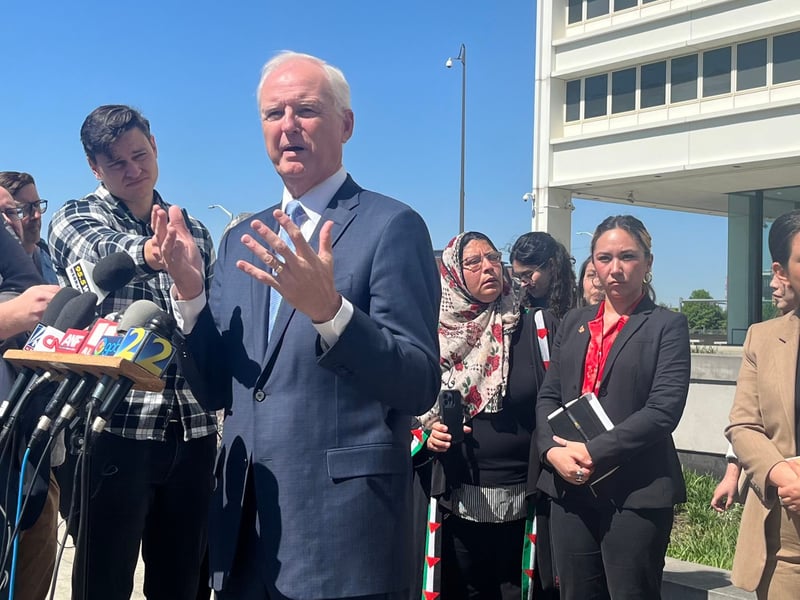
ATLANTA (CN) — Over a hundred international college students asked a federal judge on Thursday to allow them to resume their studies and work while the court determines whether the government abused its power in suddenly terminating their immigration records.
Attorney Charles Kuck argued the students are now vulnerable to detention and deportation and face irreparable harm without the judge’s intervention, as many are about to graduate next month, are currently employed or have accepted job offers for after graduation. He argued that none of the students have committed a deportable offense.
The case comes amid a national targeting of foreign students studying in the U.S. as part of the Trump administration’s immigration crackdown that has raised concerns over the due process rights of migrants.
“This is a disaster,” Kuck told reporters after Thursday’s hearing. “Doing this in January is very different than doing it in April. I don’t think any of this is unintentional. This is what the administration has been doing,” he added.
David Powell from the U.S. Attorney’s Office urged the judge to either limit the case to only the students from Georgia or transfer it entirely to Washington, D.C. Out of the 133 university students that are currently listed in the lawsuit, only 26 attend a college in the state.
“Each plaintiff has a unique circumstance,” Powell said.
Kuck argued that has nothing to do with the main issue at hand, which is why the students’ immigration records were abruptly terminated, and whether it violated their due process rights. He requested that the case stay in the Northern District Court of Georgia to create an equal solution and not waste additional court time and resources.
Calvert asked Powell if he could explain or provide more details on what led to the sudden record terminations or how they occurred, but the attorney said he didn’t know all of the underlying factors.
“At this point, we don’t have that information. I think it’s a centralized operation in D.C., but I’m not sure,” Powell said.
Last week, U.S. District Judge Victoria Calvert, a Joe Biden appointee, granted the students’ request for a temporary restraining order to reinstate their student status and SEVIS authorization. After a hearing on the motion, she found the students to have demonstrated a “substantial likelihood of success” on the merits of their claims that the government exceeded its authority in terminating the students’ SEVIS registration.
The online database known as SEVIS is used by U.S. Immigration and Customs Enforcement to track foreign students’ compliance with their F-1 student visa status. While its termination doesn’t automatically cause the student to lose their legal status, it can result in the revocation of their visa, which does dictate their lawful presence.
Some of the plaintiffs have already graduated but have remained in the country on “optional practical training,” a one-year period — or up to three for science and technology graduates — that allows employment in the U.S. after completing an academic degree. During that time, graduates work in their field and wait to receive their H-1B or other employment visas if they wish to continue working in the country.
“Many plaintiffs are mere weeks away from attaining their degrees. The loss of timely academic progress alone is sufficient to establish irreparable harm,” Calvert wrote in her order.
“Additionally, all plaintiffs report high levels of stress and anxiety resulting from the uncertainty around their futures. If plaintiffs cannot work or study, they cannot remain in the United States legally and will therefore be subjected to removal proceedings or forced to return to their native countries on their own. These harms could not be sufficiently compensated with monetary damages or avoided by a later decision on the merits,” the judge added.
During the first two weeks of April, the students received notification from their schools informing them they had been identified in a criminal records check and their SEVIS record was terminated or for “otherwise failing to maintain status” with a narrative citing deportability. Some were notified that their visas had been revoked. Many of the emails even directed students to leave the country.
But the students argue in their suit that they were in full compliance with the terms of their visa status, which allows a student to remain in the U.S. as long as they maintain a full course of study, avoid unemployment and are not convicted of a crime of violence with a potential sentence of more than a year.
However, the students do not have any criminal history that would warrant their SEVIS records being terminated. Kuck said their only criminal history consists of traffic citations or other minor misdemeanor offenses, many of which were ultimately dismissed.
“ICE has received 17 temporary restraining orders on this exact issue. They appear to be wrong,” Kuck said. “If any of the people were removable, they’d be at their houses, but they’re not.” He added that similar class action cases have also been filed in New Hampshire and Washington state.
Around 242,000 foreigners in the U.S. are employed through optional practical training, about 500,000 are pursuing graduate degrees and another 342,000 are undergraduate students.
As of April 24, over 280 colleges and universities have identified 1,800-plus international students and recent graduates who have had their legal status changed by the State Department, according to an Inside Higher Ed analysis.
Calvert said she will issue a ruling on the request for a preliminary injunction before the 14-day temporary restraining order she issued expires.
 Follow @Megwiththenews
Subscribe to our free newsletters
Our weekly newsletter Closing Arguments offers the latest about ongoing trials, major litigation and rulings in courthouses around the U.S. and the world, while the monthly Under the Lights dishes the legal dirt from Hollywood, sports, Big Tech and the arts.