
 Search Articles


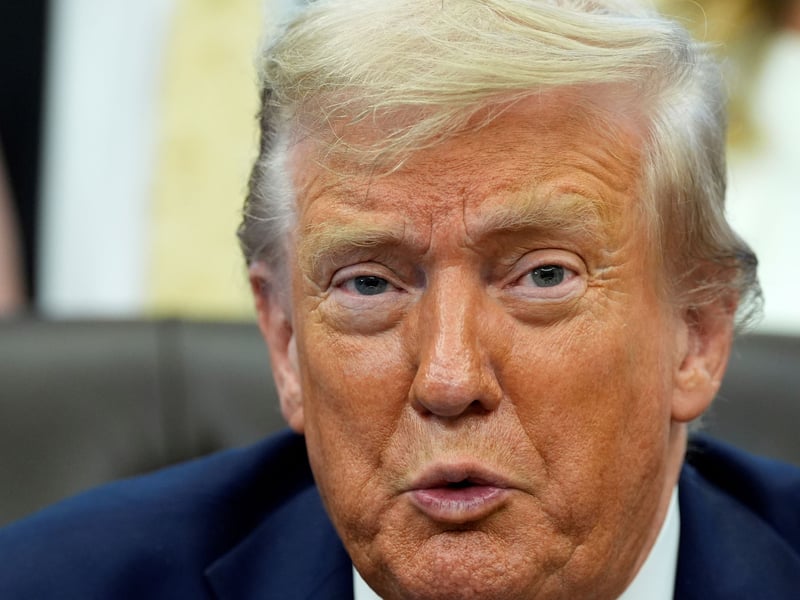
WASHINGTON (CN) — President Donald Trump advanced his brewing budget battle over foreign aid money at the Supreme Court on Monday, calling on the justices to let him unilaterally freeze billions of congressionally appropriated funds.
Trump has claimed absolute authority over funding decisions in recent weeks, aiming to skirt congressional appropriations and judicial oversight. In his latest move, he pushed the justices to pause a lower court ruling that would release around $4 billion in U.S. Agency for International Development contracts.
A lower court ordered the funds to be released by Sept. 30. The White House lambasted the ruling for causing an “unnecessary emergency and needless interbranch conflict.”
“The president can hardly speak with one voice in foreign affairs or in dealings with Congress when the district court is forcing the executive branch to advocate against its own objectives,” U.S. Solicitor General John Sauer wrote.
Nonprofits and private companies sued the administration after the wholesale pause of congressionally approved funds earlier this year. Trump claimed to cut off USAID funding to root out wasteful programs that do not align with his policy goals. Since then, overseas nonprofit groups and businesses have laid off tens of thousands of staff and shut down urgent lifesaving programs.
The AIDS Vaccine Advocacy Coalition and the Global Health Council said that the abrupt loss of funds caused severe harm to contractors and those who relied on their services. Trump countered, stating that forcing the government’s hand threatened to expend enormous sums of taxpayer dollars without conducting basic diligence to ensure that payments are free from fraud and abuse.
Months after slashing the agency’s funding, Trump officially shut down USAID in July.
USAID programs saved more than 90 million lives over the past two decades, according to a July study published in the Lancet. Researchers estimated that if the Trump administration’s funding cuts continue through 2030, 14 million people who might have otherwise lived could die.
This is the third emergency appeal Trump has filed in the monthslong back and forth over funding for the contractors. The high court issued a split ruling in March when the case first came before the justices, refusing to block $12 billion in funding disbursement for USAID contractors.
The administration was forced to pay nearly $2 billion in contractual work completed prior to a pause on foreign aid funds. Trump urged the justices to step in again last month to prevent the government from being forced to hand over billions more in contract funding before the fiscal year ends on Sept. 30.
Trump quickly withdrew the appeal after a favorable ruling from the D.C. Circuit. Trump simultaneously pushed Republican lawmakers to cancel about $4.9 billion in previously approved foreign aid contracts through a move known as a “pocket rescission.”
Under the Impoundment Control Act, the White House can place a 45-day hold on the budget line item it wants lawmakers to rescind. Trump sent a rescission notice to House Speaker Mike Johnson last week, demanding that Congress vote to cut the spending.
However, the Trump administration issued its pause less than 45 days before the end of the fiscal year, a timing loophole that effectively allows the administration to cancel the foreign aid funding without congressional approval.
Democrats on Capitol Hill characterized the move as plainly illegal, but Trump downplayed a potential pocket rescission as “simply the consequence of the ICA’s permitting the president to propose rescissions late in the fiscal year.”
The contractors returned to the lower court, looking for another path to securing funds. The court held that the administration likely had to disburse all appropriated funds. The administration said it was committed to releasing $6.5 billion in funds, but the lower court issued an order last week compelling the disbursement anyway.
Without the high court’s intervention, Trump warned that a single district court would be allowed to supplant Congress’ and the president’s authority over appropriations.
“Not only did the district court inject itself into a political process where the judiciary lacks comparative expertise, but it did so in the context of foreign policy decisions that have ‘long been held to belong in the domain of political power not subject to judicial intrusion or inquiry,’” Sauer wrote. “Indeed, the injunction threatens to override the public interest in ensuring that tax dollars are not spent for foreign assistance projects that ‘conflic[t] with American values,’ are ‘contrary to American interests,’ and undermine the president’s foreign policy.”
 Follow @KelseyReichmann
 Follow @kelseyreichmann.bsky.social
Subscribe to our free newsletters
Our weekly newsletter Closing Arguments offers the latest about ongoing trials, major litigation and rulings in courthouses around the U.S. and the world, while the monthly Under the Lights dishes the legal dirt from Hollywood, sports, Big Tech and the arts.