
 Search Articles


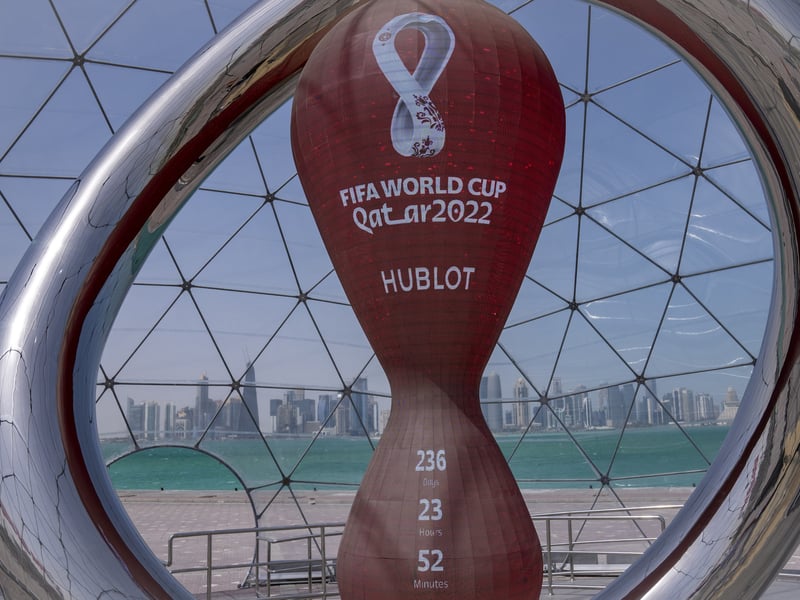
DENVER (CN) — A federal magistrate judge on Thursday maintained forced labor claims while dismissing human trafficking claims filed by dozens of Filipino migrants against the American contractors they say forced them into servitude to build stadiums for the 2022 FIFA World Cup in Qatar.
“Congress has extended the reach of the Trafficking Victim Protection Reauthorization Act’s private cause of action beyond the territory of the United States, though not quite as far as the plaintiffs claim,” wrote U.S. Magistrate Cyrus Chung in a 46-page opinion.
After Qatar won its bid to host the 2022 FIFA World Cup, it hired CH2M Hill International to manage construction projects, paying over $50 million to CH2M and Jacobs Engineering Group, which acquired CH2M in 2017.
While Jacobs was the primary contractor, Qatar’s Supreme Committee also hired other firms, including Al Jaber Engineering, Electro Mechanical Enterprises Qatar and Imar Trading, among others.
In 2023, over four dozen Filipino plaintiffs sued CH2M Hill Companies, Jacobs Engineering and their subsidiaries, followed by a second lawsuit filed by another group of plaintiffs earlier this year.
From 2012 to 2021, the anonymous migrant plaintiffs built five stadiums in Qatar under the kafala sponsorship system, which promised housing and food but often left workers in unsafe, overcrowded conditions.
The 2023 complaint alleged that employers confiscated passports, withheld wages and forced overtime. The workers claimed CH2M and Jacobs violated the Trafficking Victims Protection Reauthorization Act by failing to ensure safe labor standards and practices.
The contractors moved to dismiss the case on several jurisdictional grounds, including the argument that U.S. law doesn’t protect Filipino workers in Qatar.
Judge Cyrus found Congress intended the law to provide “a civil remedy for the foreign conduct that is prohibited by” the act, but noted its limits. He questioned the plaintiff’s lack of immigration status in the U.S., whether as a permanent resident or national, as a question of their ability to wield the law.
“Because the financial benefit to the defendants was felt in the United States, the plaintiffs say, they seek only a domestic application of section 1590,” Cyrus wrote. “The suggestion elevates hope over reason.”
After hearing oral argument last November, Cyrus dismissed claims against two subsidiaries, as well as four claims against Jacob’s and CH3M Hill, claiming negligence and unjust enrichment under the Trafficking Victims Protection Reauthorization Act.
Of the six claims, Cyrus left just two claims intact, one based on forced labor under the trafficking law and a related remedy seeking restitution to obtain the full wages entitled for their work.
“We view it as a complete win,” said Sean Grimsley, who practices with Olson Grimsley in Denver. Although Chung dismissed the plaintiff’s human trafficking claim, he kept the forced labor and restitution claims alive for further proceedings.
“We hope to finally get some accountability for the abuses of forced labor. Even though this happened in Qatar, they were forced to work in a venture involving these U.S. companies,” Grimsley said.
The contractors’ attorney told Courthouse News the legal team is evaluating next steps.
“This is only a preliminary ruling before any discovery or factual determinations," said Justin Rassi, an associate at Debevoise & Plimpton, via email. “Our position remains the same as it has been from the start: the claims underlying this entire matter are without merit, and we are confident that we will ultimately prevail.”
 Follow @bright_lamp
Subscribe to our free newsletters
Our weekly newsletter Closing Arguments offers the latest about ongoing trials, major litigation and rulings in courthouses around the U.S. and the world, while the monthly Under the Lights dishes the legal dirt from Hollywood, sports, Big Tech and the arts.