
 Search Articles


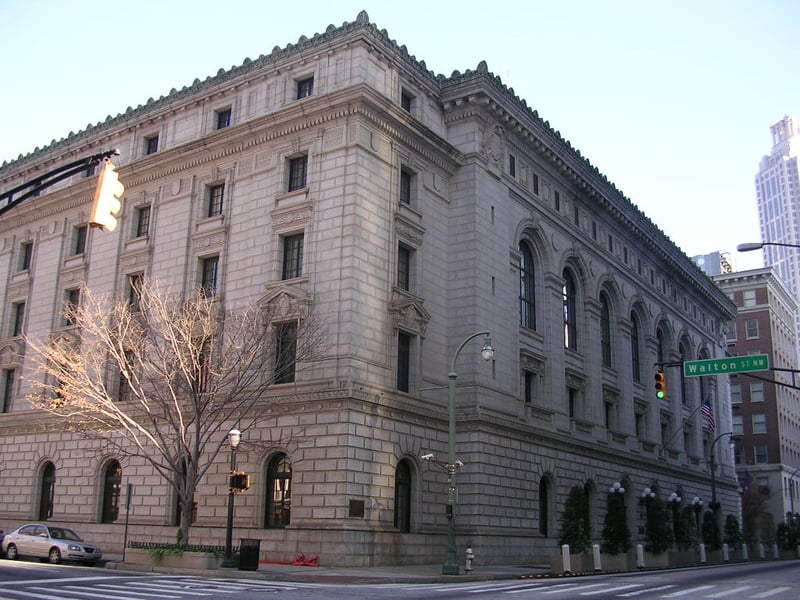
ATLANTA (CN) — Juvenile offenders sentenced to life in prison with the possibility of parole are doomed to die incarcerated, an attorney for more than a hundred Florida felons argued at the 11th Circuit Court of Appeals on Thursday.
In 2012, the United States Supreme Court ruled that the Eighth Amendment prohibits mandatory life sentences without the possibly of parole for juveniles convicted of murder, setting up standards for considering parole based on “maturity and possibility of rehabilitation.”
But Marsha Levick, an attorney representing 170 felons sentenced to life sentences for murder, told a three-judge panel that inconsistent practices by Florida’s parole board routinely ignore those youth sentencing standards upheld by the high court, which are supposed to allow for “some meaningful opportunity to obtain release based on demonstrated maturity and rehabilitation.”
“Children who are convicted of homicide crimes or non-homicide crimes under the age of 18 … cannot be sentenced to die in prison,” said Levick of the Juvenile Law Center. “Before such a sentence can be imposed, the court must provide an opportunity — a meaningful opportunity, that’s the operative word — for that individual to demonstrate growth and maturity.”
The appeal stems from a 2021 class action filed against the Florida Commission on Offender Review by a group of inmates convicted of murder as juveniles.
The group argues that constitutional principles that allow relief for minors sentenced to mandatory life without parole should also apply to those sentenced to life with parole. But U.S. District Judge Paul Bryon, a Barack Obama appointee, disagreed in an opinion last year, granting summary judgment to the commission.
In court on Thursday, Levick argued Florida’s parole system does not properly consider past immaturity when offenders come up for possible release.
“There are so many things that are wrong with the parole system here that I want to call out to the court,” Levick said. “There is a sham standard. Our position is that parole process in Florida is a sham.”
Furthermore, Levick argued her clients are not necessarily eligible for parole when they hit their mandatory 25-year sentence for murder. Instead, they only get an initial hearing in which the Florida Commission on Offender Review sets a later parole date.
“In every one of our class members cases, the presumptive parole date has been set 40 years ahead of their minimum 25-year sentence,” she said — effectively solidifying a life sentence without possibility of release.
The appellate judges pushed back on her assertion.
“How can you say that when you have had [class members] released?” questioned U.S. Circuit Judge Kevin C. Newsom, a Donald Trump appointee.
U.S. Circuit Judge Jill A. Pryor, a Barack Obama appointee, concurred.
“You cannot say people have not been paroled,” she said.
Levick acknowledged that 22 of her class action clients have been released in the last 12 years.
Jeffrey DeSousa, attorney for the state, told the panel that the parole commission does in fact consider youthfulness in its parole hearings.
“There’s no question that the commissioners do consider youth" in sentencing, DeSousa said.
In addition, he said, the commissioners hold interviews after the initial parole hearing in intervals of between one and seven years.
“Those subsequent interviews are meaningful,” DeSousa said, reiterating that some members of the class action have been released. “I think that shows our process is working.”
U.S. Circuit Judge Barbara Lagoa, also a Trump appointee, also sat on the panel.
The judges did not indicate when they will reach a decision in the case.
 Follow @alexbpickett
Subscribe to our free newsletters
Our weekly newsletter Closing Arguments offers the latest about ongoing trials, major litigation and rulings in courthouses around the U.S. and the world, while the monthly Under the Lights dishes the legal dirt from Hollywood, sports, Big Tech and the arts.