Search Articles


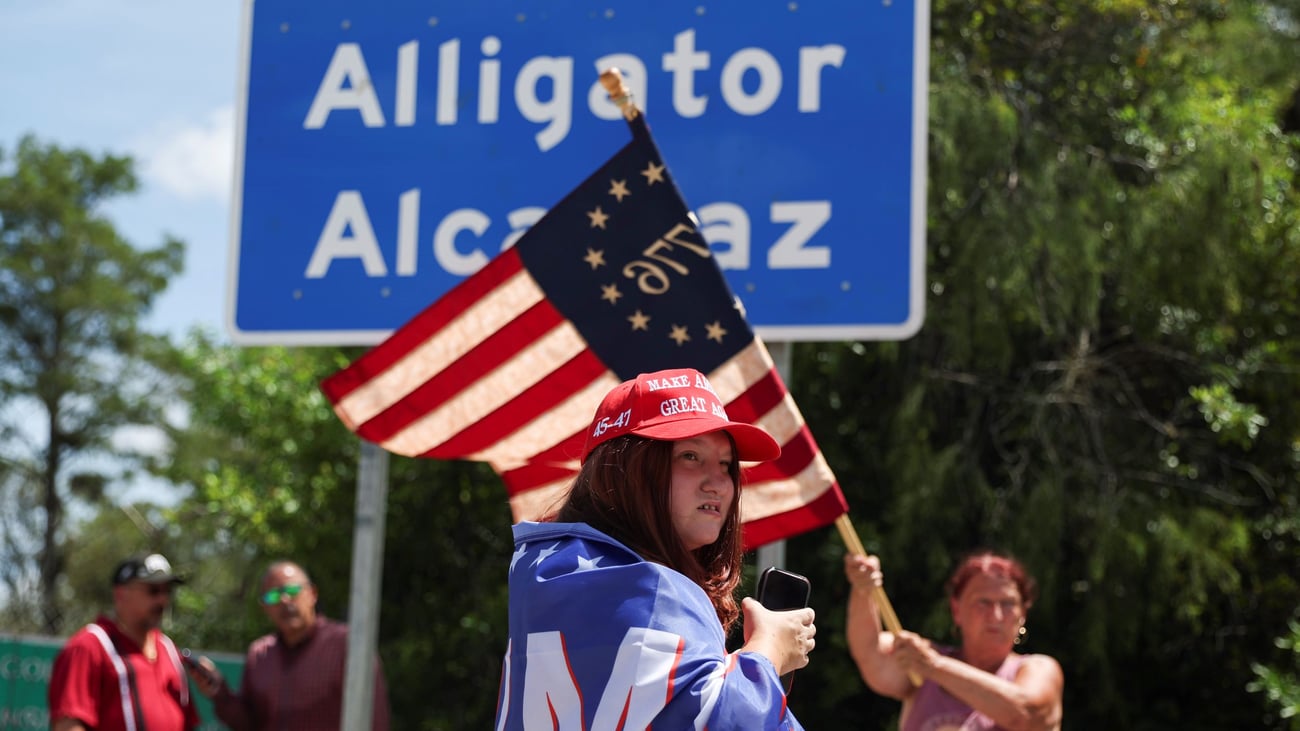
MIAMI (CN) — Florida Governor Ron DeSantis officially announced on Thursday the closure of the South Florida migrant detention center known as “Alligator Alcatraz" that brought the ire of environmentalists and civil rights advocates alike.
“I said at the beginning that this was an emergency solution that would be temporary that once [the Department of Homeland Security] had the wherewithal to handle these illegal aliens, particularly the criminal illegal aliens, that they would be able to do so,” the Republican said at a news conference near the site. “But in terms of us managing this facility, the minute that’s not needed, we would break down the facility. So Alligator Alcatraz fulfilled the role it was designed to serve.”
Rumors of the detention center’s closing spread in May with reports of detainees moved and vendors pulling out of the site. Last week, U.S. Immigration and Customs Enforcement confirmed detainees had been relocated for their safety as the Atlantic hurricane season began.
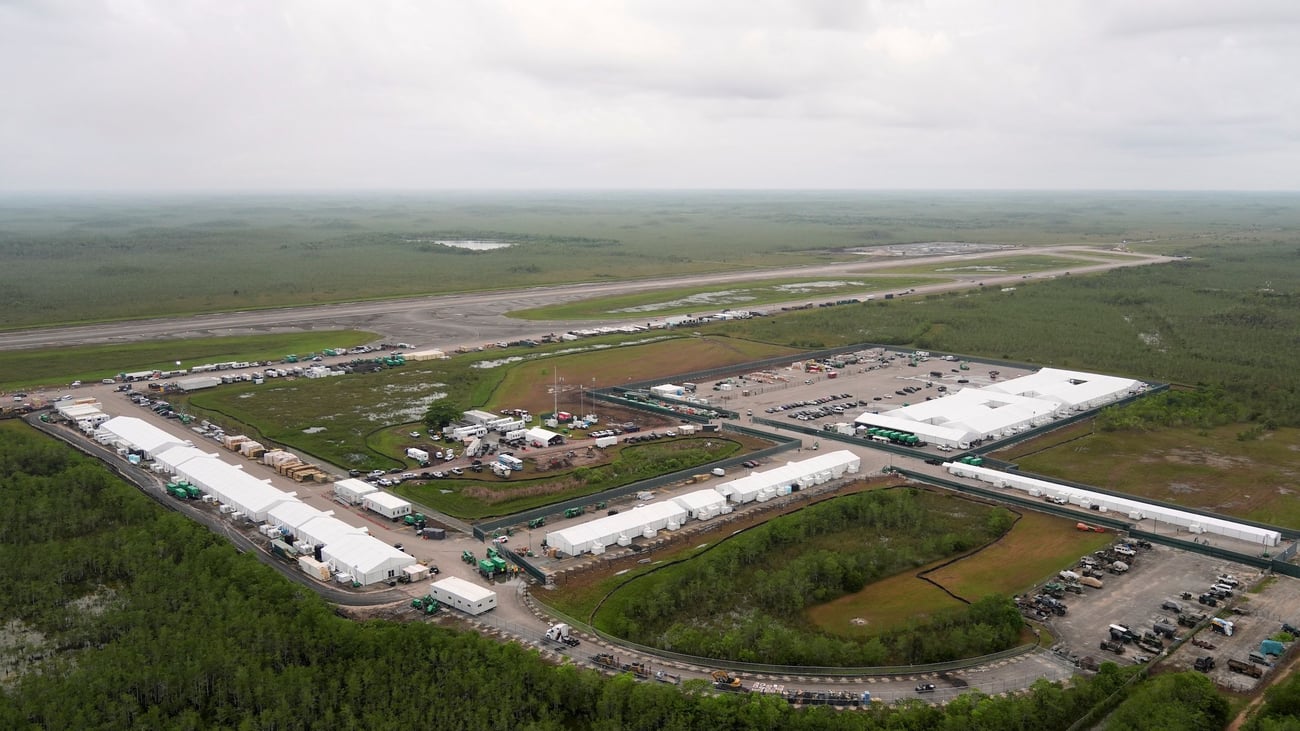
Last June, in response to Trump’s immigration crackdown, DeSantis and Florida Attorney General James Uthmeier proposed the idea of a detention center in the Everglades and used emergency powers to acquire the Dade-Collier Training and Transition Airport, a small runway surrounded by the Big Cypress National Preserve and Everglades National Park.
Within days, trucks carrying prefabricated housing, generators, security lighting and fill dirt entered the area and workers hastily set up tents and trailers to house those arrested by immigration authorities and state law enforcement.
Trump visited the facility on July 1, 2025 — the day before the first detainees arrived — and told reporters, “We’re going to teach them how to run away from an alligator if they escape prison.”

On Thursday, DeSantis championed the facility that he said deported 21,000 detainees over the last year — the highest of any state.
“Those would have been people, by and large, released back into society and Florida had this space not been there,” DeSantis said, holding up a list of some of the detainees who were arrested on charges of sexual battery and murder. “How would you want those people released back on the street? No, that’s not how we roll.”
White House border czar Tom Homan joined DeSantis, praising Trump and criticizing Democrats’ approach to immigration enforcement.
“When you become a sanctuary state and do the complete opposite of what the state of Florida does, there’s going to be more collateral arrests, more agents in your neighborhood and your community is going to be unsafe,” Homan said. “We hope more governors follow the lead of Governor DeSantis.”
Environmental activists, indigenous tribes, Democratic state lawmakers and members of Congress have decried the detention center as inhumane and detrimental to the ecosystem, pointing to reports of flooding, pest infestations, sewage backups and light pollution.
The American Civil Liberties Union and a class of detainees accused state and federal officials of restricting attorney-client communication. In March, a judge granted a preliminary injunction requiring unmonitored phone calls and ensuring in-person visits. The state is currently appealing to the 11th Circuit.
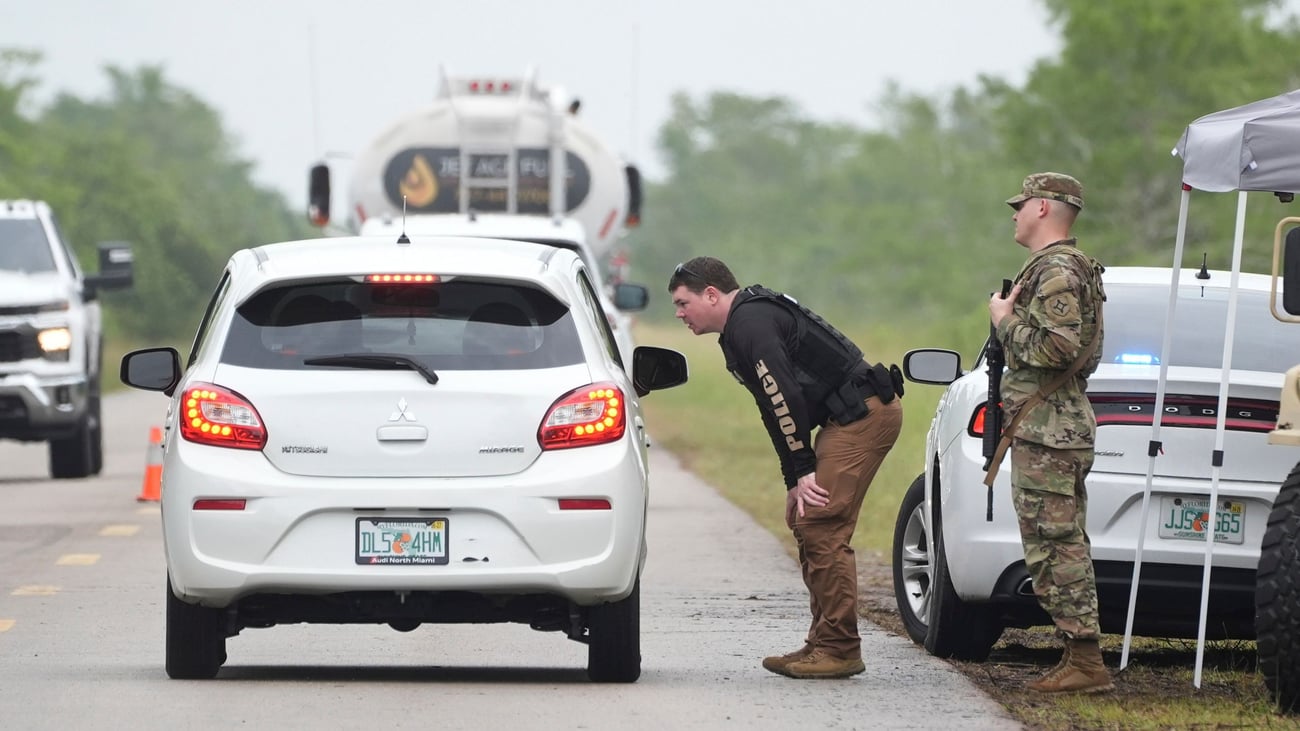
Friends of the Everglades, the Center for Biological Diversity and the Miccosukee Tribe of Florida also sued over building the detention center without first going through any environmental review. A federal judge sided with the environmentalists, prompting two separate appeals to the 11th Circuit by the state.
In a pair of rulings, the appeals court ultimately found state officials “unilaterally” controlled the detention center, barring the claims that the site violates federal environmental laws. The facility was allowed continue operating while the suit pended in Miami federal court.
It’s unclear how the closure of the facility will affect current litigation.
Friends of the Everglades and the Center for Biological Diversity vowed to fight for full remediation of the damage done to the Everglades.
“The governor’s press conference confirmed the theory of our case," said Paul J. Schwiep of Coffey Burlington and counsel for Friends of the Everglades and the Center for Biological Diversity. “This facility was coordinated between the state and the Department of Homeland Security behind closed doors, built without public scrutiny, and operated in secrecy.”
“ Now the administration believes it can quietly walk away and leave its mess for others to clean up," Schwiep continued. “The law will not allow them to escape accountability. We will ask the courts to ensure that the environmental damage is fully addressed, that the site is restored, and that no future administration can repeat this mistake.”
In addition to concerns about the environment and human rights, critics also point the huge cost of running the facility. Although DHS earmarked $608 million to reimburse the state, only $58 million has been disbursed. The entire cost of the yearlong operation is estimated to be more than $1 billion.
“We will get it,” DeSantis said about reimbursement on Thursday. “I was there with Tom and the president, and the president said, ‘Get Florida their money.’”
The fate of the land also remains unclear.
Miami-Dade County Mayor Daniella Levine Cava said the county will attempt to buy and transfer the airstrip land to the National Park Service for Everglades restoration efforts.
“Once this facility is decommissioned, we have an opportunity to permanently protect these lands for Everglades restoration and ensure they remain protected for generations to come,” said Mayor Levine Cava.
But DeSantis downplayed the proposal.
“Over the last six or seven years, there were discussions about this strip, if you just took everything out, would that meaningfully aid Everglades restoration?” he said. “I think the view was that it really wouldn’t make a huge impact, it would be costly. So I’m not sure that that’s something our administration is going to push. It was fine the way it was.”
 Follow @alexbpickett
Subscribe to our free newsletters
Our weekly newsletter Closing Arguments offers the latest about ongoing trials, major litigation and rulings in courthouses around the U.S. and the world, while the monthly Under the Lights dishes the legal dirt from Hollywood, sports, Big Tech and the arts.