
 Search Articles


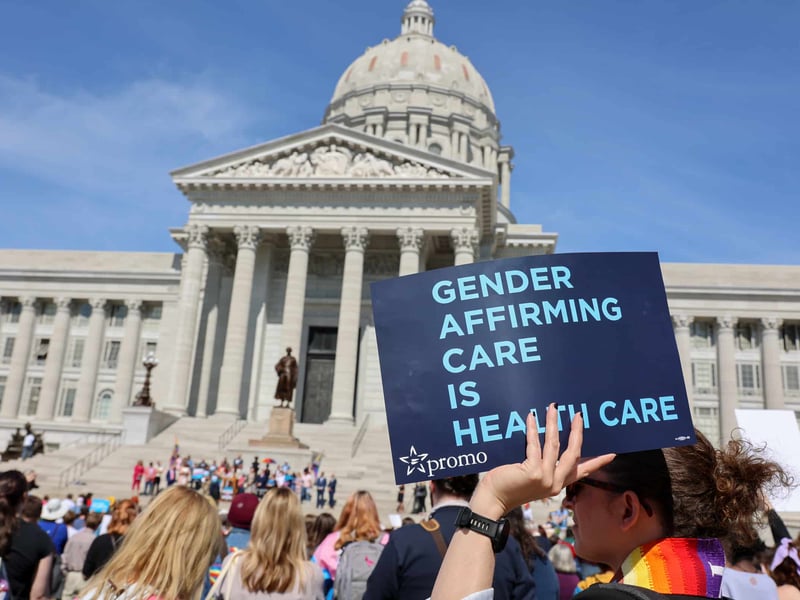
(CN) — The state of Florida asked an 11th Circuit panel in Miami on Wednesday to reinstate its ban on gender-affirming care for minors that was struck down by a federal judge last year.
The state’s attorney, Mohammad Jazil, argued the ban is not discriminatory as found by the judge, and that the law was enacted out of medical concerns over the treatment of individuals with gender dysphoria.
He said that those individuals are still able to obtain behavioral health therapy services under the state’s Medicaid program.
“Low or very low-quality evidence supports the treatments for gender dysphoria, meaning the treatments might not work,” Florida wrote in its appellant brief.
“There are first-person accounts of botched treatments. The treatments also come with side effects like infertility. And there are known unknowns like the effects on brain development and cognition,” the state added.
But the plaintiffs, who are parents of transgender children, argue the law serves no legitimate state interest and was brought out of a desire keep transgender individuals out of Florida.
“We don’t think this is medically indicated,” attorney Adam Unikowsky told the 11th Circuit panel.
Unikowsky pointed to false statements repeatedly made by Florida legislators about “castration,” “mutilation,” and “sterilization” of children and expressions of explicit antitransgender bias.
He also noted that the state’s emergency informed consent forms for transgender health care were found to be “plainly designed to discourage gender-affirming care, not to provide accurate information” by the lower court.
But U.S. Circuit Judge Andrew Brasher seemed persuaded by the state’s argument that the ban was not motivated by transgender animus.
“What if a person on the medical board thought this is not the right way to treat gender dysphoria, this is a bad idea and is being overprescribed, so we need to make it harder to get this,” the Donald Trump appointee said. “Why cant the state have this view that there are other forms of treating gender dysphoria that is preferred? Why is that animus?”
Brasher did, however, say that if the state instructed emergency rooms to not treat transgender individuals or those with gender dysphoria, that would constitute a discriminatory animus in his view.
U.S. Circuit Judge Adalberto Jordan questioned whether they should wait for further developments from the Supreme Court before making a ruling.
Last month, the justices heard arguments over whether a nearly identical law in Tennessee violates the Constitution, but have yet to issue a decision.
“You have a stay and the state of Florida is not being harmed by the district court order in a sense. So, I’m wondering whether or not it makes sense to wait for at least a little while to see what happens next,” the Barack Obama appointee said.
Brasher appeared to agree, noting that the lower court might not have come to the same conclusion if the high court had found the Tennessee ban constitutional.
U.S. District Judge Virginia Covington, a George W. Bush appointee sitting by designation from the Middle District Court of Florida, rounded out the panel.
Alabama, Arkansas, Georgia, Idaho, Indiana, Iowa, Kansas, Kentucky, Louisiana, Mississippi, Missouri, Montana, Nebraska, North Dakota, Ohio, Oklahoma, South Carolina, South Dakota, Tennessee, Texas, Utah, and West Virginia submitted an amici curiae in support of Florida.
The American Academy of Pediatrics, the American Medical Association, the American Pediatric Society, the Endocrine Society, along with several other medical and mental health organizations also filed briefs in support of the plaintiffs.
They argue empirical evidence indicates that gender-affirming care, including the prescription of puberty blockers and hormone therapy to carefully evaluated patients who meet diagnostic criteria, can lead to significant improvements in the mental health and overall wellbeing of adolescents with gender dysphoria. If not treated, or treated improperly, gender dysphoria can result in debilitating anxiety, depression, and self-harm, the groups said.
As of December, 26 states have passed bans on gender-affirming care for minors.
Bans in Arkansas and Montana have also been put on hold by courts, while those in Alabama, Georgia, Idaho, Indiana, Kentucky, Louisiana, North Carolina, North Dakota, Ohio, Oklahoma, Tennessee, and Texas are being challenged in litigation.
 Follow @Megwiththenews
Subscribe to our free newsletters
Our weekly newsletter Closing Arguments offers the latest about ongoing trials, major litigation and rulings in courthouses around the U.S. and the world, while the monthly Under the Lights dishes the legal dirt from Hollywood, sports, Big Tech and the arts.