
 Search Articles


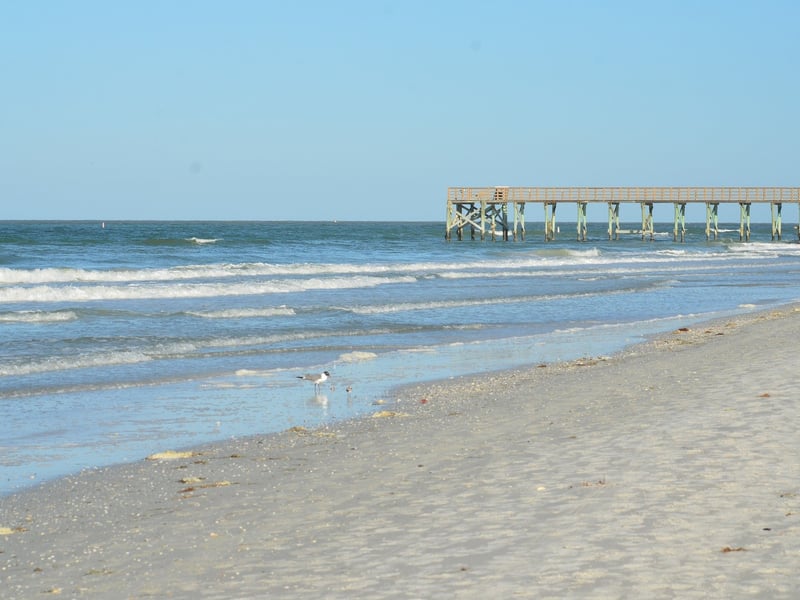
ATLANTA (CN) — Two Florida property owners asked the 11th Circuit on Tuesday to strike down an ordinance allowing broad beach access to the public.
The waterfront property owners’ appeal of a District Court decision upholding the ordinance is yet another fight over “customary use,” which permits the public to use dry sand areas of privately owned land if that right has been established for a continuous period.
“This is their homestead,” Timothy Weber, representing the property owners, told the three-judge panel. “This is their castle, the place that they’re supposed to have despotic dominion over.”
In the summer of 2018, the town of Redington Beach passed an ordinance that allows the public to use dry sand areas of the beach up to 15 feet away from waterfront properties. The Florida Constitution already allows public access to all beaches below the mean high water line — essentially the part of the beach that becomes wet during high tide. Yet, the doctrine of customary use allows for public access to part of the dry sand areas if it’s “ancient, reasonable, without interruption and free from dispute.”
A group of waterfront property owners sued the town in 2019, arguing the ordinance amounted to the unconstitutional taking of their property. A federal judge agreed, ruling in favor of the property owners, but during a subsequent appeal, the 11th Circuit sent the case back to the District Court for reconsideration, which then concluded the town adequately showed a history of customary use of the beach dating back to the municipality’s founding in 1935.
During oral arguments Tuesday, Weber argued the town did not show enough evidence that his clients’ particular plots of land were used by the public in the past.
“I think the problem is the way the town presented the case,” Weber said. “The town couldn’t offer evidence that anyone was ever on plaintiffs’ private property because they never established where the line was and where the people went, and so I would submit to the court it was the town’s burden, not my burden, to come in and prove an exact trespass.”
U.S. Circuit Court Judge Britt Grant pushed back against Weber’s assertions.
“But the town did have a lot of evidence of people regularly using the beach, people going for walks on the beach, people sunbathing on the beach, people regularly using the beach, and so in order for us to be able to accept that there wasn’t evidence of people using the private part of the beach, we’d have to also accept that nobody ever passed the mean high tide line,” said Grant, a Donald Trump appointee, adding the town used to even let people drive on the beach. “All of those things to me tend to suggest that at some point, it was some regular point, people were using the beach above the mean high tide line.”
Weber contested that the witness testimony at the District Court did not establish exactly where the public used the beach.
“You can’t take testimony that people put their stuff down in the sand and say that they were on private property,” he said. “You have to come in and establish the historical mean high waterline on this beach.”
U.S. Circuit Court Judge Elizabeth Branch seemed to agree.
“Because having witness testimony about dry sand, it could also mean that they were on the public part below the mean high waterline, correct?” the fellow Trump appointee asked.
“Absolutely, and the evidence shows that they could very well be on public property,” Weber answered.
Robert Eschenfelder, Redington Beach’s attorney, defended the evidence of longstanding customary use.
“From the town’s perspective, it’s a bit frustrating because the town is being sued for the doctrine of customary use, which the town didn’t create,” Eschenfelder said. “It is a common law doctrine recognized by the Florida Supreme Court many decades earlier.”
“The property owners’ counsel wants to muddy the sand, so to speak, by saying, ‘Well, you didn’t specifically figure out where the mean high waterline is,” he added.
“But isn’t the mean high waterline a very important point?” Branch questioned. “Because dry sand doesn’t tell you whether it’s private or public at any moment.”
Eschenfelder conceded that the mean high waterline was not measured because, according to Florida statute, that line is determined by an average of 19 years’ worth of high tides.
“So we’re going back from my witnesses — 68 years was the oldest witness who I was able to generate — and so that’s several mean high water marks,” he said. “So was I expected to go and take all of those measurements? It changes over time.”
Eschenfelder argued much of the disagreement comes from the new residents buying property without understanding the concept of customary use.
“They come from out of state, and they don’t know what the uses of the town’s beach is,” he said. “All they knew is I’m getting out of the cold, and I’m coming to Florida, and I’m buying a beautiful house.”
“They could have come to the two public hearings that were conducted by the commission in adopting the ordinance in accordance with Florida law,” he continued. “They didn’t. Instead, they just chose to sue.”
U.S. Circuit Court Judge Robin Rosenbaum, a Barack Obama appointee, joined Grant and Branch on the panel.
 Follow @alexbpickett
Subscribe to our free newsletters
Our weekly newsletter Closing Arguments offers the latest about ongoing trials, major litigation and rulings in courthouses around the U.S. and the world, while the monthly Under the Lights dishes the legal dirt from Hollywood, sports, Big Tech and the arts.