
 Search Articles


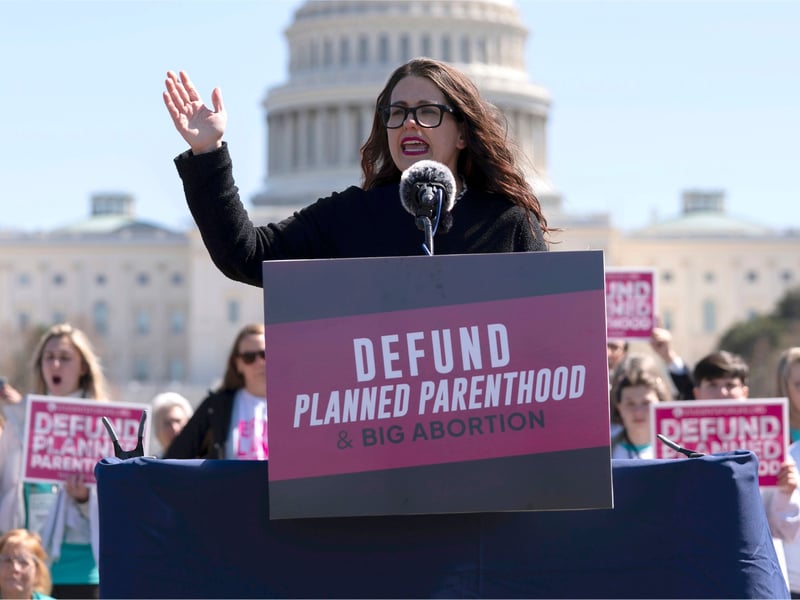
(CN) — A three-judge panel of the First Circuit ruled Friday that Planned Parenthood is unlikely to succeed in its claims that a new federal law denying it Medicaid funds is unconstitutional.
The panel overturned a lower court’s order that had temporarily blocked a provision of President Donald Trump’s “Big, Beautiful Bill,” signed into law on July 4, which removes federal Medicaid funding for one year from abortion providers that received more than $800,000 in Medicaid funds in fiscal year 2023, as well as any entities affiliated with such providers.
In practice, the law applies almost exclusively to Planned Parenthood-affiliated providers, with only two other unrelated organizations meeting the criteria for defunding.
In Friday’s ruling, the panel disagreed with U.S. District Judge Indira Talwani’s reasoning for her preliminary injunction, and found that the law doesn’t constitute a bill of attainder — a law that punishes a specific individual or group without a trial — because it doesn’t issue a punishment.
“It instead uses Congress’s taxing and spending power to put appellees to a difficult choice: give up federal Medicaid funds and continue to provide abortion services or continue receiving such funds by abandoning the provision of abortion services,” U.S. Circuit Judge Gustavo Gelpí wrote in the panel’s opinion. “That the law imposes a difficult choice on the recipient of federal funds does not demonstrate that Congress is punishing the recipient for past action — an intrinsic element of a bill of attainder.”
U.S. Circuit Judges Seth Aframe and Lara Montecalvo joined Gelpí on the panel. All three were appointed by President Joe Biden. The First Circuit panel previously stayed the preliminary injunction pending appeal in September.
Although federal law already prohibits federal funds from being used to provide abortions, Planned Parenthood uses Medicaid funds to provide other services, including birth control, cancer screenings and prenatal care.
According to a November report from Planned Parenthood, since the “Big, Beautiful Bill” was passed, 20 of Planned Parenthood’s health centers have been forced to close.
Shortly after the law’s passage, Planned Parenthood Federation of America and two of its affiliates challenged the legislation, and Talwani, a Barack Obama appointee in the District of Massachusetts, found that Planned Parenthood was likely to succeed in its claims that the legislation is an unconstitutional bill of attainder and that it violates the First Amendment and equal protection clause.
The appeals panel also pushed back on Talwani’s determination on the First Amendment. Planned Parenthood argued this provision punishes its affiliates for their association with Planned Parenthood even if they themselves don’t provide abortions, violating their right to freedom of association.
But the panel found that a more reasonable interpretation of the word “affiliates” in the law is that it refers to entities that exist “under common control” with abortion providers and that the federal court could conduct fact finding to determine whether Planned Parenthood affiliates that don’t provide abortions meet this definition.
Planned Parenthood also claimed that the law violates the equal protection clause by singling it out for defunding while allowing abortion providers that don’t meet the law’s criteria to retain Medicaid funding. But the panel found that the law is nonetheless rationally related to the federal government’s goal of reducing abortions.
“There are plausible reasons for treating ‘prohibited entit[ies]’ differently from other abortion providers, particularly where Congress viewed these entities as the most significant recipients of Medicaid funds,” Gelpí wrote.
The U.S. Department of Health and Human Services, which oversees the Centers for Medicare and Medicaid Services, did not immediately respond to an after-hours request for comment on the ruling.
Planned Parenthood Federation of America’s president and CEO Alexis McGill Johnson criticized the ruling in an emailed statement.
“Today, a court has once again allowed the Trump administration to enforce Congress’s unconstitutional ‘defund’ of Planned Parenthood — enabling their attempts to block access to care for patients most in need and force Planned Parenthood health centers to the financial brink," McGill Johnson said. “The intent is clear: They want to shut down Planned Parenthood health centers and make it harder for everyone, everywhere to get the health care they need. But this is far from over. Planned Parenthood will never stop fighting for patients, and we will never stop serving the communities that rely on Planned Parenthood health centers for care. ”
In a separate challenge to the law brought by 22 states and the District of Columbia, Talwani issued another preliminary injunction last week blocking the federal government from defunding Planned Parenthood and other providers in those states.
Subscribe to our free newsletters
Our weekly newsletter Closing Arguments offers the latest about ongoing trials, major litigation and rulings in courthouses around the U.S. and the world, while the monthly Under the Lights dishes the legal dirt from Hollywood, sports, Big Tech and the arts.