
 Search Articles


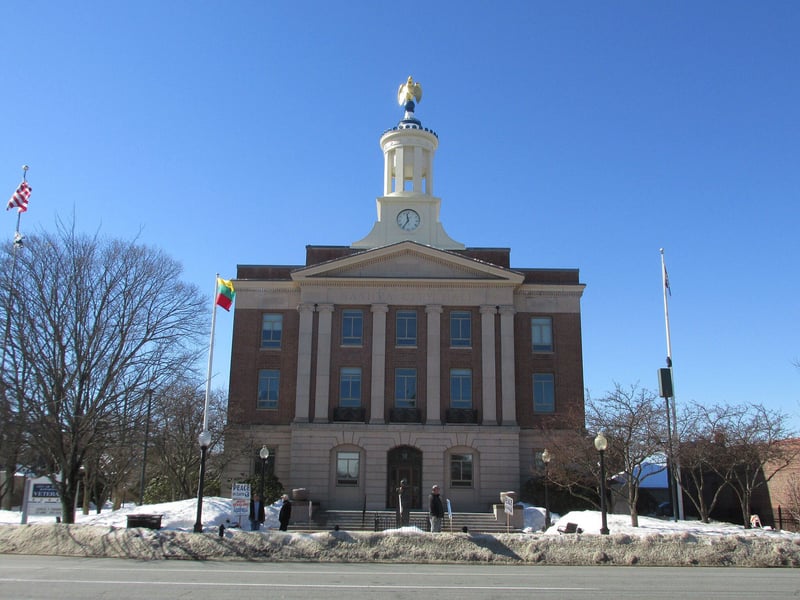
BOSTON (CN) — A New Hampshire city that allowed citizens to fly flags with political and other messages on a “citizen flagpole” outside City Hall couldn’t remove flags with messages it didn’t like, the First Circuit ruled Monday.
This was illegal “viewpoint discrimination” that violated the First Amendment, wrote U.S. Circuit Judge Sandra Lynch in a 23-page decision.
Starting in 2017, the city of Nashua — the state’s second-largest city with 92,000 people — allowed anyone who submitted a request to fly a flag outside City Hall. Flags were flown in support of Pride Month, Lutheranism, the Libertarian Party, Brazilian Independence Day, the Lions Club and organ donation.
But when Bethany Scaer flew a flag in 2020 opposing transgender women in women’s sports, the city took it down the next day. Scaer sued, but a lower court denied a preliminary injunction.
A similar case involving Boston’s City Hall flags led the First Circuit to hold in 2021 that the city could censor speech on its own property by removing a Christian flag. But the next year, the Supreme Court unanimously disagreed.
However, the Supreme Court suggested the result might have been different if Boston hadn’t simply allowed anyone to fly a flag and had made it clear that the flags represented official government speech. A week after that decision in 2022, Nashua adopted a new policy saying that it would allow flags only if they were “in harmony with city policies and messages that the city wishes to express and endorse.”
In 2024, after this lawsuit was filed, the city scrapped the citizen flagpole altogether and went back to flying only the official Nashua city flag. Scaer didn’t contest the 2024 policy, but she continued litigating to request a declaration that the 2022 policy was unconstitutional.
On appeal, the question was whether the city’s policy claiming a right to reject messages it disliked was enough to transform the citizens’ flags into “government speech.” Lynch, a Bill Clinton appointee, said it wasn’t.
For one thing, the public perceived the messages as coming from citizens, not the city, Lynch wrote. “From 2017 onward, both the public and city officials commonly used the name ‘citizen flagpole,’ not the ‘Nashua government flagpole.’"
In addition, the city “regularly permitted a rotating array of private flags, which conveyed different and sometimes dissonant messages.” And the city never “deputized” citizens to speak on its behalf, Lynch found.
“Nashua was doing no more than simply approving that private speech with which it agreed, despite operating the flagpole as what we conclude was a forum for such private speech,” Lynch concluded.
“If private speech could be passed off as government speech by simply affixing a government seal of approval without more significant government involvement, the government could silence or muffle the expression of disfavored viewpoints.”
U.S. Circuit Judge Jeffrey Howard, a George W. Bush appointee, and U.S. Circuit Judge Gustavo Gelpí, who was appointed by Joe Biden, joined the ruling.
Subscribe to our free newsletters
Our weekly newsletter Closing Arguments offers the latest about ongoing trials, major litigation and rulings in courthouses around the U.S. and the world, while the monthly Under the Lights dishes the legal dirt from Hollywood, sports, Big Tech and the arts.