
 Search Articles


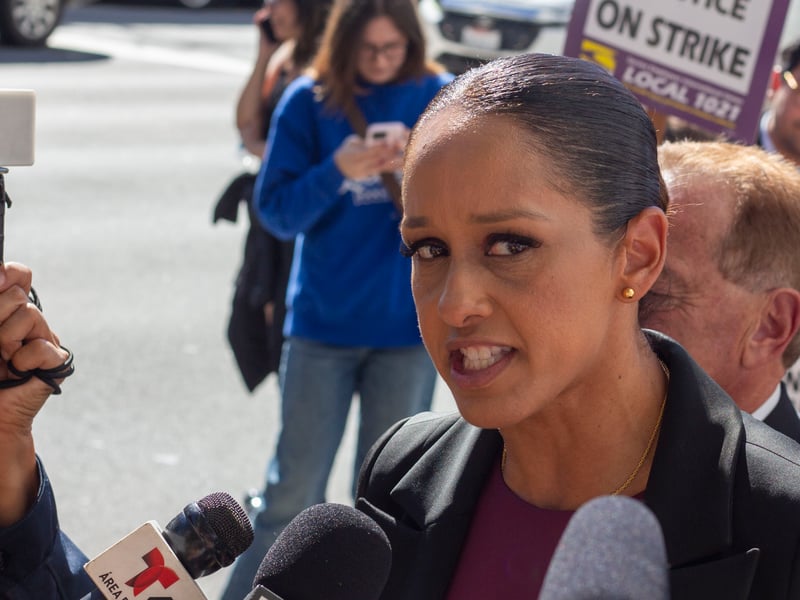
OAKLAND, Calif. (CN) — A controversial lawsuit against San Francisco District Attorney Brooke Jenkins will finally proceed after being dismissed twice in the past, a federal judge ruled Wednesday.
U.S. District Judge Jeffrey S. White, who denied the motion to dismiss, wrote that Jack Arne Friedman — a former investigator with the San Francisco District Attorney’s office that sued Jenkins for violating his free speech rights and retaliating against him for protected whistleblower activity — “has strengthened his pleadings since the court made this finding.”
The ex-investigator claims that Jenkins violated his First Amendment rights by subjecting him to a gag order and then using him as a “public scapegoat” for the unpopular decision not to prosecute a San Francisco police officer who killed a suspect.
Without his ability to speak out about impropriety behind the scenes, he claims, the district attorney was able to avoid political criticism.
“Our complaint with District Attorney Jenkins is that instead of just being candid with the public, she made up an excuse,” Dan Siegel of Siegel Yee, who represents Friedman, told Courthouse News over the phone. “And the excuse was that Mr. Friedman and Mr. Boudin had acted improperly," referring to her predecessor, former District Attorney Chesa Boudin.
Friedman’s lawsuit stems from a 2017 shooting by San Francisco police officer Christopher Samayoa, who killed carjacking suspect Keita O’Neil. Samayoa is the first San Francisco officer to ever be charged with criminal homicide for a killing in the line of duty. Friedman was the investigator who signed the arrest warrant.
After assuming office as the new district attorney, Jenkins decided to revisit the charging decision. Friedman was placed under internal investigation and instructed not to speak about the matter.
At the same time, the longtime investigator claims he learned that members of Jenkins’ staff had directed another investigator, Daniel Lundberg, to write a memorandum of his opinions on the decision to charge Samayoa. He believed this counted as unlawful coercion to provide false testimony and raised the issue multiple times over the next several months.
Jenkins dropped the charges against Samayoa in January 2023, claiming Boudin had filed them for political purposes. She also claimed that Friedman was improperly pressured by the previous administration to sign the arrest warrant, citing it as one of the main reasons she dropped the case.
Friedman now contests this, claiming he didn’t speak about the incident for fear of violating his gag order and passed up opportunities to speak to members of the press about the illegal activity he witnessed.
Friedman raised the issue again in March 2023 and was fired two months later.
Friedman filed suit in October 2023, claiming that Jenkins violated his First Amendment rights by restricting his ability to speak on matters of great public concern and broke the law by retaliating against him for making protected disclosures to the public.
As a result of his forced silence, Friedman also claims to have suffered damages to his reputation as an attorney and sworn peace officer as well as damage to his mental health.
Since filing, the suit was dismissed twice, but White seems to think Friedman has it right this time and has allowed the case to proceed.
In his ruling, the judge acknowledges that some parts of the lawsuit are lacking, including lacking detail in some parts.
“However, the second amended complaint provides sufficient detail elsewhere,” the judge clarified.
Later in the document, he clarifies his findings that the case’s First Amendment claims are strong enough to go forward.
“In sum, the Court finds that the well-pleaded allegations in the [second amended complaint] plausibly give rise to a cause of action for violation of plaintiff’s First Amendment right to free speech,” the judge ruled.
Siegel said that their team is happy with the decision and expressed interest in the coming trial.
“I think that Mr. Friedman has a very strong case and I’m glad that we’ll be able to pursue it on the merits,” the attorney said.
The San Francisco City Attorney’s office, via Deputy Press Secretary Alex Barrett-Shorter said the office was reviewing the decision and would evaluate what to do next.
Subscribe to our free newsletters
Our weekly newsletter Closing Arguments offers the latest about ongoing trials, major litigation and rulings in courthouses around the U.S. and the world, while the monthly Under the Lights dishes the legal dirt from Hollywood, sports, Big Tech and the arts.