
 Search Articles


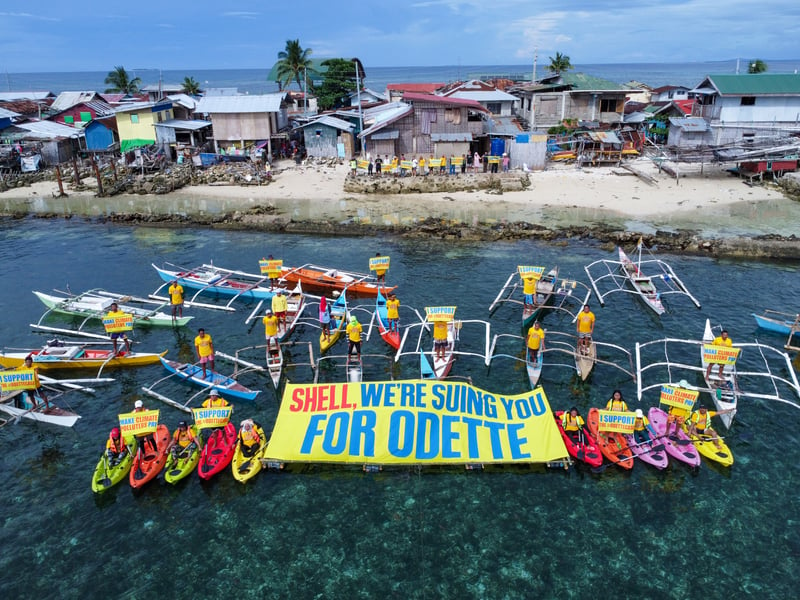
(CN) — Dozens of victims of a devastating super typhoon that tore through the Philippines in December 2021 are suing Shell in Britain, accusing the oil giant of fueling the climate crisis that made the disaster deadlier.
The 67 plaintiffs — mostly from island and coastal communities battered by Super Typhoon Rai — are seeking damages from Shell in what their lawyers say is the first-ever civil claim to directly link an oil and natural gas company’s greenhouse gas emissions to deaths and injuries from a past disaster in the Global South, a term used for developing nations.
The claimants, supported by the Philippine chapters of Greenpeace and Friends of the Earth, delivered a legal notice to Shell’s London headquarters on Wednesday. If no settlement is reached, the plaintiffs will seek damages before Britain’s High Court in December, plaintiffs lawyers said Thursday in announcing their case.
The lawsuit relies on the growing field of climate attribution science, which quantifies how much human-caused global warming has intensified specific weather events.
A study by scientists from Imperial College London and Sheffield University concluded climate change more than doubled the likelihood of an extreme event like Rai, which is known in the Philippines as Typhoon Odette.
The case also draws strength from a 2022 report by the Philippines Commission on Human Rights, which found that 47 major fossil fuel companies, including Shell, could be held morally and legally responsible for human rights violations linked to climate damage.
The lawsuit argues that Shell’s fossil fuel operations significantly contributed to human-caused climate change, which intensified Rai. The plaintiffs will invoke Philippine constitutional law, which enshrines the right to a healthy environment, applying it through proceedings in a British court.
The claimants accuse Shell of negligence, unjust enrichment and deception, saying the company knew decades ago that burning fossil fuels would cause catastrophic climate disruption but continued to expand production and fund misinformation campaigns.
For Trixy Elle, the case is deeply personal.
Days before Christmas in 2021, Rai slammed into her home on Batasan Island, Bohol province, swallowing entire villages with torrential rain and storm surges. Batasan Island is now described as a “sinking island”— flooded even during sunny days at high tide.
She said fighting a company as big as Shell was worth it for “the future of my future children.”
“It’s so unfair that we are the ones suffering the effects of climate change even though the pollution we contribute is small on a global scale,” she said in a statement. “So, why are we the ones suffering?”
According to the Carbon Majors database, Shell is responsible for about 2.5% of all industrial-era global emissions — making it one of the largest corporate contributors to global warming. By comparison, the Philippines has produced a tiny fraction of global emissions.
The storm killed more than 400 people, injured more than 1,400 and destroyed about 425,000 homes, making it one of the most powerful cyclones ever recorded in the Philippines. Damages totaled about $915 million.
“By proving in court that Shell was at fault for this climate change-driven extreme weather event and the suffering it caused, the case highlights the far-reaching and direct impacts on vulnerable communities worldwide of oil and gas company activities,” said Greg Lascelles, a plaintiffs lawyer.
In a statement, Shell dismissed claims it withheld information about the dangers of burning fossil fuels and said it has adopted measures to tackle climate change.
“The suggestion that Shell had unique knowledge about climate change is simply not true,” the company said. “The issue of climate change and how to tackle it has been part of public discussion and scientific research for decades.”
The company said it had long raised concerns about the link between fossil fuels and climate change, citing a documentary it made in 1991 called “Climate of Concern,” which it said was made available to the public.
Lawsuits accusing Shell and other energy giants of misleading the public about the threat from burning fossil fuels have been dismissed in U.S. courts in recent years.
Still, there has been a surge in “polluter pays” cases around the world. According to the London School of Economics, at least 11 such lawsuits were filed in 2024.
Earlier this year, a German court ruled that companies like RWE, a German power supplier, could be held liable for their carbon emissions, though no case has yet forced a company to pay for specific climate damages.
If successful, the Philippine case could open the door to a wave of similar claims — particularly from developing countries that have borne the brunt of worsening storms, floods and droughts.
The case also may test the reach of a recent International Court of Justice advisory opinion, which affirmed that nations have a legal duty to act on climate change.
Estela Vasquez with the Philippine Movement for Climate Justice, a group backing the suit, said “rich, polluting nations and corporations like Shell” must pay reparations for their damage.
“Their greed has intensified the climate crisis and destroyed lives, livelihoods and futures,” she said in a statement. “We are holding them accountable and making them pay for their sins against the people and planet.”
For the victims, the lawsuit is about more than money. It’s about recognition.
“When the typhoon came, a building wall collapsed and buried my sister alive,” one claimant, identified only as Betty, said in a statement. “They said no one was responsible because it was just a typhoon. But who made the storms this strong? We received no help, no justice. We deserve accountability for what was taken from us.”
Another victim, identified as Mon, put it more bluntly: “If Shell asks us why we blame them, I will tell them they are the culprits behind the tragedy that struck the Philippines.”
Greenpeace campaigner Jefferson Chua called the case part of a “rising tide of climate litigation from the Global South” that is “putting oil and gas giants like Shell on notice for their continued profiteering.”
Courthouse News reporter Cain Burdeau is based in the European Union.
 Follow @cainburdeau
Subscribe to our free newsletters
Our weekly newsletter Closing Arguments offers the latest about ongoing trials, major litigation and rulings in courthouses around the U.S. and the world, while the monthly Under the Lights dishes the legal dirt from Hollywood, sports, Big Tech and the arts.