
 Search Articles


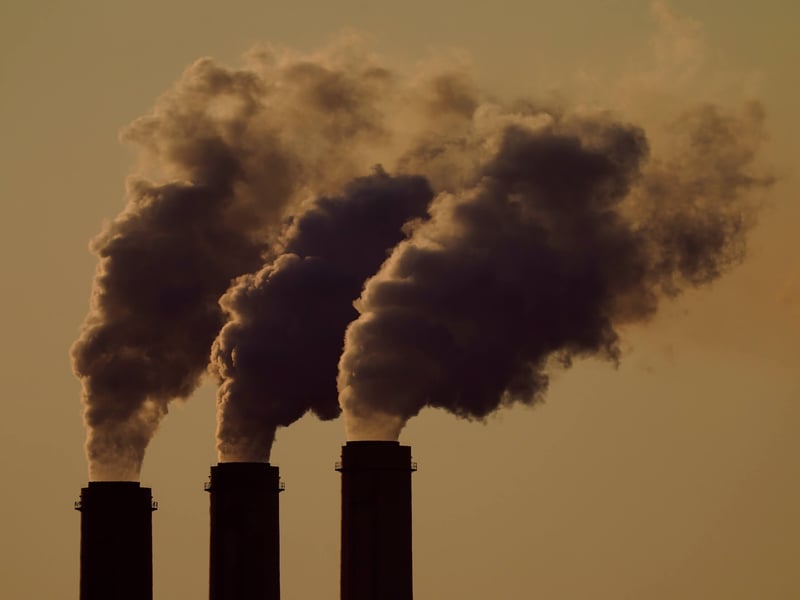
SEATTLE (CN) — The owner of a large power plant in southwest Washington state took its challenge to the state’s climate regulations before a three-judge panel of the Ninth Circuit Court of Appeals on Monday.
The state adopted the Climate Commitment Act in 2021 and it requires certain entities to buy allowances for every metric ton of greenhouse gases emitted. It followed the Clean Energy Transformation Act, which was passed in 2019 and requires all Washington utilities to change their energy portfolios to decarbonize all power sold to in-state customers by 2045.
PacifiCorp sued the director of the Washington State Department of Ecology in late 2023, arguing that the Climate Commitment Act discriminates against companies that provide power to out-of-state customers, thereby violating the dormant commerce clause.
The lower court denied the utility’s bid for a preliminary injunction and dismissed the case, with U.S. District Judge Tiffany Cartwright finding that granting the requested relief would “elevate the energy used to serve the out-of-state interest above Washington’s entire program of reducing carbon emissions.”
On appeal, PacifiCorp renewed its argument that the laws create a barrier to interstate commerce.
“This case is very important in terms of closing a hole in the dormant commerce clause that the district court opened up under the district court’s opinion,” said Dallas DeLuca, attorney with the Portland-based Markowitz Herbold firm representing PacifiCorp.
DeLuca argued that the decision allows other states to point to a preexisting statute, the way Washington did with the Clean Energy Transformation Act, and enact a new regulation to discriminate against out-of-state customers. He said it would lead to fracturing within the regional integration of the power grid and power generation. Exported power is exempt from the state’s Clean Energy Transformation Act.
“Another thing that is important here is that we’re protecting customers outside of Washington from the hoarding that Washington will do,” DeLuca said.
According to PacifiCorp, the natural result of imposing a higher cost for shipping power generated within the state to out-of-state customers will be that only Washington customers are allocated that power.
U.S. Circuit Judge Patrick Bumatay, a Donald Trump appointee, questioned how the dormant commerce clause applies and whether the markets at issue were substantially similar.
PacifiCorp retained its position that both its Washington customers and out-of-state customers were similarly situated.
Bumatay also questioned his court’s role in the dispute.
“Why should we be deciding this and figuring out what’s the rough equivalency and how much is the [Climate Commitment Act] versus the [Clean Energy Transformation Act], it just seems like courts shouldn’t be involved in things like that or we don’t have the competence to it,” Bumatay said.
But PacifiCorp argued that the court can and should involve itself with the issue, even though it doesn’t have to determine specific cost values. The utility estimated that millions of dollars in compliance costs could be passed to out-of-state consumers, while Washington consumers are granted free allowances.
The state argued that PacifiCorp’s suit was an attempt to create a loophole using the dormant commerce clause within Washington’s climate legislation.
“What PacifiCorp is asking for in this case is a complete exemption from all state regulation of greenhouse gases for emissions that occur wholly within the state’s borders,” argued Chris Reitz, attorney with the Washington State Attorney General’s Office.
Reitz argued that in-state power and exported power are not similarly situated.
“The no-cost allowances at issue in this case are not a free pass for in-state power to avoid carbon regulation — quite the opposite,” Reitz said, explaining that the Clean Energy Transformation Act is a faster and more complete decarbonization effort than what is required by the Climate Commitment Act.
“Right, but how does it make the power any different?” asked U.S. Circuit Judge Daniel Bress, a Donald Trump appointee.
Reitz explained that the electricity provided within the state has an emissions profile associated with it that is decarbonizing, whereas exported power has no carbon restrictions on it.
“Kind of like how consumers will sometimes pay more for green power versus not, it’s a different product even though it’s just electrons,” Reitz said.
With the Clean Energy Transformation Act in effect now, every utility serving Washington customers must start decarbonizing this year and remove coal-fired power from the electricity that supplies Washington customers.
Bumatay compared it to the sale of apples and organic apples, which Reitz agreed was accurate. While PacifiCorp has a six-state service area, some of those states don’t impose any carbon restrictions at all.
“If PacifiCorp were to get the relief they’re seeking here, they’d be able to export as much power as they want from their power plant in Chehalis with all the emissions,” Reitz said.
The other utilities based in Washington are subject to the same carbon regulations, even those that export surplus power, Reitz said.
“ I thought the whole purpose of the dormant commerce clause is not to advantage in-state versus out-of-state consumers, but if everyone’s under the same regulation throughout, then I don’t see what we’re doing here,” Bumatay remarked.
PacifiCorp argued that everyone in Washington receiving power from the Chehalis plant has an advantage over everyone receiving power from he same plant out of state. The utility also disagreed with the apple analogy.
“The emissions profile from Chehalis is going to be the same wherever it goes because it’s the same amount of carbon that’s emitted per megawatt, regardless of where it goes,” DeLuca said, adding that the facility doesn’t have to be in compliance with the Clean Energy Transformation Act until 2030.
The panel, which included U.S. Circuit Judge Johnnie B. Rawlinson, a Bill Clinton appointee, did not indicate when it would rule.
Subscribe to our free newsletters
Our weekly newsletter Closing Arguments offers the latest about ongoing trials, major litigation and rulings in courthouses around the U.S. and the world, while the monthly Under the Lights dishes the legal dirt from Hollywood, sports, Big Tech and the arts.