Search Articles


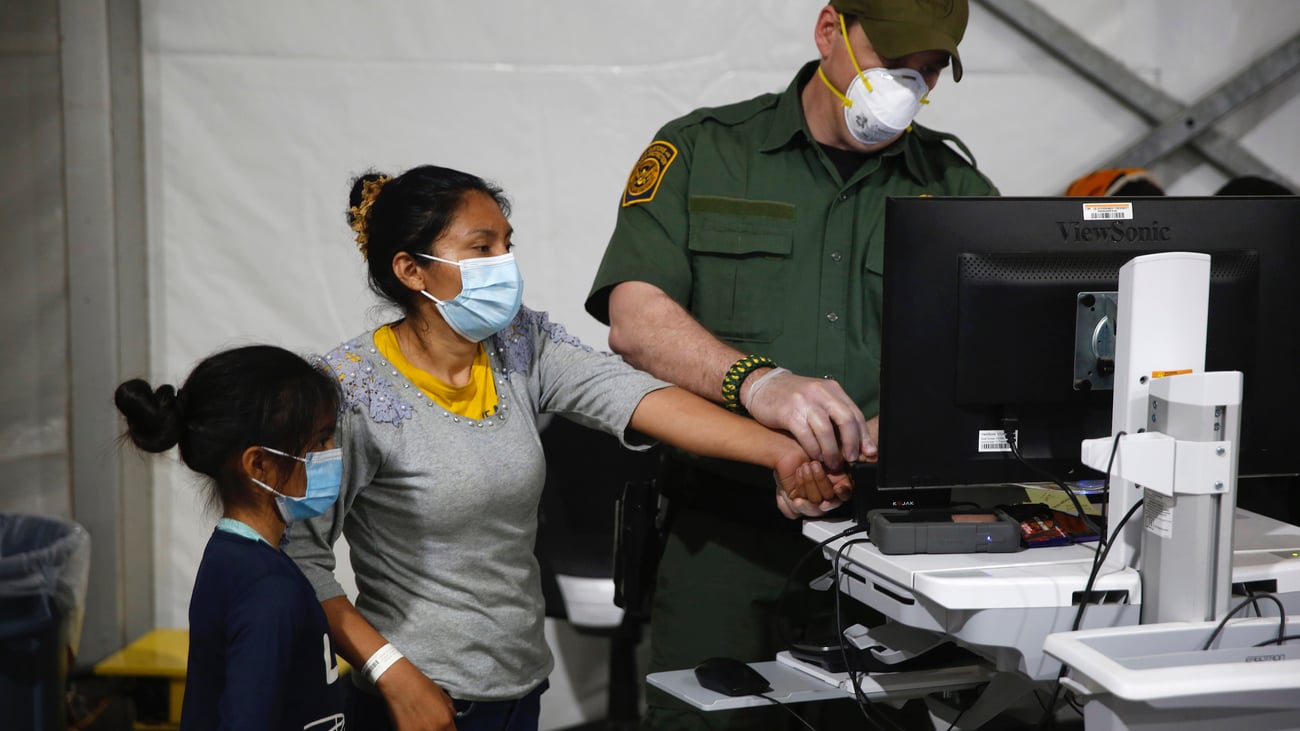
(CN) — A Fifth Circuit panel heard arguments Wednesday on whether the Trump administration can deny bond hearings for all immigration detainees who entered the country unlawfully, regardless of how long they’ve been in the U.S.
The Fifth Circuit ruled in February that the administration’s mandatory detention policy, which it announced in an ICE memo last year, does not violate the Immigration and Nationality Act. Despite the court’s ruling on the statutory issue, however, some judges in the circuit have continued to rule against the policy on constitutional grounds, finding that detaining people who have been in the country for years without a bond hearing violates their due process rights.
A three-judge panel heard arguments Wednesday for appeals by the government in three such cases, with Deputy Assistant Attorney General Drew Ensign telling the panel the lower courts erred in granting detainees’ habeas petitions on due process grounds.
“Petitioners do not challenge the constitutionality of mandatory detention without bail for those apprehended at the border, even for those who lawfully presented themselves at ports of entry,” Ensign said. “But plaintiffs instead claim that because they successfully made it past the border, that is, they successfully committed the crime of illegal entry, they have acquired a constitutional entitlement to bond by virtue of their unlawful entry.”
But Rebecca Cassler, an attorney with the American Immigration Council representing the petitioners, argued the government must have a “permissible civil purpose” for detaining someone.
“When there’s no justification for detention, it really starts to look like impermissible punishment,” Cassler said.
U.S. Circuit Judge Cory Wilson, a Donald Trump appointee, pressed Cassler on how long a person needs to be in the country to acquire a due process interest in being free from detention and how courts are supposed to determine who has sufficient interest.
“I’m seeing all sorts of sliding scales and other things to weigh,” Wilson said. “I mean, please help me here because it seems completely nonadministrable and detached from the statute.”
“Or it seems completely individualized,” U.S. Circuit Judge James Graves, a Barack Obama appointee, responded. “Which is maybe what it ought to be.”
U.S. Circuit Judge Leslie Southwick, a George W. Bush appointee, joined Wilson and Graves on the panel.
At the center of the issue are two separate portions of the INA that both govern deportation proceedings. U.S. Code §1225 applies to “applicants for admission,” defined as “an alien present in the United States who has not been admitted or who arrives in the United States.” Under that statute, “an alien seeking admission” who is “not clearly and beyond a doubt entitled to be admitted” is subject to mandatory detention pending removal proceedings.
Meanwhile, a different statute, §1226, governs deportation proceedings more generally. That statute calls for discretionary detention, allowing the government to release detainees on bond while they go through removal proceedings. Federal regulations give people detained under §1226 the right to request a bond hearing before an immigration judge.
For almost 30 years, the government held that §1225 applied to people who were detained at the border or shortly after entering the U.S., while §1226 applied to people detained within the country.
Last year, however, the Trump administration announced a major policy shift — going forward, all people who entered the U.S. without being lawfully admitted would be treated as “applicants for admission” under §1225, regardless of how long they’ve been in the country.
This has led to an avalanche of federal habeas petitions by detainees challenging the denial of bond hearings. Hundreds of federal judges have ruled the Trump administration’s policy is illegal or unconstitutional. In March, the Eighth Circuit concurred with the Fifth Circuit that the policy complies with the INA, but on Wednesday the Second Circuit disagreed.
Subscribe to our free newsletters
Our weekly newsletter Closing Arguments offers the latest about ongoing trials, major litigation and rulings in courthouses around the U.S. and the world, while the monthly Under the Lights dishes the legal dirt from Hollywood, sports, Big Tech and the arts.