
 Search Articles


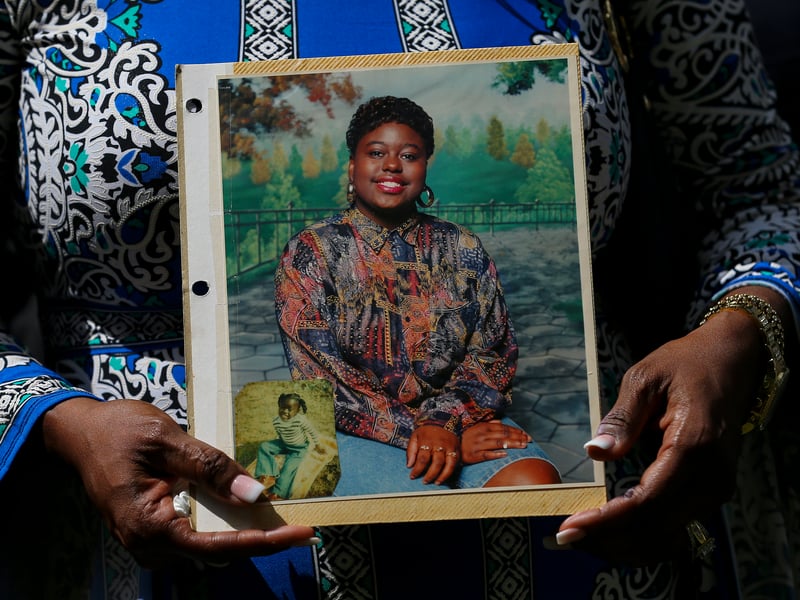
(CN) — A panel of Fifth Circuit judges appeared skeptical Friday of a civil suit brought by the family of a Black woman who in 2019 was fatally shot by a Baytown, Texas, police officer.
Officer Juan De La Cruz approached Pamela Turner in the parking lot of an apartment building where they both lived and attempted to arrest her on outstanding misdemeanor warrants. An altercation ensued, resulting in De La Cruz fatally shooting Turner.
Turner’s family has said De La Cruz was acquainted with Turner and knew she struggled with mental illness. The case garnered national attention and led to protests by Black Lives Matter activists. In 2020, a Harris County grand jury charged De La Cruz with aggravated assault by a public servant, but he was ultimately found not guilty.
In December 2023, a Texas federal judge dismissed a lawsuit brought by Turner’s family against De La Cruz, the city of Baytown and the owners of the apartment complex, finding that De La Cruz could have reasonably believed Turner posed a threat to his life.
Lawyers for De La Cruz and the family argued Friday before a three-judge Fifth Circuit panel over whether the judge was correct in dismissing the claims against the officer.
De La Cruz’s attorney William Helfand said Turner had grabbed De La Cruz’s Taser and shocked him with it, but Shelby White, an attorney representing the family, said the evidence does not conclusively show this. Even if that was the case, White argued that at the time of the shooting Turner was on the ground several feet from De La Cruz and therefore no longer posed a reasonable threat to him.
“The two fighters are on different sides of the ring, and then he pulls his gun and shoots her. And you can’t do that,” White said.
White said that even if, as De La Cruz had testified, Turner had been holding the Taser when he shot her, the Taser prongs had already been deployed, so the device could only have been used in drive-stun mode, meaning the only way Turner could have used the Taser against De La Cruz at that point would be by physically touching him with it. White argued this meant Turner could not have posed a threat to De La Cruz from several feet away.
But U.S. Circuit Judge Stuart Duncan seemed skeptical of this argument.
“You want us to write an opinion that would say, if someone an officer is trying to arrest takes control of his taser, the officer cannot use deadly force unless she’s close enough to him to tase him in drive-stun mode?” Duncan, a Donald Trump appointee, asked, adding, “I just want to understand what rule of law we would have in this circuit that guides police officers in their interaction with people who take their Tasers away.”
Helfand argued De La Cruz had a reasonable belief that Turner posed a danger to him when he shot her.
“An officer is trained, but an officer is also a human being, and sometimes folks disregard the normal human traits of pain and fear which exist when somebody is in a fight and being shocked and feeling threatened as if they’re going to be killed,” Helfand said. “And Officer De La Cruz had every not only right but reason to believe that that’s what was going to happen to him.”
U.S. Circuit Judge Jerry Smith, a Ronald Reagan appointee, and U.S. Circuit Judge Carl Stewart, a Bill Clinton appointee, joined Duncan on the panel.
Subscribe to our free newsletters
Our weekly newsletter Closing Arguments offers the latest about ongoing trials, major litigation and rulings in courthouses around the U.S. and the world, while the monthly Under the Lights dishes the legal dirt from Hollywood, sports, Big Tech and the arts.