
 Search Articles


(CN) — Texas is defending a state law empowering state police to arrest people suspected of crossing the border illegally and allow local judges to order their deportation to Mexico.
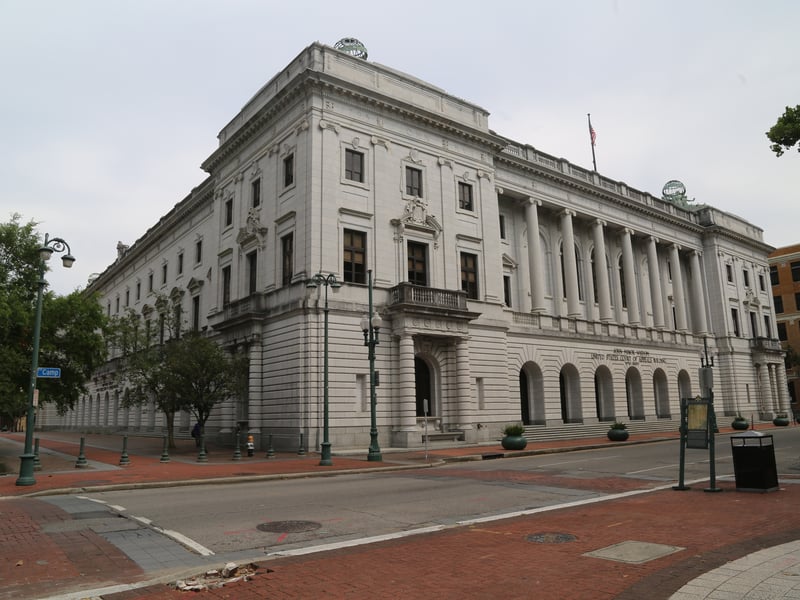
Senate Bill 4, a measure signed by Governor Greg Abbott amid rising tensions over border security, has been on hold since a federal district judge in Austin issued a preliminary injunction in February 2024, ruling it likely violates federal supremacy over immigration. At the Fifth Circuit Court of Appeals in New Orleans Thursday, Texas Solicitor General William R. Peterson urged a full panel of federal judges to toss out the injunction, arguing that challengers like the plaintiff immigrant advocacy groups — Las Americas Immigrant Advocacy Center and American Gateways — don’t even have the legal standing to sue. He leaned on precedents such as FDA v. Alliance for Hippocratic Medicine to argue nonprofits have no standing based on indirect harms or resource diversion.
“Like Las Americas, Alliance challenged that governmental action impaired its ability to provide services and achieve its organizational mission,” Peterson said, drawing a parallel to the recent Supreme Court case on abortion pills. “The Supreme Court [said] that argument does not work.”
El Paso County joined the lawsuit as a plaintiff. Together, they argue SB4 oversteps by creating a parallel state system for immigration enforcement, potentially clashing with federal laws that govern entry, asylum and removal. Penalties under the law range from misdemeanors for first-time unauthorized entries to felonies carrying up to 20 years in prison for repeat offenses or failing to comply with removal orders.
Peterson likened the nonprofits’ claims to “spending [their] way in” by diverting resources to fight SB4, calling it self-inflicted rather than a true injury. He contrasted this with Havens Realty Corp. v. Coleman, a 1982 housing discrimination case where a group had standing because defendants directly lied to its employees about apartment availability.
“Havens was an unusual case,” Peterson told the judges. “The court has been careful not to extend [its] holding.”
The en banc panel of judges peppered Peterson with questions, with Chief U.S. Circuit Judge Jennifer Walker Elrod drawing an analogy to the abortion pill case, asking why emergency room doctors there lacked standing despite a “flood of new patients,” while immigrant groups here claim harm from SB4’s changes. U.S. Circuit Judge Stephen A. Higginson pressed on Texas’ earlier “invasion” argument under the Constitution’s state self-defense clause, which allows states to act in war-like scenarios without congressional approval.
Peterson downplayed it, saying standing was the “easiest” path to victory, but added that if the court reached the merits, federal laws don’t preempt SB4 because they are “straightforward criminal statutes” that Texas merely supplements.
Higginson also quizzed Peterson on practical conflicts, including whether Texas would drop SB4 prosecutions if suspects couldn’t be deported. Peterson said the law’s text was open to ongoing interpretation, but he highlighted a potential for foreign policy snarls — a key concern for challengers who say SB4 could strain foreign relations.
Cody Wofsy, an ACLU attorney arguing for the nonprofits and El Paso County, countered that SB4 inflicts real harm. He cited District Court findings that the law “will completely change the manner in which plaintiffs must reach counsel and represent noncitizens as they navigate the federal immigration process while in state prison.”
Wofsy argued this isn’t speculative but a direct blow to groups like Las Americas, which help migrants seek asylum.
“If your goal as the organization is trying to make sure people have access to the protections that are available,” he said, SB4 forces a total overhaul.
Wofsy invoked Arizona v. United States, where the Supreme Court in 2012 struck down parts of Arizona’s similar law for intruding on federal turf. He emphasized field preemption — the idea that immigration entry and removal are exclusively federal domains — and conflict preemption, where SB4 clashes with federal laws, including those which guarantee asylum opportunities for those entering without inspection.
“Texas is stepping in and saying, ‘actually, we agree that people should be expelled from the country with no opportunity to apply for asylum,” Wofsy told the judges. “That could not be a more straightforward supremacy clause [violation].”
The panel probed Wofsy, too. One judge asked about the “newness” of SB4, questioning if updating pamphlets or advising clients in state jails truly creates novel requirements. Another asked, “Where’s the constitutional right to file an asylum application?”
Wofsy responded that while states can cooperate with federal efforts, SB4’s unilateral arrests and deportations go too far, echoing rulings against similar laws in Iowa, Florida and Oklahoma.
Elrod returned to standing, noting the nonprofits’ reliance on the law’s novelty. Wofsy distinguished it from the* Alliance*abortion case.
“There’s nothing like that [chain of causation] here,” he said. “Obviously, SB4 is directly affecting the clients of Las Americas’ operation.”
The en banc hearing — involving all 17 active Fifth Circuit judges — follows a rollercoaster appeal. A three-judge panel initially stayed the injunction, allowing SB4 to take effect briefly in March 2024, but the full court reinstated the block.
A ruling could come in months, potentially heading to the Supreme Court.
 Follow @gabetynes
Subscribe to our free newsletters
Our weekly newsletter Closing Arguments offers the latest about ongoing trials, major litigation and rulings in courthouses around the U.S. and the world, while the monthly Under the Lights dishes the legal dirt from Hollywood, sports, Big Tech and the arts.