
 Search Articles


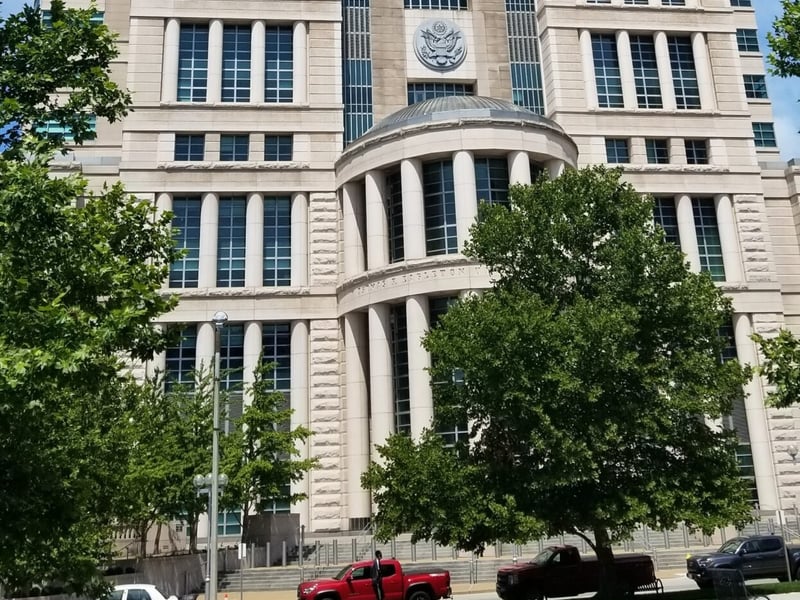
(CN) — Seeking an immediate halt to Minnesota’s gender-identity athletic policies, a women’s sports advocacy group told the Eighth Circuit Thursday that competing against biological males turns the playing field into a site of unfairness and safety risks for female athletes.
Representing several Minnesota high school softball players, Female Athletes United argued that Minnesota’s decade-old inclusive policy ignores the objective physiological differences between the sexes.
FAU asserted Minnesota’s policy is not just a neutral rule but an intentional choice to allocate athletic opportunities based on gender identity, which intentionally disparages female athletes.
FAU’s attorney, Henry Frampton, of Alliance Defending Freedom, claimed that because the athletic system was already “sex-conscious,” any “tinkering” that introduces biological males into female sports is a form of disparate treatment — regardless of whether the league acted with malice.
The lower court in Minnesota heard oral arguments in August and later denied FAU’s motion for a preliminary injunction. The court held that private parties like FAU can’t sue under Title IX’s athletic regulations and that allowing transgender participation in female sports doesn’t “per se” treat female athletes unequally.
After the lower court denied its request, FAU is asking the Eighth Circuit to reverse that decision and halt Minnesota’s inclusive sports policy while its lawsuit proceeds. Specifically, it is seeking a ruling that Title IX’s guarantee of equal athletic opportunity requires the state to provide separate sports categories based on biological sex rather than gender identity.
The state, however, maintains that its bylaws are a necessary application of Title IX, and the Minnesota State High School League and Minnesota Attorney General Keith Ellison claim barring transgender participation is a violation of the Minnesota Human Rights Act — which prohibits discrimination based on gender identity.
Minnesota Solicitor General Liz Kramer defended the policy as gender-neutral, noting to the three-judge panel that it applies to all students across various activities, including fine arts and debate. Kramer argued there is no evidence of an intent to discriminate.
U.S. Circuit Judge Raymond Gruender questioned whether FAU’s legal record contained any evidence that the bylaws stemmed from an intent to disadvantage biological girls or if they were instead born from a sincere belief that the change would not significantly impact female athletes. He also pushed back on FAU’s argument, using the Trump administration’s guidance to back its claim.
“Are you sure that argument works? Because what if the next administration, like the one before, thinks completely differently,” Gruender said.
A divide emerged over the scientific certainty of athletic advantages. FAU pointed to expert reports citing eight peer-reviewed studies suggesting biological males retain significant physical advantages even after medical interventions, but the state countered — pointing to a lack of research overall and little physical evidence that the athlete in question was “far and above” her peers.
FAU said the high-level softball players it represents have all faced one transgender athlete who has completely taken over in games — often pitching shut-outs with unrivaled speed and ball movement — although the judges noted that it’s often for top softball pitchers to perform similar feats.
Because a preliminary injunction requires a showing of “irreparable injury,” FAU contended athletic contests are “one and done” events that cannot be remedied with money damages. The state argued that a reduced likelihood of success in a game does not meet the threshold FAU seeks.
The state contends that FAU has failed to show transgender participation is likely to or has deprived any FAU member of a roster spot, an honor or award, recognition or a scholarship.
U.S. Circuit Judge Ralph Erickson challenged the state by pointing to the name, image and likeness era, where high school performance can impact future million-dollar college earnings. He suggested losing statistics in a single game could constitute irreparable injury.
The state countered that such financial concerns are exactly why monetary damages exist, and that alone does not meet the legal threshold for an injunction.
Furthermore, the state warned that an injunction against transgender participation in girls’ sports would irreparably harm the athlete in question.
“The harm to Doe, to the student, would be complete preclusion from participating in softball in her senior year,” Athlete Doe’s School District’s attorney Virginia McCalmont, of Forsgren Fisher in Minneapolis, said. “That’s not just a harm to Doe, that’s a harm to her team and a harm to her community.”
Months before the FAU lawsuit, President Donald Trump signed an executive order titled “Keeping Men Out of Women’s Sports,” which stated educational institutions receiving federal funds cannot deny women an equal opportunity to participate in sports and clarified that women’s sports are reserved for biological women.
MSHSL announced in February 2025 that it would not comply with Trump’s executive orders barring trans athletes from competing because of the direct conflict between state law and federal mandates. In September 2025, the U.S. Department of Education and Health and Human Services found Minnesota in violation of Title IX, citing the participation of transgender athletes in girls’ and women’s sports.
The Eighth Circuit hearing comes just two days after the U.S. Supreme Court heard landmark oral arguments over similar bans in West Virginia and Idaho. The justices appeared sympathetic to state arguments that Title IX allows for sports to be separated by biological sex, a ruling that could set the nationwide standard.
Subscribe to our free newsletters
Our weekly newsletter Closing Arguments offers the latest about ongoing trials, major litigation and rulings in courthouses around the U.S. and the world, while the monthly Under the Lights dishes the legal dirt from Hollywood, sports, Big Tech and the arts.