
 Search Articles


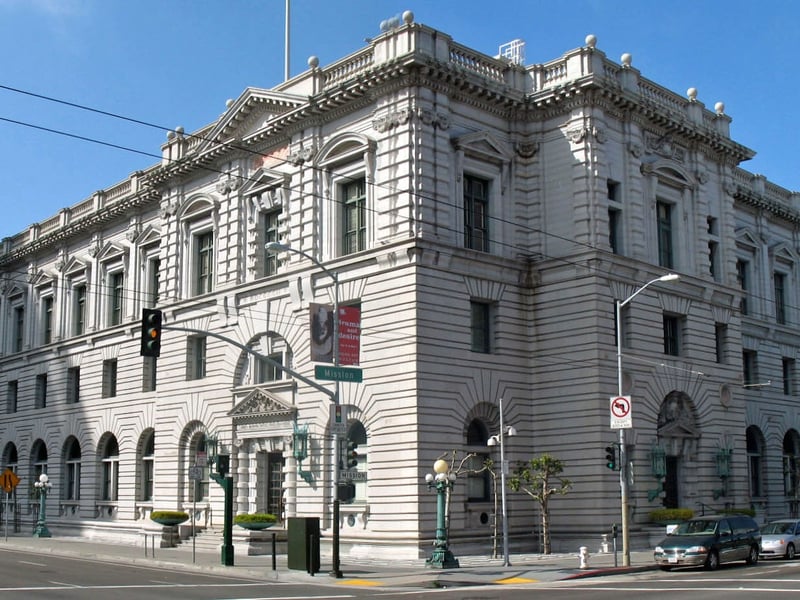
SAN FRANCISCO (CN) — Federal lawyers on Friday morning asked a Ninth Circuit Court of Appeals panel to reverse a lower court’s decision that it must release data on federal contractors to a San Francisco nonprofit.
The fight is specifically over EEO-1 reports. These reports reflect the breakdown by job classification of a company’s workforce by race, ethnicity, and sex.
The Center for Investigative Reporting, a San Francisco nonprofit news organization that investigates and reports on injustices in the United States, had submitted a Freedom of Information Act for reports from 2016 to 2020.
The federal government notified its employees of the request, and nearly 5,000 objected to the release of their information. The government released the remaining reports to the Center for Investigative Reporting, prompting the organization to sue in 2022 for the rest of them.
A federal judge sided with the Center for Investigative Reporting in 2023, ruling that EEO-1 reports were not exempt from disclosure under FOIA. The government appealed, arguing that they were.
At the hearing Friday morning, Joshua Koppel, a Department of Justice attorney, said that EEO-1 reports are commercial in nature and therefore protected from disclosure because they show a company’s ability to produce a good or make a profit.
“EEO-1 data is commercial," Koppel said, “because of just the nature of the information in these reports. That might not be true about all information, but it is true about EEO-1 data.”
“That’s because EEO-1 data contains the total employee headcount of a company,” Koppel added. “It describes the resources [and] the human capital that a company has at its disposal to engage in trade or commerce.”
Senior U.S. Circuit Judge Norman Randy Smith, a George W. Bush appointee, said that it seemed to him that the commercial exemption, FOIA Exemption 4, only applied to service-oriented companies.
Koppel disagreed, explaining that EEO-1 reports also break down the workforce according to job category — meaning they disclose how many sales people a company employs to generate revenue. Koppel said the reports would have this information whether it is a service business or not.
“I think that this court should hold, as a general matter, that employee headcount, the allocation of personnel across job categories, when it pertains to a commercial business, that that is commercial information,” Koppel said.
Arguing for the Center for Investigative Reporting, Diana Baranetsky said that the EEO-1 reports are not commercial under any circuit case law and that they contain no intimate information. Thus, she said, there is no foreseeable harm.
“EEO1 reports are not commercial," she said bluntly. “They do not reveal commercial information.”
U.S. Circuit Judge Anthony Johnstone, a Joe Biden appointee, asked Baranetsky if her argument holds even for a service-oriented industry. Baranetsky said yes, because the titles revealed in an EEO-1 report are vague.
“There are 10 categories they apply to every industry," she said. “There’s things as vague as ‘professionals’ or ’technicians’ or ‘managers.’ That’s not enough to reveal something intimate.”
EEO-1 reports are government records, Baranetsky concluded, and the reports were always for governmental purposes — not commercial ones.
“Yes, they reveal the total employee headcount," Baranetsky said. “That says nothing about productivity. It says nothing about the products. It says nothing about the ability for these workers to fulfill their roles, or how many of these workers are staffed in different locations.”
The panel took the matter under submission. U.S. District Judge Dana Christensen, an Obama appointee from Montana, rounded out the panel.
Subscribe to our free newsletters
Our weekly newsletter Closing Arguments offers the latest about ongoing trials, major litigation and rulings in courthouses around the U.S. and the world, while the monthly Under the Lights dishes the legal dirt from Hollywood, sports, Big Tech and the arts.