
 Search Articles


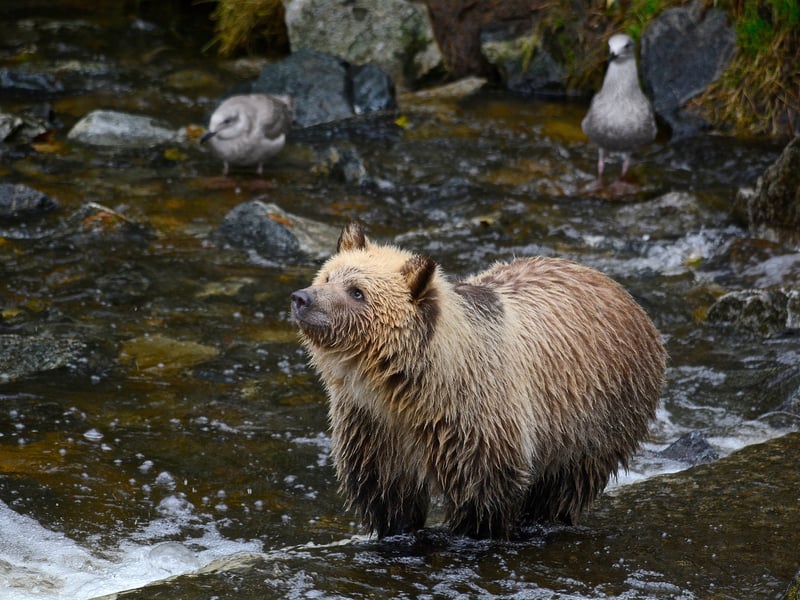
(CN) — The federal government and a Native American tribe on Thursday asked a federal judge to reject environmentalists’ concerns about road impacts on grizzlies and greenlight a proposed logging project through the bear’s habitat in the Kootenai National Forest in Lincoln County, Montana.
“Grizzly bears are experiencing more illegal roads than the agency acknowledges and that is bearing out in the record here,” argued Portland-based attorney Kristine Akland on behalf of the Center for Biological Diversity.
The center led environmental groups in suing the U.S. Forest Service in May 2022 seeking to block the Knotty Pine Project, a 5,000-acre logging proposal in the Kootenai National Forest’s Cabinet-Yaak Mountains, designated a recovery zone for threatened grizzly bears. The environmentalists argue the government inadequately considered the impact 45 miles of new roads would have on the slow-recovering species estimated to have fewer than 50 bears in the area.
U.S. District Judge Dana Christensen granted the environmentalists’ motion for a preliminary injunction blocking the Knotty Pine Project from moving forward in April 2023. After reviewing supplemental briefing, the Barack Obama appointee scheduled Thursday’s hearing to consider which party to grant summary judgment.
According to the Forest Service’s 2022 record of decision, resource managers believed the logging project would “promote resilient vegetation conditions by managing for landscape-level vegetation patterns, structure, patch size, fuel loading and species composition.”
The proposed forest thinning plan would control forest insects, build fire resistance and increase drought tolerance, according to the decision signed by U.S. forest supervisor Chadwick Benson.
But environmental watchdog groups remain concerned that the government’s analysis discounts the impact of unauthorized road use on wildlife.
“Analyzing illegal road use is critical to understanding the impacts of the project and it’s critical to the survival of the species,” Akland argued. She criticized the Forest Service’s plan to allow 1,300 acres of “pre-commercial thinning,” which she said was poorly defined and not included in the proposal submitted to the public for comment.
The federal government argued that forest thinning had been discussed in the underlying biological opinion and would have minimal temporary impacts on grizzly bears. Claiming the government wasn’t required to parse out the impacts of illegal motorized access, U.S. Attorney Erika Furlong urged the court to defer to the agency’s experts on the issue.
Furlong explained that existing policy provided a method of calculating illegal vehicle use, and that some routes can be excluded from the analysis due to a lack of information about isolated incidents.
“At bottom, plaintiffs seek to impose an impossible standard on the agency that does not exist in the Endangered Species Act or the Administrative Procedure Act,” Furlong said. “The biological opinion is reasonable and must be upheld under the Endangered Species Act.”
The Kootenai Tribe of Idaho intervened in the case to advocate in support of the Knotty Pine Project as consistent with the tribe’s goal of preserving the land.
“The tribe really wants to see restoration take place for the benefit of everyone, the grizzly bear, and their treaty rights,” said attorney Julie Weis, who practices with the Portland firm Haglund Kelley.
“Just because they couldn’t conduct a quantitative analysis doesn’t mean they ignored the issue, they issued a very good qualitative assessment,” Weis said.
Christensen heard argument at the Russell Smith Federal Courthouse in Missoula, Montana, which was also broadcast over YouTube. The judge did not indicate how he would decide the case, but promised to be “hard at work” as the court is “very busy right now.”
 Follow @bright_lamp
Subscribe to our free newsletters
Our weekly newsletter Closing Arguments offers the latest about ongoing trials, major litigation and rulings in courthouses around the U.S. and the world, while the monthly Under the Lights dishes the legal dirt from Hollywood, sports, Big Tech and the arts.