
 Search Articles


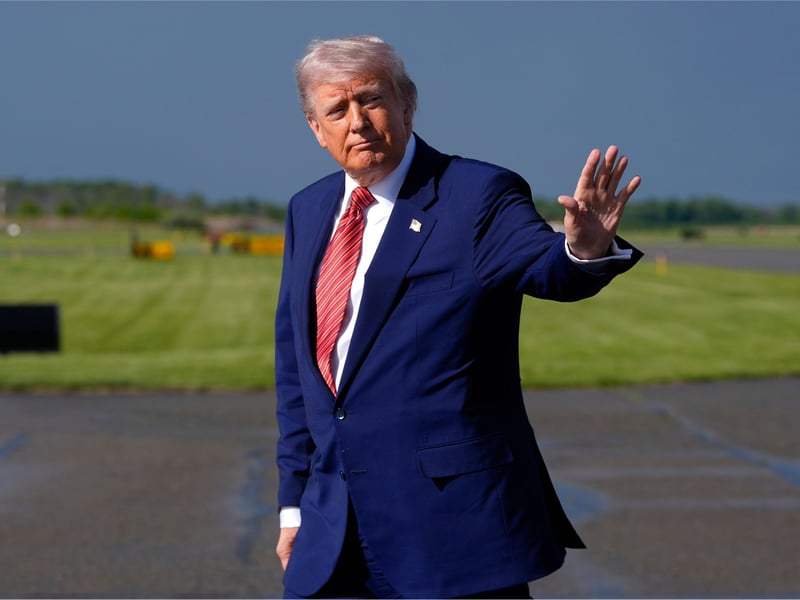
(CN) — The federal government defended its crackdown on diversity, equity and inclusion programs in the Fourth Circuit on Thursday as the city of Baltimore and university organizations fought to claw back federal grant money.
A federal judge imposed a preliminary injunction in February on President Donald Trump’s executive orders directing government agencies to cancel funding for DEI initiatives across the country, including at institutions of higher learning.
An appellate panel appeared skeptical Thursday that the president’s orders were unconstitutional, however.
U.S. Circuit Judge Allison Jones Rushing, a Trump appointee, observed that the president had broad authority to set priorities for spending by executive agencies. If an agency wrongfully terminates a grant, it may be more appropriate to address that issue through a separate lawsuit rather than a facial challenge to the orders, she noted.
Trump issued two executive orders in January directing government officials to excise DEI programs, which the order called “illegal” and “immoral,” from federal agencies while canceling funding for similar initiatives in the private sector.
The order directed the Attorney General’s Office to develop a plan to deter private sector DEI programs or principles that constitute illegal discrimination and to work with agencies to identify targets for “civil compliance investigations.”
Federal agencies responded to the order by canceling a slew of grants and contracts related to DEI, creating a flurry of lawsuits as municipalities, nonprofits and universities challenged the decisions. Separately, U.S. Attorney General Pam Bondi announced the Department of Justice would investigate and penalize any “illegal” DEI programs, while the Federal Communications Commission has pressured private companies, including Comcast and Disney, to eliminate DEI programs and scrub related policies from their websites.
Several federal agencies, including the Department of Health and Human Services and Americorps, warned Baltimore city officials not to use federal grants to promote DEI programs, according to the plaintiffs’ brief. Meanwhile, federal officials have yanked funding from college professors researching gender disparity and equity of access.
In February, the city of Baltimore challenged the executive orders in Maryland federal court, joined by the American Association of University Professors and the National Association of Diversity Officers in Higher Education. A fourth plaintiff, Restaurant Opportunities Center United, dismissed its claims in the District Court.
U.S. District Judge Adam B. Abelson, a Joe Biden appointee, granted a preliminary injunction in the case, finding the executive orders were unconstitutionally vague and infringed on the plaintiffs’ free speech rights.
Abelson wrote in a 63-page opinion that the president failed to identify what “equity-related” grants or contracts should be terminated, leaving contractors and their employees alone to parse whether their work would be funded or not. Further, the threat to initiate civil compliance investigations against anyone who promoted DEI principles unlawfully restricted protected speech, Abelson wrote.
“The White House and attorney general have made clear, through their ongoing implementation of various aspects of the J21 Order, that viewpoints and speech considered to be in favor of or supportive of DEI or DEIA are viewpoints the government wishes to punish and, apparently, attempt to extinguish,” Abelson wrote.
Acting U.S. Assistant Attorney General Yaakov Roth argued Thursday that the grant recipients were not constitutionally entitled to fair notice for the government’s funding decisions. Unlike criminal or civil laws, executive orders do not contain penalties that require fair notice for proper enforcement, he said.
“This executive order is not defining what is lawful,” Roth said. “It is determining what the government is going to pay for or not pay for.”
Rushing said Roth’s argument seemed correct to her.
“This executive order is the president telling his subordinates within the executive branch what standard to apply (for determining grants),” Rushing said, adding later: “It’s not regulating private parties, and we don’t have one branch (of government) giving a standard to another branch.”
Under the executive order, federal grant recipients must certify that they do not operate DEI programs that violate federal anti-discrimination laws. Roth said recipients already needed to certify they are in compliance with federal civil rights laws, so it was unclear to him why it made a tangible difference.
Attorney Aleshadye Getachew of the D.C.-based Democracy Forward Foundation argued the new certification requirements, combined with the FCC investigations and claims that DEI was “dangerous” or “immoral,” had a chilling effect on the speech of grant recipients.
U.S. Chief Circuit Judge Albert Diaz, a Barack Obama appointee, questioned whether the actions of an overly aggressive agency or federal actor were enough to justify striking down the entirety of the orders.
Getachew said it was not a single agency or rogue employee.
“It’s across the government, across multiple agencies, so it’s a little hard to say that these are outlier examples or somehow broken actors, as opposed to reasonable interpretations of what agencies were expected to do under these executive orders,” she said.
Getachew argued the certification requirement was not a content-neutral regulation of speech. Recipients who promote DEI programs face worse treatment compared to recipients who stay silent on the issue or oppose such initiatives.
Rushing stopped Getachew’s arguments to read the certification provision.
“This provision, all it does is enforce anti-discrimination laws, right?” Rushing said. “I’m just reading it.”
Getachew said the language may appear neutral, but the government was “putting its thumb on the scale,” specifically singling out DEI to show its disfavor with the practice and recipients who support it.
Obama appointee U.S. Circuit Judge Pamela A. Harris said it seemed there was “tension” in Getachew’s arguments. On the one hand, the plaintiffs contend there was insufficient notice of what equity-related grants were disfavored by the administration. On the other hand, language that specifies DEI programs had a chilling effect on the speech of the recipients.
 Follow @SteveGarrisonPC
Subscribe to our free newsletters
Our weekly newsletter Closing Arguments offers the latest about ongoing trials, major litigation and rulings in courthouses around the U.S. and the world, while the monthly Under the Lights dishes the legal dirt from Hollywood, sports, Big Tech and the arts.